Agostinho-Neto International Airport
Agostinho-Neto International Airport
Agostinho-Neto International Airport (PNR / FCPP) — Airport Profile
Agostinho-Neto International Airport serves Pointe-Noire, the commercial and industrial capital of the Republic of the Congo, and stands as one of Central Africa’s most strategically positioned gateways. Named in honour of Agostinho Neto — the Angolan independence leader and poet whose legacy resonates across Lusophone and Francophone Africa alike — the airport functions as the primary air access point for the Congo Basin’s offshore oil and gas sector, a hub for humanitarian and development logistics, and an increasingly important node in the regional aviation network connecting Central and West Africa.
About
Agostinho-Neto International Airport (IATA: PNR; ICAO: FCPP) is located in Pointe-Noire, Republic of the Congo — a city that, despite not being the national capital, functions as the country’s economic engine, driven by petroleum extraction, a deep-water Atlantic port, and a growing services sector. The airport’s international designation reflects both its scheduled intercontinental connectivity and its critical role in supporting the multinational energy industry workforce that rotates through the region continuously.
The airport’s origins trace to the colonial-era infrastructure developed under French Equatorial Africa, with the site progressively upgraded following Congolese independence in 1960. Ownership and operational oversight rest with the Congolese state, administered through the national civil aviation authority, the Agence Nationale de l’Aviation Civile (ANAC Congo), with day-to-day airport management subject to periodic concession and management arrangements that have evolved over the decades. The airport has undergone several phases of infrastructure improvement, particularly in the 1990s and 2000s, driven largely by the demands of the petroleum industry rather than mass passenger tourism.
More recent attention has focused on runway rehabilitation, apron expansion, and terminal modernisation, with the Congolese government signalling — through publicly disclosed policy frameworks — an intent to position Pointe-Noire as a competitive regional hub. The precise scope and financing of any current expansion programme should be verified against official government or ANAC Congo announcements, as project timelines and budgets in this sector are subject to revision.
Country
The Republic of the Congo — not to be confused with the much larger Democratic Republic of the Congo across the Congo River — is a Central African nation with its capital at Brazzaville. With a population estimated in the low single-digit millions, the country punches above its demographic weight in regional economic terms, owing to significant offshore oil reserves, a strategic Atlantic coastline, and membership of the Economic Community of Central African States (ECCAS). Pointe-Noire, the country’s second city and commercial heart, sits on the Atlantic coast and serves as the practical entry point for the majority of business travellers and industry personnel entering the country.
→ Read the Republic of the Congo expert briefing
Airlines Based Here
The airport does not host a large legacy national carrier in the traditional sense. Trans Air Congo, one of the Republic of the Congo’s longest-operating carriers, has historically used Pointe-Noire as a key operational base alongside Brazzaville’s Maya-Maya Airport, operating domestic and limited regional services. Aero Service, a Congolese operator with deep roots in the country’s aviation history, has similarly maintained a presence at PNR, particularly serving charter and rotary-wing operations tied to the energy sector. Visiting international carriers — rather than home-based majors — account for the bulk of scheduled international seat capacity at the airport. Travellers and analysts should verify the current operational status of Congolese carriers directly with ANAC Congo, as the domestic airline landscape in the Republic of the Congo has historically been subject to fleet and licensing changes.
Flights and Destinations
Agostinho-Neto International Airport supports a network that combines intercontinental trunk routes with regional African connections, shaped heavily by the business-travel and energy-sector demand profile of Pointe-Noire. Air France has maintained service connecting Pointe-Noire to Paris Charles de Gaulle, providing the primary intercontinental link for both business and diaspora travellers. Ethiopian Airlines, which has aggressively expanded its Central and West African network, serves the airport with connections routed through Addis Ababa Bole International Airport, opening onward connectivity across Africa and to Asia. Kenya Airways has at various points offered service connecting PNR into the Nairobi hub at Jomo Kenyatta International Airport. Within the region, connections to Brazzaville (Maya-Maya), Libreville (Léon-Mba International Airport) in Gabon, Douala International Airport in Cameroon, and Kinshasa (N’djili Airport) in the DRC represent the core of the short-haul network. Luanda’s Quatro de Fevereiro Airport in Angola — a natural commercial partner given geographic proximity and shared oil-sector interests — has also featured in the route map. Travellers should confirm current schedules directly with carriers, as frequency and routing are subject to seasonal and commercial adjustment.
Facilities and Capacity
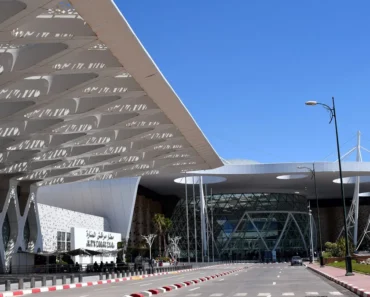
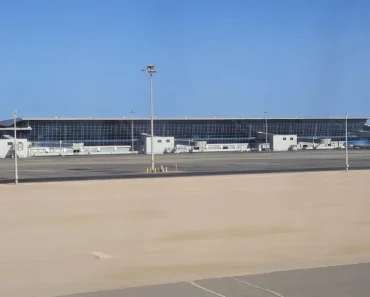
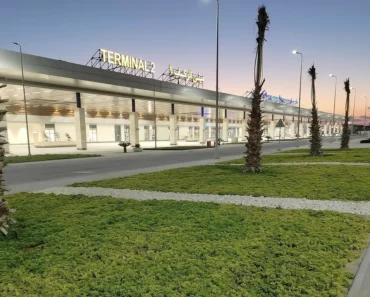
Agostinho-Neto International Airport operates with a single main terminal building handling both domestic and international passengers, with functional separation of arriving and departing flows. The airport is served by a single primary paved runway, oriented to accommodate the prevailing wind patterns of the Atlantic coastal zone; runway length and load-bearing specifications are sufficient to handle narrowbody and medium widebody jet aircraft, making it accessible to the Airbus A320 family, Boeing 737 variants, and the Boeing 787 or Airbus A330 class aircraft operated by carriers such as Ethiopian Airlines and Air France on longer sectors. Cargo facilities, while not on the scale of a major African freight hub, are operationally significant given the volume of oil-industry equipment, spare parts, and perishable goods moving through the airport. Apron capacity has historically been a constraint during peak rotations. By the classification standards used in African aviation analysis, PNR is best described as a medium-small international hub — larger and more complex than a purely domestic facility, but operating well below the throughput levels of major African gateway airports. According to publicly disclosed traffic data where available, passenger volumes reflect the airport’s specialised business-travel and industry character rather than mass-market leisure demand.
Visa Regulations
Travellers arriving at Agostinho-Neto International Airport are subject to the Republic of the Congo’s national visa regime. As of the most recently available public guidance, the Republic of the Congo does not operate a broad visa-free or visa-on-arrival programme for most long-haul source markets: citizens of the United States, United Kingdom, and European Union member states are generally required to obtain a visa in advance through a Congolese embassy or consulate. Some African Economic Community passport holders and citizens of specific ECCAS member states may benefit from reduced-documentation or visa-free arrangements under regional protocols, though implementation can vary. An eVisa facility has been discussed and partially implemented at various points, but travellers should not assume its availability or scope without checking current official guidance. Visa rules change — sometimes with limited public notice — and the information above is a general orientation only. Use our live visa requirements lookup tool for up-to-date entry requirements for your specific passport.
Recent Developments
In the period leading into 2026, Agostinho-Neto International Airport has seen several noteworthy developments. Ethiopian Airlines has consolidated and in some periods expanded its Central African network, with Pointe-Noire remaining a commercially prioritised stop given the business-travel yield profile of the route. Discussions around terminal rehabilitation and apron works have continued within the framework of the Congolese government’s broader infrastructure investment agenda, though confirmed project milestones should be sourced from official ANAC Congo or government communications. The post-pandemic recovery of international aviation across Central Africa has been uneven, and PNR — like many mid-tier African airports — has experienced both the return of suspended services and the renegotiation of commercial terms with carriers. Regional connectivity, particularly to Libreville and Brazzaville, has remained a priority for both commercial and administrative reasons. Industry observers have also noted growing interest from Gulf-based carriers in expanding their African footprint, though no confirmed new service to PNR from that region had been publicly announced at the time of writing.
News and Reports
Ongoing operational and regulatory news relating to Agostinho-Neto International Airport can be tracked through several authoritative channels. The Agence Nationale de l’Aviation Civile (ANAC Congo) is the primary regulatory body and publishes official notices, safety directives, and policy updates through its official communications. The Republic of the Congo’s Ministry of Transport issues infrastructure and concession-related announcements. At the pan-African level, IATA’s Africa and Middle East regional office produces periodic market analysis and traffic outlook reports that contextualise PNR within broader Central African aviation trends. The ICAO Western and Central Africa Regional Office (WACAF), based in Dakar, covers safety oversight and regulatory compliance matters for the region. Aviation trade publications including ch-aviation, Cirium, and The Africa Report provide commercial route and fleet intelligence. Researchers are advised to cross-reference multiple sources, as official Congolese government communications are not always promptly indexed by international aggregators.