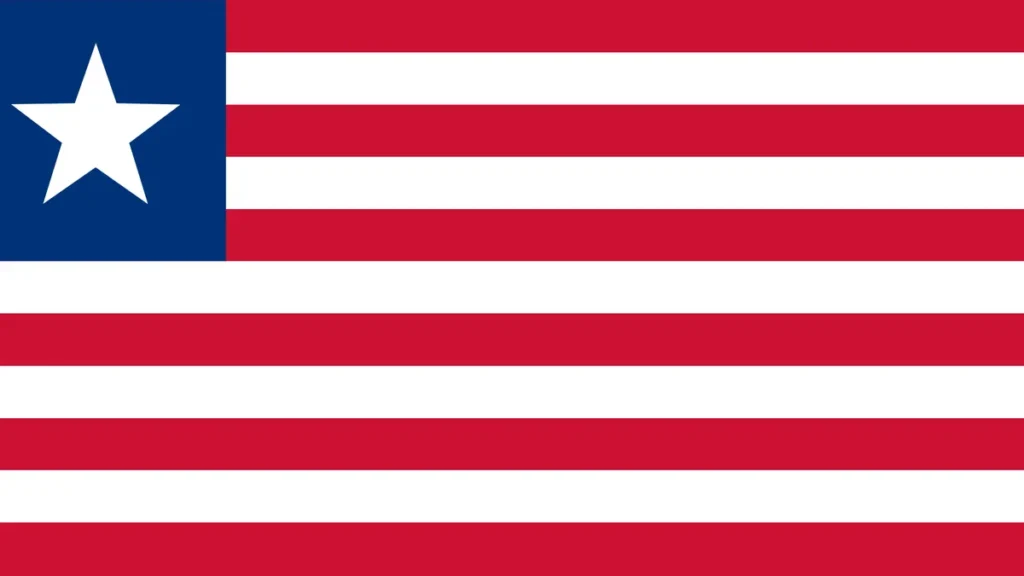
Liberia — Expert Briefing
Liberia at a glance: Africa’s oldest republic is navigating a fragile democratic transition under a football legend-turned-president, while its resource wealth, coastal position, and post-war recovery trajectory make it one of West Africa’s most closely watched frontier states.
Overview
Capital: Monrovia. Population: approximately 5.6 million (World Bank, 2024 estimate), with projections placing the figure closer to 5.8 million by 2026. Official language: English. Currency: Liberian dollar (LRD), which circulates alongside the US dollar in a formal dual-currency system. GDP per capita: low-income band, estimated at roughly USD 700–750 (current prices, World Bank 2024), placing Liberia among the lower quartile of sub-Saharan African economies by this measure. Liberia matters in 2026 for two intersecting reasons: it sits at the centre of a regional arc of instability stretching from Guinea through Sierra Leone, yet it has maintained multiparty democratic governance continuously since 2006 — a record that carries weight in a neighbourhood where coups have become routine. Its untapped iron ore, gold, rubber, and offshore oil potential, combined with a young, English-speaking population and a legal system rooted in common law, continue to attract cautious investor interest even as governance and infrastructure deficits remain severe.
Government and Politics
Liberia is a presidential republic, modelled closely on the United States constitutional framework. Executive power is vested in a directly elected president who serves as both head of state and head of government. Joseph Nyuma Boakai — a veteran politician and former vice-president who ran unsuccessfully for the presidency in 2017 — won the November 2023 run-off election, defeating incumbent George Weah with approximately 50.9 percent of the vote. Boakai, who assumed office in January 2024, leads the Unity Party and has positioned his administration around anti-corruption pledges and economic renewal, though early governance signals have been mixed. The legislature is bicameral: the Senate comprises 30 members serving nine-year terms, and the House of Representatives has 73 members serving six-year terms. Mid-term legislative elections are due in 2026 and are expected to serve as an early referendum on the Boakai administration’s performance. No significant constitutional amendments have been enacted since the 2011 referendum on moving election day, though periodic calls for constitutional reform — particularly around dual citizenship and land rights — remain live political issues. The National Elections Commission (NEC) has faced scrutiny over administrative capacity but has broadly maintained its independence. Liberia’s political landscape is characterised by strong personality-driven factionalism rather than deep ideological cleavage, and patronage networks remain central to political mobilisation.
Economy
Liberia’s GDP is estimated at approximately USD 4.3–4.5 billion (current prices, 2024), with real growth running at around 5–6 percent annually — a rate that looks respectable in headline terms but is insufficient to meaningfully reduce poverty given population growth and the depth of post-conflict underdevelopment. The economy rests on four primary pillars: mining (iron ore and gold), rubber and palm oil agriculture, forestry, and a growing services sector anchored in Monrovia. Iron ore is the dominant export earner; the Nimba Range deposits, operated by ArcelorMittal under a mineral development agreement renegotiated in 2022, represent the single largest foreign investment in the country. Rubber — historically associated with the Firestone plantation, one of the world’s largest — remains a significant employer. The Liberian dollar has faced persistent depreciation pressure against the US dollar, contributing to imported inflation and eroding household purchasing power; the Central Bank of Liberia has pursued a managed float with limited reserves. External debt stands at roughly 50–55 percent of GDP, with the IMF and World Bank among the principal creditors; Liberia completed its HIPC debt relief process in 2010 but has accumulated new obligations since. The single most consequential economic story of the past 24 months is the renegotiation and expansion of the ArcelorMittal iron ore agreement, which the Boakai government has signalled it intends to revisit further to increase government revenue share — a process that will define the country’s fiscal trajectory for the next decade and is being watched closely by other mining investors assessing Liberia’s contract stability.
Demographics and Society
Liberia’s population is young and rapidly urbanising: the median age is estimated at around 18–19 years, and Monrovia — the only city of significant scale — is home to roughly 1.5 million people, representing a quarter of the national population. Urban growth is outpacing infrastructure provision at a rate that creates acute pressure on housing, water, sanitation, and electricity. Ethnically, Liberia is home to 16 recognised indigenous groups, the largest of which include the Kpelle, Bassa, Grebo, Gio (Dan), Mano, and Kru. The Americo-Liberian community — descendants of freed American slaves who founded the republic in 1847 and dominated political life until the 1980 coup — remains economically influential but numerically small. Christianity is the majority religion, practised by an estimated 85 percent of the population, with Islam concentrated in the north and northwest, particularly among Mandingo and Vai communities. English is the official and commercial language, but Liberian Kreyol (a creole English) functions as the de facto lingua franca across ethnic lines. The defining social trend of the current moment is a youth employment crisis: with more than 60 percent of the population under 25 and formal sector job creation lagging far behind demographic growth, urban youth unemployment is generating both social tension and a significant diaspora outflow, particularly toward the United States, where a substantial Liberian community — estimated at over 200,000 — sends remittances that constitute a meaningful share of household income for many families.
Key Issues Right Now
Anti-corruption and governance credibility. President Boakai came to power on an explicit anti-corruption platform, and the early months of his administration have been scrutinised intensely for signs of follow-through. The Liberia Anti-Corruption Commission (LACC) has historically lacked prosecutorial independence, and civil society groups have pressed for structural reform. Several high-profile cases involving officials from the Weah era remain unresolved, and questions about procurement transparency in infrastructure contracts have already surfaced under the new government. Whether Boakai can demonstrate credible institutional reform — rather than selective accountability — will determine both donor confidence and domestic political legitimacy heading into the 2026 legislative cycle.
Regional security spillover from Guinea and beyond. Liberia shares borders with Guinea, Sierra Leone, and Côte d’Ivoire — three countries with their own histories of instability. Guinea’s military junta, in power since the 2021 coup, has created an uncertain security environment along Liberia’s northern border, with cross-border movement of arms and the potential for refugee flows a persistent concern. The broader Sahel crisis has not yet directly penetrated Liberia’s territory, but security analysts at institutions including the Africa Center for Strategic Studies have flagged the country’s porous borders, limited security sector capacity, and history of armed group activity as vulnerability factors that merit sustained attention. Liberia’s own Armed Forces of Liberia (AFL), rebuilt with US assistance after the civil wars, remain small and under-resourced.
Climate vulnerability and coastal erosion. Liberia’s Atlantic coastline — including Monrovia itself — is experiencing accelerating erosion, with several urban neighbourhoods and critical infrastructure directly threatened. The country ranks among the most climate-vulnerable in West Africa relative to adaptive capacity: its economy depends heavily on rain-fed agriculture and natural resource extraction, both sensitive to shifting precipitation patterns. Flooding in Monrovia has become a near-annual emergency, and the government’s capacity to finance adaptation measures is severely constrained by fiscal pressures. International climate finance — including potential access to the Loss and Damage Fund established at COP27 and operationalised at COP28 — represents a significant policy priority for the Boakai administration in multilateral forums.
Travel and Connectivity
Roberts International Airport (ROB), located approximately 60 kilometres east of Monrovia near Harbel, is Liberia’s principal international gateway and the only airport handling scheduled long-haul traffic. Regional connections operate through carriers including Brussels Airlines, Air Maroc, and several West African operators, with Monrovia linked to Accra, Abidjan, Dakar, and Freetown among other regional hubs. Spriggs Payne Airport, within Monrovia city limits, handles domestic and some regional charter traffic. Beyond Monrovia, principal cities of note include Gbarnga (Bong County, a commercial and administrative hub in the interior), Buchanan (Grand Bassa County, the country’s main port), Voinjama (Lofa County, near the Guinea border), and Harper (Maryland County, in the southeast). Tourism remains nascent: Liberia’s beaches, rainforest reserves — including Sapo National Park, one of West Africa’s largest remaining primary forest areas — and cultural heritage offer genuine potential, but visitor numbers are low, accommodation infrastructure outside Monrovia is limited, and the country carries residual reputational weight from its civil war period. Internet penetration stands at approximately 30–35 percent of the population, concentrated heavily in Monrovia and other urban centres; rural connectivity remains very limited. Mobile money adoption has grown substantially, with operators including Lonestar Cell MTN and Orange Liberia offering mobile financial services that are increasingly integrated into everyday commerce, partially compensating for low formal banking penetration, which remains below 20 percent of adults.
Further Research
Analysts and researchers seeking to deepen their understanding of Liberia should consult the following institutions and resources. The Central Bank of Liberia publishes monetary policy reports, exchange rate data, and financial sector statistics that are essential for any economic analysis. The Liberia National Bureau of Statistics is the primary source for demographic, household survey, and national accounts data, including the Liberia Demographic and Health Survey series. The World Bank Liberia country page aggregates development indicators, project documentation, and country economic memoranda, and is among the most accessible entry points for investors and policy researchers. The Africa Center for Strategic Studies (a US Department of Defense academic institution) produces regular security and governance analysis covering Liberia within its West Africa regional coverage, including mapping of conflict dynamics and civil-military relations. The Governance Commission of Liberia publishes policy reform documents and constitutional review materials relevant to anyone tracking institutional development. Finally, the Carter Center has maintained a long-term election observation and rule-of-law programme in Liberia and its published election reports and governance assessments offer detailed, ground-level analysis not easily replicated from secondary sources.