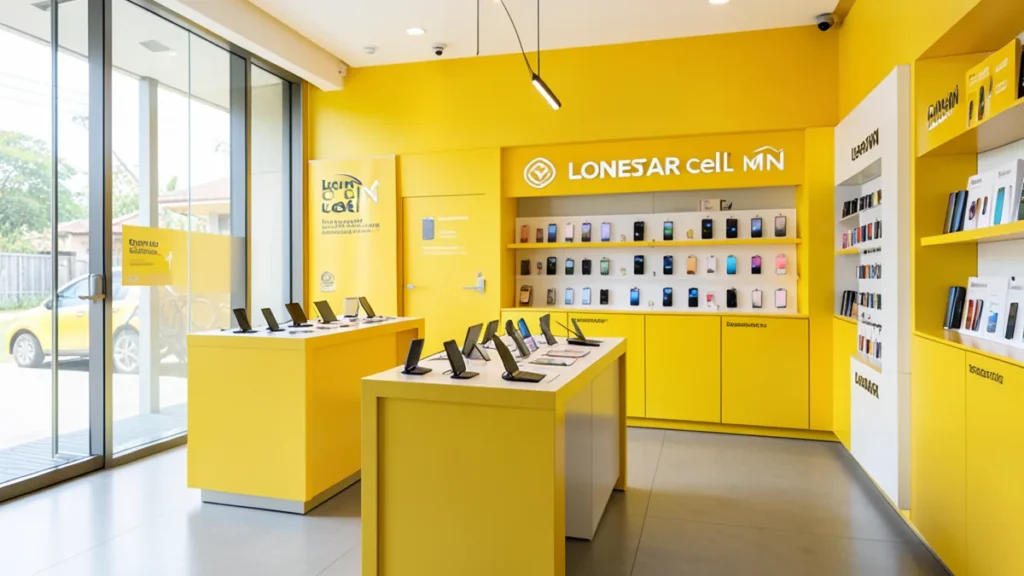
Lonestar Cell MTN
Lonestar Cell MTN
About
Lonestar Cell MTN is Liberia’s most established mobile network operator and, by most industry measures, the country’s market-leading telecommunications brand. Headquartered in Monrovia and operating under the global MTN Group umbrella, the operator provides 2G, 3G, and 4G services across a country where mobile connectivity remains the primary — and for many communities, the only — form of electronic communication. Its scale, brand recognition, and network depth give it a structural advantage in a market that is still maturing but increasingly strategically important to pan-African investors.
The operator traces its origins to Lonestar Communications Corporation, which was among the first private entities to receive a mobile licence in Liberia in the early 2000s as the country began rebuilding its telecommunications infrastructure following years of civil conflict. The company launched commercial GSM services and rapidly expanded its footprint as post-war reconstruction accelerated demand for voice connectivity.
MTN Group, the Johannesburg-listed pan-African and Middle Eastern telecoms giant, acquired a controlling stake in the business and subsequently rebranded the operation as Lonestar Cell MTN, integrating it into its wider West African portfolio. The dual-name branding — preserving the legacy “Lonestar Cell” identity alongside the MTN masterbrand — reflects both local heritage and the operator’s alignment with MTN Group’s continental strategy, technology roadmap, and procurement scale.
Country market context
Liberia’s mobile market is regulated by the Liberia Telecommunications Authority (LTA), which oversees licensing, spectrum allocation, and consumer protection across the sector. Mobile penetration, while growing, remains below the West African regional average, reflecting the country’s low GDP per capita, challenging terrain, and infrastructure gaps inherited from decades of instability. According to the most recent regulator data, the market supports a small number of licensed mobile operators — with Lonestar Cell MTN and Orange Liberia (formerly Cellcom) constituting the two principal competitors — alongside smaller players with more limited reach. The competitive dynamic is broadly a two-horse race at the national level, with market share concentrated among the leading pair and meaningful differentiation driven by network quality, mobile money adoption, and data pricing. → Read the Liberia expert briefing
Network and technology
Lonestar Cell MTN operates 2G (GSM/EDGE), 3G (UMTS/HSPA), and 4G (LTE) networks, making it one of the most technologically diversified operators in the Liberian market. Its 4G footprint is concentrated in Monrovia and major urban centres, while 2G and 3G coverage extends into secondary towns and rural corridors. The operator has invested in fibre backhaul to support data quality on its LTE network, and its position within the MTN Group ecosystem provides access to shared international gateway infrastructure and roaming agreements across MTN’s 18-plus market footprint. Spectrum holdings are governed by LTA allocations; specific band assignments are subject to periodic regulatory review. No commercial 5G launch has been announced as of early 2026, consistent with the broader trajectory of frontier markets where 4G consolidation remains the near-term priority.
Products and services
The operator’s core consumer offering spans prepaid and postpaid voice, SMS, and mobile data services. On the financial services side, Lonestar Cell MTN operates MoMo — MTN Group’s flagship mobile money product — which provides wallet, person-to-person transfer, merchant payment, airtime top-up, and bill payment functionality to subscribers, including a significant unbanked population. MoMo’s integration into MTN’s cross-border interoperability framework is a strategic differentiator in a country where formal banking penetration is limited. The enterprise segment offers dedicated data connectivity, corporate SIM management, and value-added services targeted at NGOs, government agencies, and the private sector — all of which represent a meaningful share of Liberia’s formal economy. Fixed broadband and home internet products have been offered in urban areas, though mobile data remains the dominant access mode nationally.
Subscribers and market position
Lonestar Cell MTN is widely regarded as one of the country’s two largest operators by active subscriber base, with industry estimates suggesting it holds a leading or near-leading share of the national SIM market. Its subscriber base skews toward prepaid customers, consistent with the broader West African pattern, and mobile money registered users represent a growing subset of its active base. The operator’s brand equity, built over more than two decades of operation, and its association with the MTN Group masterbrand provide resilience against competitive pressure from smaller or newer entrants.
Financial situation
Lonestar Cell MTN is not separately listed on any stock exchange; its financial results are consolidated within MTN Group’s reporting, which is listed on the Johannesburg Stock Exchange (JSE). MTN Group periodically discloses segmental or country-level performance data in its annual and interim results, though granular Liberia-specific revenue and EBITDA figures are not always broken out publicly. Industry analysts characterise the Liberian operation as a growth-stage market within the MTN portfolio — one where revenue trajectory is positive on the back of data and mobile money uptake, but where macroeconomic headwinds, currency exposure to the Liberian dollar, and infrastructure investment requirements continue to weigh on near-term profitability. No significant ownership restructuring or divestiture has been publicly announced as of early 2026.
Recent developments
Over the past 24 months, Lonestar Cell MTN’s most notable activity has centred on the continued rollout and optimisation of its 4G LTE network, with reported site additions in peri-urban and secondary market areas. The operator has also advanced the penetration of MTN MoMo, aligning with MTN Group’s group-wide strategy of treating mobile financial services as a standalone growth vertical. Regulatory engagement with the LTA has included ongoing discussions around quality-of-service benchmarks and spectrum renewal timelines, areas of focus across the Liberian market as a whole. No merger, acquisition, or change of control transaction has been publicly confirmed during this period. The operator has continued to expand its agent and distribution network as a route to deepening both airtime and MoMo reach in underserved communities.