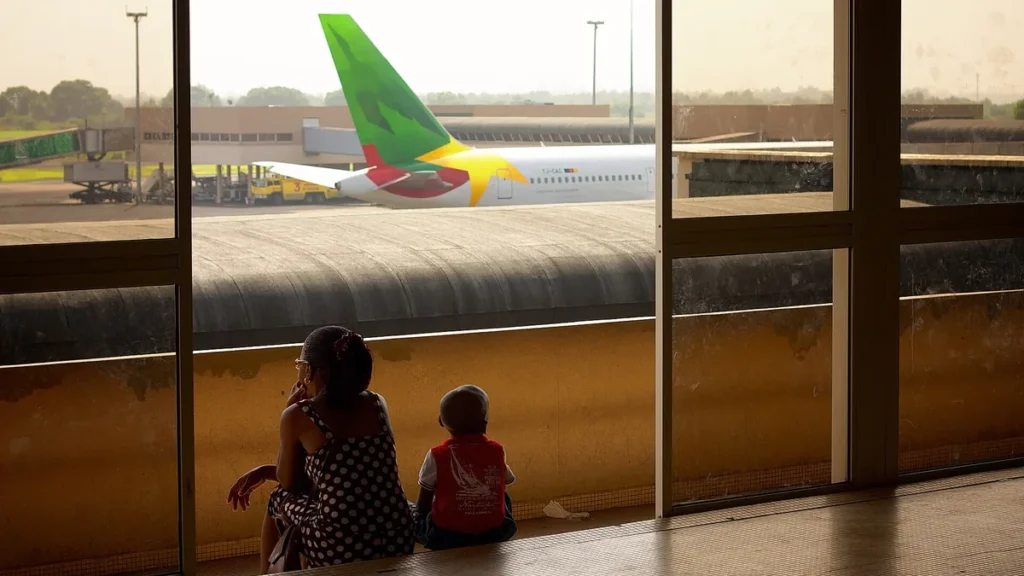
Douala International Airport
Douala International Airport
Douala International Airport (DLA) — Airport Profile
Douala International Airport (IATA: DLA | ICAO: FKKD) is Cameroon’s principal gateway to the world and one of Central Africa’s most strategically significant aviation hubs. Serving the country’s largest city and commercial capital, the airport connects West and Central African trade corridors with intercontinental routes to Europe, the Middle East, and beyond. For travellers, logistics professionals, journalists, and aviation analysts tracking the pulse of sub-Saharan Africa, Douala remains an indispensable node in the continent’s air transport network.
About
Douala International Airport sits approximately ten kilometres from the city centre of Douala, in the Littoral Region of Cameroon. The airport has served commercial aviation since the mid-twentieth century, with its origins traceable to airfield infrastructure developed during the French colonial administration. It was formally developed as a civilian international facility in the post-independence era and has since grown in step — if not always in pace — with Douala’s emergence as the economic engine of Central Africa. The airport is operated under the authority of the Cameroonian state, with Aéroport de Douala falling under the oversight of the Autorité Aéronautique du Cameroun (AAC) and managed through Aéroports du Cameroun (ADC), the state-designated airport management company.
Over the decades, the airport has undergone successive rounds of infrastructure improvement, including runway resurfacing programmes and terminal upgrades intended to raise passenger handling capacity and improve safety compliance with ICAO standards. Discussions around more comprehensive modernisation — including expanded terminal facilities and enhanced cargo infrastructure — have been a recurring feature of Cameroonian aviation policy. The pace and funding of such works have at times been subject to delays, a pattern common across many African airport development programmes where financing, procurement, and regulatory approvals intersect with complex institutional dynamics.
The airport operates a single primary runway (designated 12/30), which accommodates a range of narrowbody and widebody commercial aircraft. Its classification as an international hub reflects both its scheduled route network and its function as a transit and cargo point for the broader Central African sub-region, serving landlocked neighbours including Chad and the Central African Republic.
Country
Cameroon is a lower-middle-income country in Central Africa, bordered by Nigeria to the west, Chad and the Central African Republic to the east, and the Republic of Congo, Gabon, and Equatorial Guinea to the south. Its capital is Yaoundé, though Douala — the country’s largest city — functions as the commercial and financial heart of the nation. With a population estimated at over 30 million people as of the mid-2020s, Cameroon occupies a pivotal geographic position often described as “Africa in miniature” for its ecological and cultural diversity. The country is a member of the Economic Community of Central African States (ECCAS) and the African Union, and its aviation sector is regulated in alignment with the Yamoussoukro Decision framework for liberalised African air transport.
→ Read the Cameroon expert briefing
Airlines Based Here
Douala International Airport serves as the primary operational base for Cameroon Airlines Corporation (Camair-Co), the state-owned national carrier. Camair-Co has historically used Douala as its hub for both domestic services — connecting Douala to Yaoundé, Garoua, Maroua, and Bafoussam — and for select regional international routes. The carrier has faced well-documented operational and financial challenges over the years, and its network and fleet status should be verified against current schedules before travel planning.
Beyond the national carrier, Douala attracts a significant number of visiting international carriers that treat the airport as a destination or turnaround point rather than a base. These include major European carriers such as Air France, which has maintained a long-standing Paris Charles de Gaulle–Douala service, and Brussels Airlines, which connects Douala to its Brussels hub as part of its broader African network. Ethiopian Airlines, one of the continent’s most expansive carriers, serves Douala as part of its Central and West African route structure via Addis Ababa. Kenya Airways connects Douala to Nairobi on its pan-African network. Turkish Airlines has also operated services linking Douala to Istanbul, reflecting the growing importance of Gulf and Near Eastern hub carriers in African aviation. Travellers should confirm current schedules directly with carriers, as African route networks remain subject to seasonal and commercial adjustment.
Flights and Destinations
The airport supports a mixed network of intercontinental, continental, and sub-regional services. Intercontinental routes connect Douala primarily to European hubs — Paris, Brussels, and Istanbul being the most consistently served — reflecting both historical ties and the preferences of the Cameroonian diaspora. Within Africa, the airport offers connections to Nairobi, Addis Ababa, Libreville (Gabon), Lagos (Nigeria), Abidjan (Côte d’Ivoire), Brazzaville (Republic of Congo), and Bangui (Central African Republic), among others. Domestic services link Douala to Yaoundé Nsimalen International Airport and to secondary cities in Cameroon’s northern and western regions. The overall network positions Douala as a functional, if modestly scaled, hub for travellers moving between Central Africa and the wider world, with onward connections typically requiring a transit through a major European or African hub city.
Facilities and Capacity
Douala International Airport operates from a single terminal building that handles both international and domestic passenger flows, with segregated processing areas for arriving and departing international passengers. The terminal includes standard commercial facilities — check-in counters, immigration and customs halls, a departure lounge with retail and food and beverage concessions — though independent traveller reviews and industry assessments have historically noted that the facility operates under capacity pressure during peak periods. The airport is generally classified as a medium-sized regional hub by African aviation standards, handling a passenger throughput that, according to publicly disclosed traffic data from Aéroports du Cameroun, places it among the busier airports in the ECCAS sub-region, though well below the volumes recorded at major continental hubs such as Johannesburg, Cairo, or Addis Ababa.
Cargo infrastructure at Douala is of particular strategic importance given the airport’s role in serving landlocked Central African states. A dedicated cargo apron and freight handling facilities support both belly-hold cargo on passenger services and dedicated freighter operations. Runway 12/30 is paved and maintained to accommodate Code C and Code D aircraft, including widebody types such as the Boeing 787 and Airbus A330, which are operated by several of the international carriers serving the route. Expansion and modernisation plans — including proposals for terminal capacity increases and airside improvements — have been discussed at the governmental and concessionary level, though the timeline and financing of such projects should be verified against current official announcements from ADC and the Cameroonian Ministry of Transport.
Visa Regulations
Travellers arriving at Douala International Airport are subject to Cameroon’s national visa regime, which as of 2026 requires most foreign nationals to hold a valid visa prior to arrival. Citizens of the United States, the United Kingdom, and European Union member states are generally required to obtain a visa in advance through a Cameroonian diplomatic mission or, where available, through an official eVisa platform. Cameroon has made incremental progress toward expanding electronic visa availability, and travellers are advised to check the current status of eVisa processing for their nationality before departure. Within the African continent, visa requirements vary considerably: citizens of some ECCAS member states benefit from reduced or waived visa requirements under regional agreements, while nationals of other African countries may still require advance visas. Visa on arrival availability has been limited and inconsistent; travellers should not assume this option is available without prior official confirmation. Visa policy is subject to change at short notice.
→ For the most current visa requirements by nationality, use our live lookup tool: Visa Requirements
Recent Developments
Over the 24 months leading into 2026, Douala International Airport has seen a number of operationally significant developments. Industry estimates suggest that post-pandemic traffic recovery has continued to consolidate, with seat capacity on European routes broadly returning to or approaching pre-2020 levels. Turkish Airlines has reinforced its West and Central African footprint, and its Douala service has been cited in regional aviation commentary as part of a broader pattern of non-traditional carriers deepening African market penetration. On the infrastructure side, works related to airside safety compliance and terminal maintenance have been reported by ADC, though the scope and completion status of specific projects should be confirmed through official channels. Camair-Co’s operational situation has remained a subject of scrutiny from both the Cameroonian government and regional aviation observers, with fleet availability and route reliability continuing to attract attention. The broader regulatory environment has also been shaped by Cameroon’s engagement with the African Union’s Single African Air Transport Market (SAATM) initiative, which — if fully implemented — would have material implications for route licensing and carrier access at Douala.
News and Reports
Researchers and journalists tracking developments at Douala International Airport have several authoritative source channels to draw upon. The Autorité Aéronautique du Cameroun (AAC) publishes regulatory notices and safety-related communications relevant to the airport’s operational status. Aéroports du Cameroun (ADC) periodically releases traffic data and infrastructure announcements through official government and corporate communications. At the continental level, IATA’s Africa regional office produces periodic market analysis and airport performance commentary that contextualises Douala within broader sub-Saharan aviation trends. The ICAO Western and Central African Regional Office (WACAF), based in Dakar, is the relevant ICAO regional body for safety oversight and standards compliance matters affecting Cameroonian aviation. Aviation trade publications including ch-aviation, Anna.aero, and The Africa Report’s business aviation coverage provide ongoing commercial and operational news. Travellers and analysts are advised to cross-reference multiple sources, as reporting on Central African aviation can vary in timeliness and depth.
Related Research
- Cameroon Expert Briefing — in-depth political, economic, and business environment analysis
- Cameroon Statistics — demographic, economic, and trade data
- African Airports — comparative profiles across the continent
- African Airlines — carrier profiles, fleet data, and route network analysis
- Visa Requirements — live lookup tool for entry requirements by nationality
- Country Comparison — benchmark Cameroon against peer economies and aviation markets