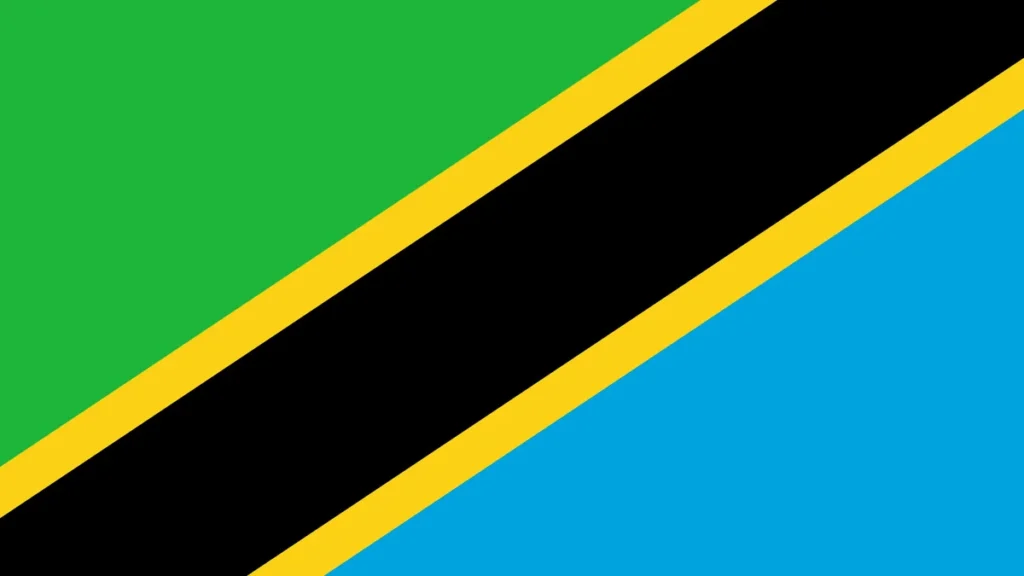
Tanzania — Expert Briefing
Tanzania at a glance: A vast, resource-rich East African nation navigating a delicate balance between democratic consolidation, rapid demographic growth, and its emergence as a pivotal corridor state in one of the continent’s most contested geopolitical regions.
Overview
Tanzania is a presidential republic located on the eastern coast of sub-Saharan Africa, bordered by Kenya and Uganda to the north, Rwanda, Burundi, and the Democratic Republic of Congo to the west, and Zambia, Malawi, and Mozambique to the south. The capital for government functions is Dodoma, designated as the official capital since 1996, though Dar es Salaam remains the commercial and financial hub and the country’s largest city. The semi-autonomous archipelago of Zanzibar, comprising Unguja and Pemba islands, operates under its own government within the union structure. Tanzania’s population is estimated at approximately 67–68 million as of 2025–2026, making it the most populous country in East Africa and one of the fastest-growing populations on the continent, according to United Nations projections. Official languages are Swahili (Kiswahili) and English; Swahili functions as the true lingua franca across the mainland and is a cornerstone of national identity. The currency is the Tanzanian shilling (TZS). GDP per capita sits in the lower-middle-income band, estimated at roughly USD 1,200–1,300 in nominal terms, though purchasing-power-adjusted figures are somewhat higher. Tanzania matters in 2026 for two converging reasons: it sits at the geographic and logistical heart of the Great Lakes crisis, serving as the primary humanitarian and trade corridor for eastern DRC, and its vast reserves of critical minerals — including nickel, lithium, and graphite — have placed it squarely in the sightlines of both Western and Chinese strategic investment at a moment when global supply-chain competition is intensifying.
Government and Politics
Tanzania is a presidential republic with a unitary structure on the mainland and a semi-autonomous government in Zanzibar — a constitutional arrangement that has produced persistent tension since the union of Tanganyika and Zanzibar in 1964. Executive power is concentrated in the presidency. Samia Suluhu Hassan, who assumed office in March 2021 following the death of President John Magufuli, is the current head of state; she is Africa’s first female president and has pursued a notably more open political posture than her predecessor, re-engaging with Western donors and relaxing some restrictions on civil society and the press. Hassan is a member of the ruling Chama Cha Mapinduzi (CCM), the party that has governed Tanzania without interruption since independence — one of the longest-ruling single parties on the continent. The legislature is the unicameral National Assembly (Bunge), which includes 393 seats; a proportion of seats are reserved for women under constitutional quota provisions. The last general election was held in October 2020, which CCM won by a wide margin amid credible opposition complaints of irregularities and suppression. The next general election is scheduled for October 2025, and it is shaping up as a significant test of whether Hassan’s liberalising signals translate into a genuinely competitive political environment. Zanzibar holds its own parallel elections simultaneously. No major constitutional amendments have been enacted in the past two years, though debate over a new constitution — a process that stalled under Magufuli — has been periodically revived. The opposition landscape remains fragmented, with Chadema (Chama cha Demokrasia na Maendeleo) as the principal challenger party, though its leadership has faced repeated legal harassment.
Economy
Tanzania’s GDP is estimated at approximately USD 80–85 billion in nominal terms as of 2025, placing it among the larger economies in sub-Saharan Africa. The economy is broadly diversified by African standards, with agriculture remaining the backbone — employing roughly 65 percent of the workforce and contributing around a quarter of GDP — while services, particularly tourism and financial services, have grown substantially. Key exports include gold (consistently the largest single export earner), coffee, tea, cashews, tobacco, and horticultural products. Tourism, centred on the Serengeti ecosystem, Kilimanjaro, and the Zanzibar archipelago, is a critical foreign-exchange earner and recovered strongly post-pandemic. The Tanzanian shilling has faced moderate depreciation pressure in line with broader emerging-market currency trends, and the Bank of Tanzania has maintained a broadly orthodox monetary stance. External debt remains a concern: Tanzania has borrowed significantly from China under Belt and Road-aligned infrastructure agreements, and the terms of some of those loans — particularly around the Julius Nyerere Hydropower Project on the Rufiji River — have attracted scrutiny from civil society and international financial institutions. The single most consequential economic story of the past 24 months is the accelerating development of Tanzania’s liquefied natural gas (LNG) sector. After years of delay, the government reached a final investment decision framework with Shell and Equinor for an onshore LNG terminal project valued at over USD 30 billion — potentially the largest single private investment in African history. If it proceeds on schedule, it would transform Tanzania’s fiscal position within a decade, though it also raises well-documented questions about the resource curse, local content, and environmental impact on the Lindi and Mtwara coastal regions.
Demographics and Society
Tanzania’s population of approximately 67–68 million is growing at roughly 2.9–3.0 percent per annum, one of the higher rates globally, with a median age estimated below 18 years. This demographic profile creates both an extraordinary potential dividend and acute pressure on education, healthcare, and employment systems. The country is home to more than 120 ethnic groups, none of which constitutes a majority — a diversity that has historically been managed through a strong Swahili-language national identity and the integrating ideology of Ujamaa, Julius Nyerere’s African socialist framework. The largest groups include the Sukuma, Chagga, Haya, Nyamwezi, and Makonde, among many others. Zanzibar’s population is predominantly of Arab-African heritage and largely Muslim. On the mainland, Christianity and Islam are roughly equally represented, with indigenous religious practices also widespread; religious coexistence has generally been stable, though intercommunal tensions have occasionally surfaced in coastal regions and Zanzibar. Urbanisation is accelerating: Dar es Salaam is growing at among the fastest rates of any city in the world and is projected to become one of Africa’s megacities within two decades, with current population estimates ranging from 7 to 9 million in the greater metropolitan area. The defining social trend of this moment is the rapid expansion of mobile-phone-enabled financial services and digital commerce among young urban Tanzanians, which is reshaping consumption patterns, small-business formation, and political communication in ways that outpace regulatory frameworks and that the 2025 election cycle will stress-test in real time.
Key Issues Right Now
The Great Lakes spillover and regional security. Tanzania’s western border regions — particularly Kigoma and Rukwa — are under sustained pressure from the ongoing conflict in eastern DRC, where M23 and affiliated armed groups, alongside the involvement of Rwandan forces, have produced one of the largest displacement crises in the world. Tanzania hosts several hundred thousand refugees, primarily Congolese and Burundian, and Dar es Salaam has played an active if sometimes ambiguous diplomatic role in the East African Community (EAC)-led peace process. The relationship with Rwanda is particularly fraught: Kigali and Dar es Salaam have competing interests in eastern DRC’s mineral wealth and transit routes, and the EAC’s credibility as a mediating body has been questioned following the withdrawal of the EAC Regional Force in early 2024. How Tanzania positions itself in the next phase of DRC diplomacy — including its relationship with the new SADC-led framework — will define its regional standing for years.
The 2025 general election and democratic trajectory. The October 2025 elections represent the most consequential political moment since President Hassan took office. Her administration has made genuine gestures toward political opening — lifting bans on opposition rallies, allowing some previously suppressed media to resume operations, and releasing a number of political detainees — but structural advantages for CCM remain overwhelming, and the legal and institutional environment for opposition activity is still heavily constrained. International observers, including the African Union and the Carter Center, will scrutinise the process closely. The outcome will determine whether Tanzania’s democratic trajectory bends toward genuine pluralism or whether the liberalisation under Hassan proves largely cosmetic. Youth voter registration and social-media-driven political mobilisation are wildcards that make this cycle harder to predict than previous ones.
Climate vulnerability and the water-energy nexus. Tanzania is acutely exposed to climate variability. The Julius Nyerere Hydropower Project — a 2,115-megawatt dam on the Rufiji River that is now largely complete and entering commissioning phases — is intended to resolve chronic electricity deficits that have long constrained industrial development. However, the project’s output is directly dependent on rainfall patterns in the Southern Highlands, which are becoming less predictable. The 2023–2024 El Niño cycle caused severe flooding in parts of the country while simultaneously threatening reservoir levels elsewhere. Agricultural communities across the country face increasing pressure from erratic rains, and the government’s climate adaptation frameworks, while formally ambitious, remain underfunded. Tanzania’s coastline and the Zanzibar islands are also exposed to sea-level rise and coral bleaching, with direct consequences for the tourism and fishing sectors.
Travel and Connectivity
Tanzania’s principal international gateway is Julius Nyerere International Airport (DAR/HTDA) in Dar es Salaam, which handles the majority of international traffic and has undergone significant expansion. Kilimanjaro International Airport (JRO/HTKJ), located between Arusha and Moshi, serves the northern safari circuit and receives direct regional and charter flights. Abeid Amani Karume International Airport (ZNZ/HTZA) on Zanzibar island handles substantial leisure traffic, particularly from Europe and the Gulf. Principal cities beyond Dar es Salaam include Dodoma (the political capital, with improving road and rail links), Arusha (the safari and EAC diplomatic hub), Mwanza (the Lake Victoria commercial centre), and Mbeya (a key southern corridor node). Tanzania’s tourism profile is among the strongest in Africa: the Serengeti–Ngorongoro–Tarangire northern circuit, Mount Kilimanjaro, the Selous/Nyerere National Park in the south, and the Zanzibar beach and cultural offer collectively attract over 1.5 million international visitors in strong years, with the sector targeting significant growth. Internet penetration stands at approximately 45–50 percent of the population, with mobile internet accounting for the overwhelming majority of connections; fixed broadband remains limited outside Dar es Salaam. Mobile money adoption is exceptionally high by global standards: M-Pesa (Vodacom Tanzania) and Tigo Pesa are deeply embedded in daily commerce, with interoperability between platforms having been mandated by the Bank of Tanzania, making Tanzania one of the more advanced mobile-money ecosystems on the continent.
Further Research
Analysts and researchers seeking to go deeper on Tanzania should consult the following institutions and resources. The Tanzania National Bureau of Statistics (NBS) publishes GDP estimates, census data, and household survey results and is the authoritative source for domestic economic and demographic figures. The Bank of Tanzania publishes monetary policy statements, financial stability reports, and balance-of-payments data that are essential for any economic analysis. The World Bank Tanzania country page provides regularly updated macro data, project documentation, and analytical notes, including assessments of the LNG sector and infrastructure investment. The Africa Center for Strategic Studies (a US Department of Defense academic institution) publishes security-focused briefings on the Great Lakes region and Tanzania’s role within it that are freely available and rigorously sourced. The Zanzibar Commission for Tourism and the Tanzania Tourist Board are the relevant official bodies for travel and investment data in their respective jurisdictions. For academic and policy depth, the Institute of Development Studies (IDS) at the University of Sussex and the African Studies Centre Leiden both maintain substantial Tanzania-focused research programmes covering governance, rural livelihoods, and political economy.