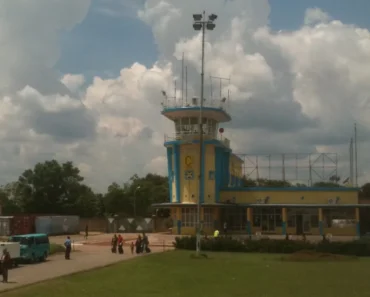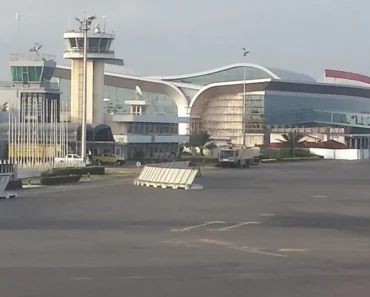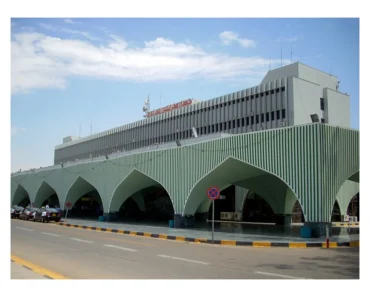
Harry Mwanga Nkumbula International Airport
Harry Mwanga Nkumbula International Airport
About
Harry Mwanga Nkumbula International Airport (IATA: LVI / ICAO: FLLI) is Zambia’s principal gateway for international leisure travel, sitting at the edge of one of the most visited natural wonders on the African continent. Named after the Zambian independence-era politician and trade union leader Harry Mwanga Nkumbula, the airport serves Livingstone — the historic colonial-era city that borders the Zambezi River and lies within walking distance of Victoria Falls. In a regional aviation landscape dominated by capital-city hubs, LVI occupies a distinctive niche: it is a purpose-built tourism airport whose passenger volumes are tied directly to the fortunes of safari travel, adventure tourism, and the broader Southern African leisure circuit.
The airport’s origins trace to the early decades of Zambian independence, when a modest aerodrome served domestic and limited regional traffic. A significant modernisation programme in the early 2000s upgraded the facility to international standards, extending runway capacity and constructing a dedicated international terminal building to accommodate the growing influx of visitors drawn to Victoria Falls and the surrounding national parks. Ownership and operation fall under the Zambia Airports Corporation Limited (ZACL), the state-owned entity that manages Zambia’s principal airports, including Kenneth Kaunda International Airport in Lusaka.
Subsequent years brought incremental improvements to apron space, passenger processing infrastructure, and airside retail. The airport has historically operated as a small-to-medium international hub by African standards, with its traffic profile shaped almost entirely by seasonal tourism peaks rather than business or transit demand. Expansion discussions have periodically surfaced at the government and ZACL level, reflecting ambitions to position Livingstone as a competitive entry point for the broader Kavango–Zambezi Transfrontier Conservation Area, which spans five countries.
Country
Zambia is a landlocked republic in south-central Africa, bordered by eight countries including Zimbabwe, Tanzania, Mozambique, Botswana, Namibia, Angola, the Democratic Republic of Congo, and Malawi. Its capital is Lusaka, and the country’s population is estimated at well over nineteen million people, making it a mid-sized nation within the Southern African Development Community (SADC) bloc. Zambia is a member of the African Union and the Common Market for Eastern and Southern Africa (COMESA), and its economy is anchored by copper mining, agriculture, and a tourism sector that has grown steadily in strategic importance. The country’s political stability relative to several of its neighbours has made it an increasingly attractive destination for both investors and international visitors.
→ Read the Zambia expert briefing
Airlines Based Here
Harry Mwanga Nkumbula International Airport does not function as a primary hub for any single carrier in the conventional sense, but several airlines treat it as a focus city or a key spoke within their Southern African networks. Proflight Zambia, the country’s leading domestic and regional private carrier, operates scheduled services through LVI and represents the closest equivalent to a home carrier at the airport, connecting Livingstone to Lusaka and select regional points. Zambia’s national carrier landscape has undergone significant change in recent years following the suspension of Zambia Airways’ revived operations, leaving Proflight as the dominant Zambian-registered operator at the airport.
International visiting carriers have historically included South African Airways and its low-cost affiliate Mango (prior to Mango’s operational suspension), as well as British Airways operated by Comair before that airline’s liquidation. Kenya Airways has maintained a presence in the Livingstone market. Charter operators — including specialist safari and luxury travel charter companies — contribute meaningfully to LVI’s traffic, particularly during peak Southern Hemisphere dry-season months between May and October. The airport’s slot and gate structure is modest enough that even a single new scheduled carrier represents a material change to its network profile.
Flights and Destinations
The route network at LVI is compact but strategically oriented toward the major source markets for Victoria Falls tourism. Domestically, the Livingstone–Lusaka corridor is the airport’s busiest scheduled route, offering travellers a connection to Kenneth Kaunda International Airport and onward intercontinental services. Regionally, Johannesburg (O.R. Tambo International) has historically been the single most important international connection, providing a critical link to South Africa’s extensive long-haul network. Nairobi’s Jomo Kenyatta International Airport has also featured as a regional connection, supporting East African visitor flows.
Beyond these anchor routes, the airport has at various points seen scheduled or seasonal services to Harare in Zimbabwe, Windhoek in Namibia, and Dar es Salaam in Tanzania, reflecting the transfrontier tourism geography of the region. Charter and seasonal services have extended the airport’s effective reach to European source markets including London, Frankfurt, and Amsterdam, typically operating during peak tourism season rather than year-round. The intercontinental scheduled network remains limited, with most long-haul travellers connecting through Johannesburg or Lusaka rather than flying directly into LVI.
Facilities and Capacity
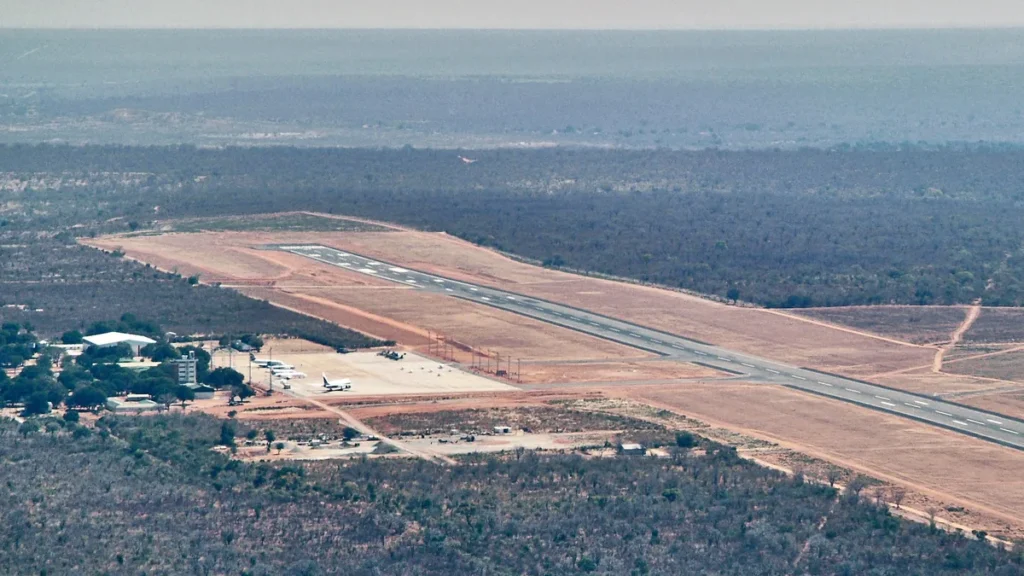
The airport operates with a single main runway, which according to published aeronautical information is capable of accommodating narrow-body jet aircraft of the Boeing 737 and Airbus A320 family, as well as turboprop regional aircraft. Wide-body operations have been conducted on a limited basis, primarily by charter carriers during peak season. The terminal building is divided into domestic and international processing zones, with the international terminal featuring dedicated immigration, customs, and arrivals halls that were upgraded as part of the early 2000s modernisation programme.
Airside facilities include a modest retail and food-and-beverage offering, a VIP lounge, and apron space sufficient for several simultaneous aircraft stands. Cargo handling exists but is limited in scale, consistent with the airport’s tourism rather than freight orientation. By the classification standards used by IATA and regional aviation bodies, LVI falls into the small international hub category. Industry estimates suggest annual passenger throughput remains well below one million, placing it in a tier that is commercially viable for niche tourism operations but not yet at the scale that attracts major hub-and-spoke investment. Discussions around apron expansion and terminal capacity upgrades have been reported by ZACL and the Zambian government, though specific timelines and confirmed budget allocations should be verified against current official disclosures.
Visa Regulations
Travellers arriving at Harry Mwanga Nkumbula International Airport are subject to Zambia’s national visa regime, administered by the Department of Immigration. As of 2026, Zambia operates a relatively accessible entry framework for most major tourism source markets. Citizens of the United States, the United Kingdom, and most European Union member states are generally eligible to obtain a visa on arrival or to apply in advance through Zambia’s eVisa portal, which allows travellers to secure approval before departure and present a confirmation document at the immigration counter. The eVisa system has been progressively expanded and is the recommended route for most international visitors to avoid processing delays at the airport.
Regional African passport holders face a more varied picture: citizens of several SADC member states benefit from visa-free or visa-on-arrival arrangements under bilateral and regional agreements, while travellers from other African nations may require advance visas. Zambia has also participated in the KAZA Univisa arrangement, a joint visa product shared with Zimbabwe that allows holders to move between the two countries’ Victoria Falls entry points — a particularly practical option for travellers combining both sides of the falls. Visa fees, eligible nationalities, and permitted durations of stay are subject to change, and travellers are strongly advised to verify current requirements before travel. → Check the live visa requirements lookup
Recent Developments
The period from 2024 to 2026 has seen renewed attention to Livingstone’s aviation infrastructure as part of broader Zambian government efforts to grow tourism receipts and diversify the national economy beyond copper dependency. According to publicly disclosed traffic data and regional aviation reporting, the airport has experienced a gradual recovery in international visitor numbers following the disruptions of the early 2020s, with Southern African leisure travel rebounding more strongly than business aviation across the continent. Proflight Zambia has been reported to have reviewed and adjusted its Livingstone frequency in response to demand signals, and discussions around attracting additional scheduled international carriers to the route have been ongoing at the ZACL and Ministry of Tourism level.
Infrastructure works at the terminal, including improvements to passenger processing flow and airside amenities, have been referenced in ZACL communications, though the scope and completion status of specific projects should be confirmed against the corporation’s most recent official statements. The KAZA Univisa arrangement, which directly affects the commercial attractiveness of LVI as an entry point, has been subject to periodic administrative review by both Zambia and Zimbabwe, and its current operational status is worth confirming before travel. Regulatory developments at the Zambia Civil Aviation Authority (ZCAA) level, including safety oversight and air operator certification matters, continue to shape the operating environment for carriers serving the airport.
News and Reports
Researchers, journalists, and aviation analysts tracking developments at Harry Mwanga Nkumbula International Airport should consult several authoritative source categories. The Zambia Airports Corporation Limited publishes operational updates and press releases through its official communications channels, and these represent the primary source for infrastructure and capacity announcements. The Zambia Civil Aviation Authority (ZCAA) is the relevant regulatory body for safety, licensing, and airspace matters, and its publications provide the authoritative record on regulatory developments affecting carriers operating at LVI.
At the continental level, IATA’s Africa and Middle East regional office produces periodic market analysis and traffic reports that contextualise LVI’s performance within broader Southern African aviation trends. The ICAO regional office for Eastern and Southern Africa (ESAF), based in Nairobi, publishes safety oversight and infrastructure assessments relevant to Zambian airports. Specialist aviation trade publications including ch-aviation, anna.aero, and the African Aviation journal provide route-level and commercial analysis that is particularly useful for tracking new airline entries and schedule changes. The Zambian government’s Ministry of Tourism and the Ministry of Transport and Logistics are additional sources for policy-level announcements affecting the airport’s strategic direction.