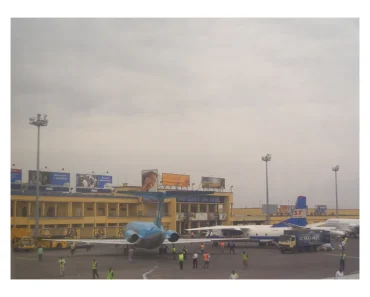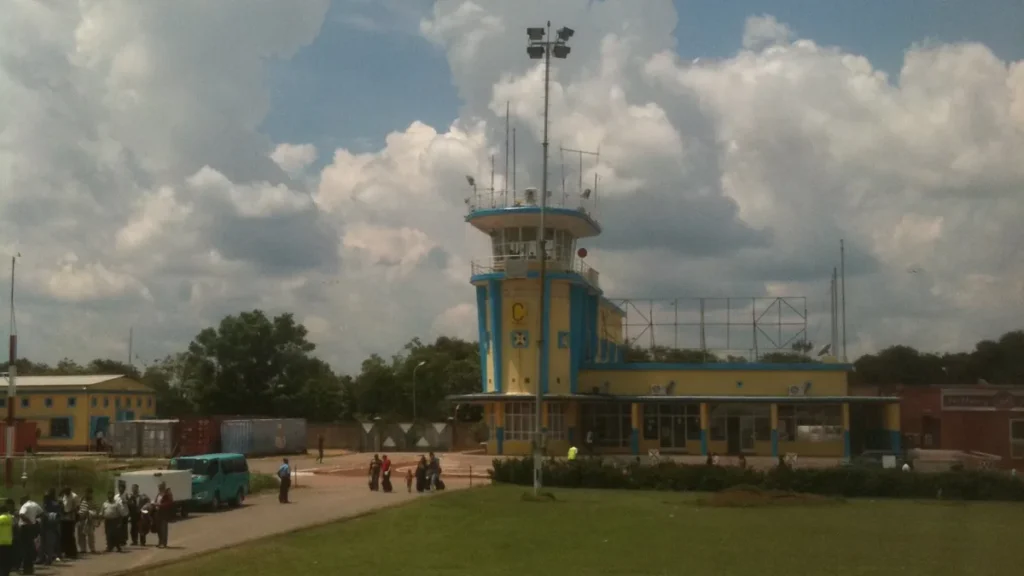
Lubumbashi International Airport
Lubumbashi International Airport
About
Lubumbashi International Airport (IATA: FBM / ICAO: FZQA) serves as the principal air gateway to Lubumbashi, the Democratic Republic of the Congo’s second-largest city and the undisputed commercial capital of the country’s vast Katanga region. Positioned at the heart of one of Africa’s most mineral-rich corridors, the airport occupies a strategic role that extends well beyond passenger convenience: it is a critical logistics node for the copper and cobalt industries that drive both the local economy and global supply chains. For aviation analysts tracking sub-Saharan Africa’s emerging markets, FBM represents a compelling case study in how resource-sector demand can sustain international air connectivity even in the absence of large leisure tourism flows.
The airport’s origins trace to the colonial era, when infrastructure across the Belgian Congo was developed primarily to serve administrative and extractive purposes. The facility was established and progressively upgraded through the mid-twentieth century, eventually receiving international designation as Lubumbashi grew in economic importance following Congolese independence in 1960. Ownership and operational oversight fall under the authority of the Régie des Voies Aériennes (RVA), the Congolese state body responsible for managing the country’s principal airports and en-route air navigation services.
Over the decades, the airport has undergone periodic infrastructure improvements, though the pace and scale of modernisation have been constrained by the broader fiscal and governance challenges that have affected the DRC’s public sector. Rehabilitation works on the terminal building and airside facilities have been carried out at various points, with international development partners and bilateral donors occasionally contributing technical and financial support. The airport is classified by industry observers as a medium-capacity regional hub, serving a mix of scheduled international services, domestic routes, charter operations, and dedicated cargo flights.
Country
The Democratic Republic of the Congo, with its capital at Kinshasa, is the largest country in sub-Saharan Africa by area and home to a population that industry and demographic estimates place well above 100 million people, making it one of the most populous nations on the continent. Sharing borders with nine countries — including Zambia, Angola, Tanzania, Uganda, Rwanda, Burundi, the Central African Republic, the Republic of the Congo, and South Sudan — the DRC occupies a pivotal geographic position at Africa’s centre, with Lubumbashi sitting in the far south-east, closer to Lusaka than to Kinshasa. The country’s extraordinary endowment of natural resources, including copper, cobalt, coltan, and timber, ensures that it remains a focal point for international business, development finance, and geopolitical attention despite persistent governance and security challenges in several of its provinces.
→ Read the Democratic Republic of the Congo expert briefing
Airlines based here
Lubumbashi International Airport does not host a major home-based carrier in the conventional hub sense, but it functions as a significant focus city for several Congolese operators. Congo Airways, the DRC’s state-backed national carrier headquartered in Kinshasa, operates scheduled services through FBM as part of its domestic network, connecting Lubumbashi to the capital and other provincial centres. Korongo Airlines, which historically operated as a Katanga-focused carrier in partnership with Brussels Airlines, ceased operations in the mid-2010s, leaving a gap in direct European connectivity that has been partially addressed by other carriers. Smaller Congolese private operators, including charter and regional airlines, use FBM as a base for mining-sector charter work — a segment that, according to industry observers, represents a meaningful share of total aircraft movements at the airport.
Flights and destinations
The route network at FBM reflects the airport’s dual role as a regional business hub and a domestic connector. Within the DRC, Kinshasa (N’djili Airport, FIH) is the dominant domestic route, operated with meaningful frequency given the volume of government, business, and mining-sector travel between the two cities. Regionally, Lubumbashi maintains air links with neighbouring capitals and commercial centres, with Lusaka (Zambia), Johannesburg (South Africa), Nairobi (Kenya), and Addis Ababa (Ethiopia) among the most consistently served international points. Ethiopian Airlines has maintained a presence on the Addis Ababa–Lubumbashi routing, leveraging its pan-African network strategy. South African carriers have at various points served the Johannesburg corridor, reflecting the strong business ties between Katanga’s mining industry and South African capital and services. Brussels, as the former colonial metropole, has historically been a significant intercontinental destination, with connections typically operated via intermediate stops. Additional regional destinations served at various times have included Harare (Zimbabwe), Dar es Salaam (Tanzania), and Bujumbura (Burundi), though schedule continuity on thinner routes can vary with seasonal and commercial factors.
Facilities and capacity
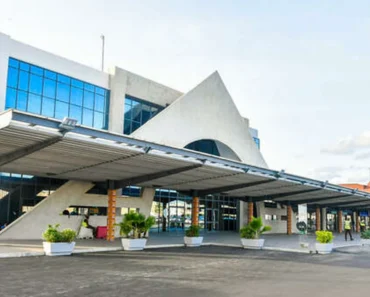
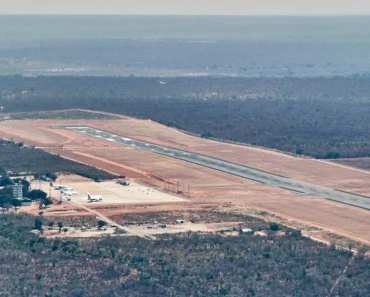
Lubumbashi International Airport operates with a single primary terminal building that handles both international and domestic passengers, with airside processing areas segregated by flight type. The terminal’s design and capacity reflect its mid-twentieth-century origins, though successive refurbishment programmes have updated key passenger-facing elements including check-in counters, immigration halls, and departure lounges. The airport is served by a single main runway, which according to published aeronautical data is capable of accommodating wide-body jet aircraft, a specification that has been important for sustaining cargo operations serving the mining sector. Cargo handling facilities are present on the airfield, supporting both belly-hold freight on scheduled passenger services and dedicated freighter operations. According to publicly disclosed traffic data and RVA reporting, FBM falls within the medium-hub category for African airports, handling volumes that are significant for the region but modest by global standards. Planned or ongoing expansion works have been discussed at various points in recent years in the context of broader DRC infrastructure investment programmes, though confirmed project timelines and financing details should be verified against current RVA and government announcements.
Visa regulations
Travellers arriving at Lubumbashi International Airport are subject to the DRC’s national visa regime, which as of 2026 requires most foreign nationals to hold a valid visa prior to arrival. Citizens of the United States, United Kingdom, and European Union member states are generally required to obtain a visa in advance through a Congolese embassy or consulate, or — where the facility is available and current — via an official electronic visa (eVisa) platform. Visa-on-arrival arrangements have been discussed and piloted at various points, but their consistent availability cannot be guaranteed without checking current official guidance. Regional African passport holders face varying requirements depending on bilateral agreements and COMESA or SADC frameworks to which the DRC is party; some neighbouring country nationals may benefit from simplified entry procedures, while others require standard visas. Visa fees, processing times, and required documentation are subject to change without notice. For the most current and source-verified entry requirements applicable to your nationality, consult your country’s foreign ministry travel advisory and the DRC’s official immigration authority. → Use our live visa requirements lookup tool.
Recent developments
In the 24-month window leading into 2026, Lubumbashi International Airport has seen activity consistent with the broader recovery and reconfiguration of African aviation following the disruptions of the early 2020s. Route network adjustments by regional carriers have been reported, with some airlines consolidating frequencies while others have explored new entry points into the Katanga market, driven in part by sustained global demand for cobalt and copper and the associated movement of mining executives, engineers, and logistics personnel. Infrastructure discussions at the governmental level have continued, with the RVA and DRC’s Ministry of Transport periodically signalling intentions to upgrade airside and landside facilities at key airports including FBM. Regulatory engagement with ICAO and IATA on safety oversight and operational standards has remained an ongoing area of attention for Congolese civil aviation authorities. Travellers and analysts are advised to monitor official channels for confirmed route launches, terminal changes, and any updates to operational procedures, as the pace of change in this market can be rapid and announcements do not always precede implementation by significant lead times.
News and reports
Ongoing operational and commercial news relating to Lubumbashi International Airport can be sourced from several authoritative channels. The Régie des Voies Aériennes (RVA) publishes official notices, operational updates, and periodic traffic summaries through its institutional communications; researchers should consult the RVA directly for the most current aeronautical information publications (AIPs) and NOTAM-related guidance. The DRC’s Autorité de l’Aviation Civile (AAC) is the relevant civil aviation regulatory body and issues safety oversight findings, regulatory decisions, and policy updates. At the continental level, IATA’s Africa and Middle East regional office produces periodic market analysis reports covering sub-Saharan aviation trends, within which FBM and the broader DRC market are addressed. The ICAO Regional Office for Eastern and Southern Africa (ESAF), based in Nairobi, is the appropriate point of contact for safety audit findings and regional implementation data. Trade publications including ch-aviation, Cirium, and The Africa Report provide commercially oriented coverage of route developments, airline financial performance, and infrastructure investment across the continent, and regularly report on DRC aviation matters.