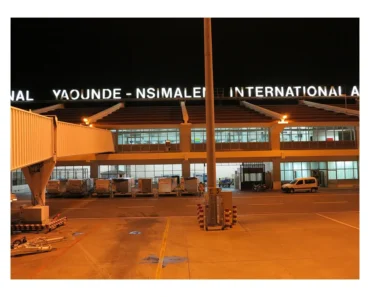
Maputo International Airport
Maputo International Airport
About
Maputo International Airport (IATA: MPM / ICAO: FQMA) is the principal gateway to Mozambique and one of the more strategically positioned airports along Africa’s south-eastern seaboard. Sitting approximately ten kilometres from the centre of Maputo — the country’s capital and commercial heartland — the airport connects southern Africa’s Indian Ocean coast to regional hubs across the continent and to intercontinental routes serving Europe and the Middle East. For travellers, journalists, and aviation analysts alike, MPM represents both the practical entry point to Mozambique and a useful barometer of the country’s economic trajectory.
The airport’s origins trace to the colonial era, when it was developed under Portuguese administration as Lourenço Marques Airport, serving the city then known by the same name. Following Mozambican independence in 1975 and the subsequent renaming of the capital to Maputo, the facility was rebranded accordingly. Decades of post-independence conflict constrained investment, but the return of sustained peace in the 1990s allowed for gradual modernisation. The airport is operated under the authority of the Mozambican state, with Aeroportos de Moçambique (ADM) — the national airports company — holding responsibility for its day-to-day management and infrastructure development.
Significant rehabilitation and expansion works have been undertaken in successive phases since the early 2000s, improving the passenger terminal, apron capacity, and airside infrastructure. Industry observers have noted that the airport’s physical footprint, while adequate for current traffic volumes, has been subject to ongoing discussions about long-term capacity planning as Mozambique’s extractive industries — particularly liquefied natural gas developments in the north — generate increased business travel demand across the country’s aviation network.
Country
Mozambique is a sovereign republic on the south-eastern coast of Africa, bordered by Tanzania to the north, Malawi, Zambia, and Zimbabwe to the west, and South Africa and Eswatini to the south, with a long Indian Ocean coastline to the east. Maputo serves as the national capital and largest city. With a population estimated in the tens of millions and a land area that makes it one of the larger countries in sub-Saharan Africa, Mozambique occupies a pivotal position within the Southern African Development Community (SADC) and is a member of both the African Union and the Commonwealth of Nations. Its economy is shaped by agriculture, natural resources, and a growing services sector, with significant foreign investment interest linked to offshore gas reserves.
→ Read the Mozambique expert briefing
Airlines based here
The flag carrier of Mozambique, LAM Mozambique Airlines (Linhas Aéreas de Moçambique), treats Maputo International Airport as its primary hub and operational base. LAM operates both domestic services connecting Maputo to provincial cities including Beira, Nampula, Pemba, and Tete, as well as a limited number of regional international routes. The carrier has faced well-documented financial and operational pressures over the years, and its network scope has fluctuated accordingly. A second Mozambican carrier, Mozambique Airlines’ low-cost subsidiary and other domestic operators, have at various points served the market, though the domestic aviation landscape remains relatively concentrated.
On the visiting carrier side, South African Airways and its low-cost affiliate have historically maintained services between Johannesburg’s OR Tambo International Airport and Maputo, reflecting the strong economic corridor between the two cities. Ethiopian Airlines, one of the continent’s most expansive network carriers, operates services through Maputo as part of its pan-African connectivity strategy. Kenya Airways has also served the route from Nairobi. Among intercontinental carriers, TAP Air Portugal has maintained a presence on the Lisbon–Maputo corridor, reflecting the historical and linguistic ties between Portugal and Mozambique. Travellers and analysts should verify current schedules directly with carriers, as network decisions in this market are subject to revision.
Flights and destinations
Maputo International Airport supports a network that spans domestic, regional African, and intercontinental routes. Domestically, the airport anchors connections to Mozambique’s major provincial centres. Regionally, the strongest and most commercially significant corridor is the Maputo–Johannesburg route, which benefits from high volumes of business, leisure, and diaspora traffic. Beyond South Africa, the airport is connected to Nairobi (Kenya), Addis Ababa (Ethiopia), Dar es Salaam (Tanzania), and Harare (Zimbabwe), among other African cities. Intercontinentally, Lisbon (Portugal) represents the most historically established long-haul route, while connections via Middle Eastern hubs — including through airlines that route passengers onward from Addis Ababa or Nairobi — provide onward access to destinations in Asia, the Gulf, and beyond. The overall network reflects the airport’s classification as a medium-scale regional hub rather than a major intercontinental gateway in its own right.
Facilities and capacity
Maputo International Airport operates a single passenger terminal building, which has been subject to phased upgrades to improve check-in capacity, immigration processing, and retail and food-and-beverage offerings in the departures area. The airport is served by a single primary runway, oriented to accommodate the prevailing wind conditions of the coastal Mozambican environment, and the apron can accommodate a range of narrowbody and widebody aircraft types. Cargo handling facilities are present, serving both belly-hold freight on passenger services and dedicated cargo operations, which are of particular relevance to Mozambique’s agricultural export sector and humanitarian supply chains. By the classifications commonly used in African aviation analysis, MPM is best described as a medium-sized regional hub — larger than many secondary African airports but operating well below the traffic volumes of major continental gateways such as Johannesburg, Nairobi, or Addis Ababa. According to publicly disclosed traffic data from Aeroportos de Moçambique and ICAO regional reporting, passenger throughput has shown sensitivity to broader economic conditions and airline network changes.
Visa regulations
Travellers arriving at Maputo International Airport are subject to Mozambique’s national visa regime, which has evolved in recent years toward greater accessibility. Citizens of a number of Southern African Development Community (SADC) member states benefit from visa-free entry arrangements, reflecting the region’s broader integration agenda. For travellers holding passports from the United States, the United Kingdom, and European Union member states, Mozambique has made visa-on-arrival facilities available at the airport, though conditions, fees, and documentation requirements are subject to change. An eVisa system has also been introduced, allowing eligible travellers to apply and receive authorisation before departure — a development that has been welcomed by business travellers and tour operators. Passport holders from other African nations should verify their specific status, as arrangements vary by bilateral agreement. Because visa regulations are subject to revision by the Mozambican government and can change with limited notice, travellers are strongly advised to consult the most current official guidance before travel.
→ Check the live visa requirements lookup for Mozambique
Recent developments
In the period leading into 2026, Maputo International Airport and the broader Mozambican aviation sector have seen a number of noteworthy developments. Route network activity has reflected both the resilience of the Johannesburg corridor and the gradual recovery of regional African connectivity following the disruptions of earlier years. Ethiopian Airlines has continued to consolidate its southern African presence, with Maputo remaining a point on its network. There has been industry-level discussion around the long-term infrastructure needs of the airport, particularly in the context of Mozambique’s ambitions to develop its northern gas fields and the associated growth in business aviation and charter activity to cities such as Pemba. LAM Mozambique Airlines has continued to navigate operational and financial challenges that have been the subject of reporting by regional aviation media. Terminal improvement works and airside upgrades have been referenced in ADM communications, though the pace and scope of capital investment remain subject to government budget priorities and financing arrangements. Analysts tracking the airport note that its development trajectory is closely tied to the broader political and economic stability of Mozambique.
News and reports
Researchers and journalists seeking current operational and regulatory information about Maputo International Airport and Mozambican civil aviation have several authoritative sources to consult. Aeroportos de Moçambique (ADM), the national airports authority, periodically publishes operational updates and press releases through its official communications channels. The Instituto de Aviação Civil de Moçambique (IACM), the country’s civil aviation regulatory authority, is the primary source for regulatory decisions, safety oversight matters, and licensing information. At the continental level, the African Civil Aviation Commission (AFCAC) and the ICAO Regional Office for Eastern and Southern Africa produce periodic assessments relevant to Mozambican aviation. IATA’s Africa and Middle East regional team publishes market intelligence reports that contextualise MPM within broader African aviation trends. Specialist aviation trade publications including ch-aviation, Anna.aero, and the African Business Aviation Association (AfBAA) provide route-level and market-level reporting. For economic and investment context, the World Bank’s transport sector publications and the African Development Bank’s infrastructure reports offer useful background.