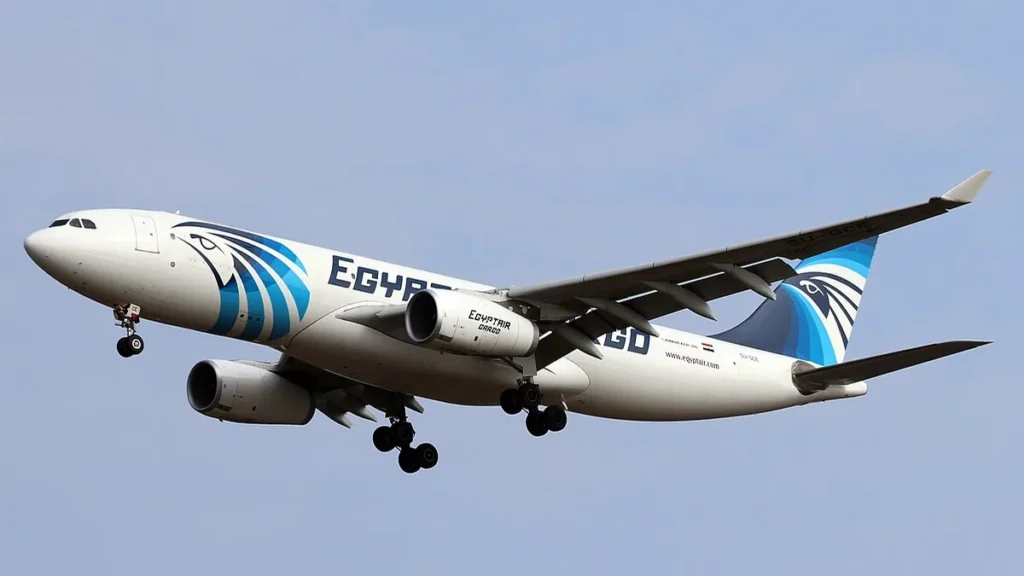
EgyptAir Cargo
EgyptAir Cargo
About
EgyptAir Cargo occupies a strategically significant position in African aviation, serving as the dedicated freight arm of one of the continent’s oldest and most recognised flag carriers. Operating under IATA code MS and ICAO designator MSX, the airline connects Egypt — and by extension the African continent — to global trade lanes spanning Europe, the Middle East, Asia, and the Americas. As air freight demand across Africa continues to outpace infrastructure investment, EgyptAir Cargo’s Cairo hub places it at a natural crossroads between hemispheres, making it a carrier of genuine commercial and geopolitical relevance.
EgyptAir Cargo was established as a distinct subsidiary of the EgyptAir Holding Company, the state-owned aviation group that also encompasses EgyptAir, EgyptAir Express, and several aviation services businesses. The cargo division was formally structured to allow the group to pursue dedicated freighter operations independently of its passenger network, enabling more flexible scheduling and capacity management for freight customers. Ownership remains firmly in the hands of the Egyptian state through the EgyptAir Holding Company, which itself reports to the Egyptian Ministry of Civil Aviation.
In recent years, the airline has been subject to the broader restructuring conversations that have surrounded the EgyptAir group as a whole. Egyptian government initiatives aimed at modernising state-owned enterprises have placed pressure on the holding company to improve operational efficiency and reduce reliance on public subsidy. EgyptAir Cargo, as a commercially oriented subsidiary with tangible revenue-generating capacity, has been positioned as one of the group’s more viable business units in that context.
Bases and Hubs
Cairo International Airport (CAI) — The airline’s principal hub and primary operational base, offering extensive belly-hold and freighter ramp capacity, and connecting EgyptAir Cargo to intercontinental freight corridors across Europe, Asia, and Africa.
Alexandria Borg El Arab Airport (HBE) — A secondary focus point serving Egypt’s second city and its surrounding industrial and agricultural export base, particularly relevant for perishables and manufactured goods moving to European markets.
Sharm El-Sheikh International Airport (SSH) and Hurghada International Airport (HRG) — While primarily passenger-oriented, these Red Sea gateways are served by EgyptAir group operations and contribute to the cargo network through belly-hold capacity on connecting services.
Fleet
EgyptAir Cargo operates a dedicated freighter fleet built around Boeing widebody aircraft, with the Boeing 737 freighter family and Boeing 777 freighter variants understood to form the backbone of its capacity, according to publicly disclosed fleet data and industry tracking sources. The carrier has historically relied on converted passenger aircraft alongside purpose-built freighters to maintain network flexibility. Fleet renewal has been a recurring topic within the EgyptAir group’s strategic planning, with industry estimates suggesting that the cargo division has explored options for newer, more fuel-efficient freighter types as it seeks to reduce operating costs and meet tightening emissions standards on key European routes. Any confirmed orders or lease agreements would be subject to announcement through official EgyptAir Holding Company channels.
Destinations
EgyptAir Cargo’s network is intercontinental in character, radiating outward from Cairo to key freight markets across three broad categories. Within Africa, the carrier serves a range of intra-continental routes connecting Cairo to commercial hubs such as Nairobi (NBO), Lagos (LOS), Johannesburg (JNB), and Casablanca (CMN), reflecting demand from Egypt’s trading relationships with sub-Saharan and North African partners. On intercontinental lanes, the airline maintains services to major European freight gateways including Frankfurt (FRA) and Paris Charles de Gaulle (CDG), as well as connections into the Gulf region — particularly Dubai (DXB) and Doha (DOH) — which serve as onward relay points for Asian cargo. Eastward, routes into the Indian subcontinent and East Asia reflect Egypt’s role as a transit economy. The network’s shape is heavily influenced by Egypt’s export profile: pharmaceuticals, fresh produce, textiles, and engineering goods feature prominently in outbound cargo, while inbound flows include electronics, machinery, and consumer goods.
Codeshare and Alliance
EgyptAir, the parent passenger carrier, is a member of Star Alliance, and EgyptAir Cargo benefits from the commercial relationships and interline frameworks that membership facilitates, even though cargo subsidiaries do not hold formal alliance membership in their own right. On the freight side, EgyptAir Cargo has maintained cooperative arrangements with a number of international carriers and freight forwarders, with Lufthansa Cargo and other Star Alliance-affiliated freight operations understood to be among its closer commercial partners. The airline also works within the IATA cargo framework and participates in standard interline cargo agreements that extend its effective network reach well beyond its own operated routes.
Notable Incidents
EgyptAir Cargo has no major safety incidents on its publicly documented record in recent years. Readers researching the broader EgyptAir group’s safety history should consult official reports from the Egyptian Civil Aviation Authority (ECAA) and the Aviation Safety Network, and should take care to distinguish between incidents involving the passenger carrier and those, if any, attributable to the cargo subsidiary specifically.
Financial and Operational Situation
As a wholly state-owned subsidiary, EgyptAir Cargo does not publish standalone audited financial statements accessible to the general public, making independent assessment of its profitability difficult. Industry analysts have generally characterised the EgyptAir group as a carrier that has faced persistent financial pressures, including the impact of Egypt’s currency devaluations on dollar-denominated operating costs such as fuel and aircraft leases. The cargo division, however, is widely regarded as one of the group’s more commercially resilient units, given the structural growth in African air freight demand and the relative insulation of freight revenues from the passenger market disruptions that have periodically affected the group. Any substantive financial disclosures would be expected to emerge through the Egyptian Ministry of Civil Aviation or official EgyptAir Holding Company communications.
Recent Developments
In the period leading into 2026, EgyptAir Cargo has been navigating a confluence of opportunity and operational challenge. The broader African air freight market has continued to attract attention from global integrators and Gulf carriers, intensifying competition on the Cairo hub’s key corridors. At the same time, Egypt’s expanding role in regional trade — including its participation in African Continental Free Trade Area (AfCFTA) frameworks — has created new potential demand for dedicated freight capacity on intra-African routes. The EgyptAir group has signalled interest in fleet modernisation as part of its wider strategic review, and the cargo subsidiary is expected to be a beneficiary of any new aircraft commitments. Partnerships with freight forwarders and e-commerce logistics providers have also been a focus, reflecting the rapid growth of cross-border e-commerce flows through Egyptian customs gateways. Regulatory engagement with the ECAA and alignment with ICAO standards on dangerous goods and cold-chain handling have remained operational priorities.