Air Mauritius
Air Mauritius
About
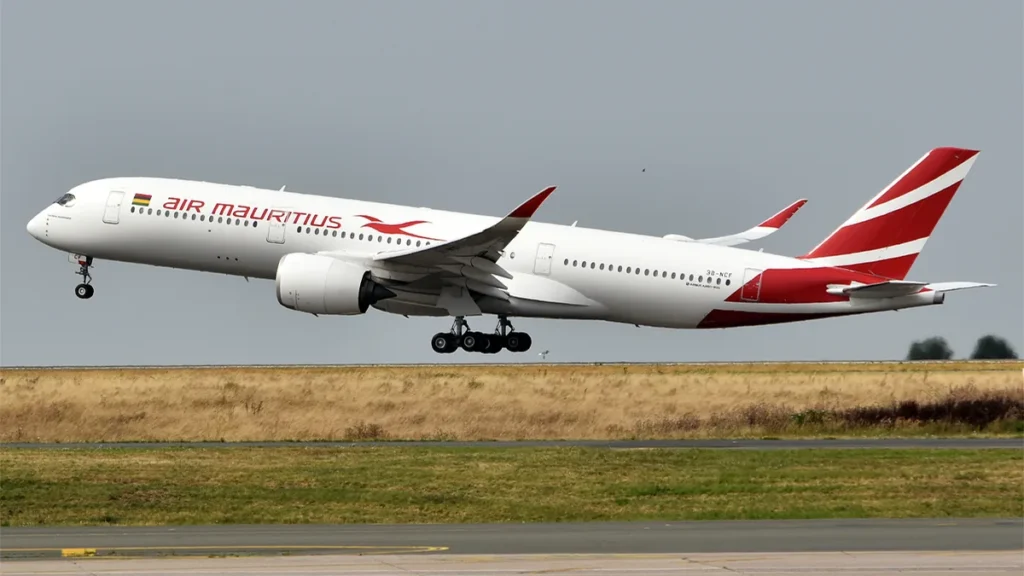
Air Mauritius occupies a distinctive position in African aviation: a full-service, long-haul carrier operating from one of the Indian Ocean’s most strategically located island economies, connecting sub-Saharan Africa, Europe, Asia, and Australia through a single hub. As the flag carrier of the Republic of Mauritius, it serves both as a commercial airline and as a critical piece of national infrastructure, underpinning the country’s tourism-dependent economy and its ambitions as a regional business gateway.
Air Mauritius was founded in 1967, making it one of the older carriers on the African continent. The airline is majority state-owned, with the Government of Mauritius holding a controlling stake alongside institutional and private shareholders. Air France and Air India have historically held minority equity positions, reflecting the airline’s long-standing codeshare relationships with both carriers.
The airline entered voluntary administration in April 2020, a move precipitated by the catastrophic collapse in international travel during the COVID-19 pandemic. It emerged from administration in 2021 following a restructuring process that involved government recapitalisation, workforce rationalisation, and a renegotiation of key commercial contracts. The restructuring was overseen by administrators appointed under Mauritian law and was widely covered in regional business media at the time.
Since its return to normal operations, Air Mauritius has pursued a measured recovery strategy, rebuilding its network progressively rather than restoring all pre-pandemic routes simultaneously. The airline operates under IATA code MK and ICAO designator MAU.
Bases and Hubs
Sir Seewoosagur Ramgoolam International Airport (MRU), Plaine Magnien, Mauritius — The airline’s sole primary hub and the point through which all long-haul operations are routed; MRU functions as both a leisure gateway and a connecting node for passengers transiting between Africa, Europe, and Asia.
Sir Charles Gaëtan Duval Airport (RRG), Rodrigues Island, Mauritius — A domestic focus city served by regional turboprop or jet operations, linking the outer island of Rodrigues to the main island and providing essential connectivity for residents and visitors alike.
Fleet
According to publicly disclosed fleet data, Air Mauritius operates a mixed narrowbody and widebody fleet centred on Airbus aircraft. The long-haul network is served by Airbus A330 family widebodies, which form the backbone of intercontinental operations to Europe, Asia, and Australia. Regional and medium-haul routes are operated using Airbus A319 and A320 family narrowbodies. The airline has also operated ATR 72 turboprops on the domestic Rodrigues route, though the precise current configuration of the regional fleet should be confirmed with the airline directly.
Industry observers have noted that fleet renewal remains a strategic priority for Air Mauritius as it emerges from its post-administration restructuring. Any firm orders or letters of intent for next-generation aircraft — such as the Airbus A320neo family or A330neo — had not been publicly confirmed at the time of writing, and readers should consult the airline’s investor communications for the most current position.
Destinations
Air Mauritius operates an intercontinental network shaped by Mauritius’s role as a premium tourism and financial services destination. The route map spans four broad categories: European leisure and business routes, Asian connectivity, intra-African services, and Australian operations.
Headline European routes include services to Paris Charles de Gaulle (CDG), London Heathrow (LHR), and Frankfurt (FRA), all of which carry significant leisure traffic as well as diaspora and business travellers. In Asia, the airline serves destinations including Mumbai (BOM) and Kuala Lumpur (KUL), reflecting both historical ties and growing trade flows. The Melbourne (MEL) route represents one of the longer thin-route operations in the African carrier landscape. On the African continent, Air Mauritius connects MRU to Johannesburg (JNB), Nairobi (NBO), Antananarivo (TNR) in Madagascar, and Réunion (RUN), among others, providing regional connectivity that complements its long-haul offering.
Codeshare and Alliance
Air Mauritius is not a member of any of the three major global airline alliances — Star Alliance, SkyTeam, or oneworld. The airline maintains a bilateral codeshare model, with Air France and Air India among its most established partners, a relationship that predates the 2020 restructuring and has been maintained in some form since. Codeshare arrangements with other carriers on specific routes have been reported in industry trade media; travellers and travel managers should verify current interline and codeshare agreements directly with the airline or through GDS systems, as the post-restructuring commercial landscape has evolved.
Notable Incidents
Air Mauritius does not appear on the public record as having been involved in a major hull-loss or fatal accident in recent decades. The airline has maintained a broadly clean operational safety profile, and no incidents requiring specific disclosure have been identified in the course of preparing this profile. Readers requiring a comprehensive safety audit should consult the Aviation Safety Network database and the ICAO Universal Safety Oversight Audit Programme (USOAP) records for Mauritius.
Financial and Operational Situation
Air Mauritius’s financial trajectory since its 2021 exit from administration has been one of cautious recovery rather than rapid expansion. The airline benefited from the strong rebound in Mauritius’s inbound tourism sector from 2022 onwards, as the island repositioned itself as a premium destination following the lifting of COVID-era travel restrictions. Industry estimates suggest that load factors on European leisure routes recovered meaningfully ahead of the broader African carrier average, given Mauritius’s appeal to high-yield French and British travellers.
The airline remains majority state-owned, and the government’s continued financial commitment has been an important stabilising factor. However, the airline operates in a structurally challenging environment: fuel costs, the relatively small size of the Mauritian domestic market, and competition from Gulf carriers transiting passengers through Dubai (DXB) and Abu Dhabi (AUH) all weigh on unit economics. Investors and analysts monitoring the carrier should treat any specific profitability figures with caution unless drawn from audited annual reports published by the airline itself.
Recent Developments
In the 24 months to early 2026, Air Mauritius has focused on consolidating its recovered network and selectively adding capacity on high-demand leisure routes. The airline has been reported in regional aviation media as exploring options for fleet modernisation, with the ageing elements of its narrowbody fleet a known operational consideration. Discussions around potential new codeshare or interline partnerships — particularly with carriers serving the Gulf and East African markets — have been referenced in trade publications, though no major new alliance or equity deal had been publicly confirmed at the time of writing.
The airline has also been attentive to the growing sustainable aviation fuel (SAF) agenda, with Mauritius’s government having signalled interest in aligning national aviation policy with broader ESG commitments. Whether Air Mauritius formalises SAF procurement agreements in the near term will be a development worth monitoring for investors with an ESG mandate.
Related Research
- Mauritius Expert Briefing — full country profile for Mauritius, covering economy, trade, and aviation policy
- African Airlines — the africa-research.org pillar covering carriers across the continent
- African Airports — infrastructure profiles including MRU and regional hubs
- Country Comparison Tool — benchmark Mauritius against peer economies and aviation markets