Guinea — Expert Briefing
Guinea at a glance: A mineral-rich West African state navigating a prolonged military transition, Guinea sits at a pivotal juncture between democratic aspiration and authoritarian consolidation, with its vast bauxite and iron ore reserves making it indispensable to global supply chains.
Overview
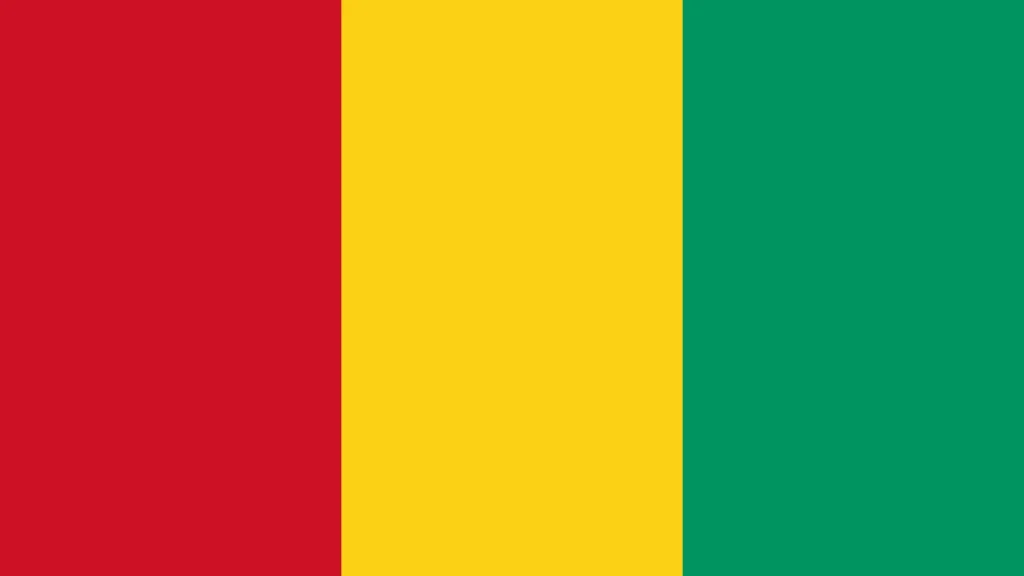
Guinea — formally the Republic of Guinea, and sometimes called Guinea-Conakry to distinguish it from its neighbours — has its capital at Conakry, a densely populated peninsula city on the Atlantic coast. The country’s population is estimated at approximately 14.5 million (World Bank, 2024 projection), making it one of the more populous states in West Africa relative to its land area. The official language is French, though Pular (Fula), Mandinka, and Susu function as the principal vernacular languages across different regions. The national currency is the Guinean franc (GNF). GDP per capita sits in the low-income band, estimated at roughly USD 800–900 in nominal terms, though purchasing power parity figures are somewhat higher given the informal economy’s scale. Guinea matters in 2026 for two interconnected reasons: it holds an estimated one-third of the world’s proven bauxite reserves — the ore from which aluminium is refined — and its political trajectory under military rule is being watched as a test case for how ECOWAS and the African Union manage unconstitutional changes of government in an era of renewed coup activity across the Sahel and West Africa.
Government and Politics
Guinea is currently governed as a military-led transitional state, following the coup of 5 September 2021 in which Colonel Mamadi Doumbouya led the Groupement des Forces Spéciales (GFS) to overthrow President Alpha Condé, who had himself controversially extended his rule via a disputed constitutional referendum in 2020. Doumbouya subsequently assumed the title of President of the Transition and Head of State; he is a former French Foreign Legion officer who has positioned himself as a technocratic reformer, though critics argue his administration has concentrated power and suppressed political opposition. The transitional government dissolved the National Assembly following the coup and replaced it with a Conseil National de la Transition (CNT), a 81-member appointed body that functions as a quasi-legislative consultative organ rather than an elected parliament. A transitional charter, adopted in late 2021 and revised in 2022, serves as the interim constitutional framework. A new draft constitution was presented in 2024 as part of a roadmap toward civilian rule, but its provisions — including a clause that would bar transitional figures from standing in future elections — remain contested. Under sustained pressure from ECOWAS, which imposed targeted sanctions and travel bans on junta members, the transitional authorities committed to a return to civilian constitutional order, with elections initially promised for late 2024 and subsequently pushed to 2025 and then, by most credible assessments, into 2026. As of mid-2026, no credible electoral calendar with independent verification has been confirmed. The political space remains constrained: the Front National pour la Défense de la Constitution (FNDC), the principal opposition coalition, has faced repeated bans on public demonstrations, and several civil society leaders have been detained or forced into exile.
Economy
Guinea’s GDP is estimated at approximately USD 20–22 billion (nominal, 2024–2025 estimates), with growth driven overwhelmingly by the extractive sector. Bauxite mining is the single dominant industry: Guinea is the world’s largest exporter of bauxite ore, supplying a substantial share of China’s aluminium refining industry and significant volumes to European and North American markets. Gold and diamonds are secondary mineral exports of note. Agriculture — primarily subsistence farming of rice, cassava, and groundnuts, alongside cash crops including coffee and palm oil — employs the majority of the rural population but contributes a disproportionately small share of formal GDP. The Guinean franc has experienced persistent inflationary pressure, with annual inflation running in the high single to low double digits in recent years, eroding household purchasing power particularly in urban areas. Guinea’s external debt position is manageable relative to some regional peers but has grown as the transitional government has sought infrastructure financing, primarily from Chinese state-linked entities, to develop road, port, and energy infrastructure. The single most consequential economic story of the past 24 months has been the accelerating development of the Simandou iron ore project — widely described as the world’s largest untapped high-grade iron ore deposit — located in the Nzérékoré region of southeastern Guinea. A consortium involving Rio Tinto, the Singaporean commodity trader Winning Consortium Simandou (WCS), and Chinese state interests has made significant progress on the associated 650-kilometre Trans-Guinean Railway and a new deep-water port at Morebayah. First ore exports, long delayed by financing disputes and political instability, are now anticipated within the 2025–2027 window, with the potential to fundamentally reshape Guinea’s fiscal position and its strategic importance to global steel supply chains.
Demographics and Society
Guinea’s population is young and growing rapidly, with a median age estimated below 20 years and a total fertility rate that remains among the higher in the sub-region. The country is ethnically and linguistically diverse: the Fula (Peul) community, concentrated in the Fouta Djallon highlands of central Guinea, is the largest single group and has historically been associated with trade, Islamic scholarship, and political mobilisation. The Mandinka (Malinké) are dominant in Upper Guinea and have strong cross-border cultural ties with Mali, Senegal, and Guinea-Bissau. The Susu are the principal group of the coastal zone and Conakry. Smaller groups — including the Kissi, Toma, and Guerze — are concentrated in the Forest Region of the southeast. Islam is the religion of an estimated 85–90 percent of the population, with Christianity practised primarily in the Forest Region and among some coastal communities. Urbanisation is accelerating: Conakry, with a metropolitan population estimated at 2.5–3 million, is growing rapidly and faces severe infrastructure deficits in water, sanitation, electricity, and housing. The defining social trend of the current moment is the expansion of mobile phone access among young Guineans, which has created new channels for political information, economic activity, and social organisation — but has also become a vector for misinformation and, periodically, for the coordination of protest activity that the transitional authorities have sought to monitor and restrict.
Key Issues Right Now
Transition timeline and democratic credibility. The most pressing political question in Guinea in 2026 is whether the military-led transition will produce a genuine return to elected civilian government or whether it will follow the pattern seen in Mali and Burkina Faso — where transitional periods have been extended indefinitely and military figures have consolidated long-term control. ECOWAS has maintained diplomatic pressure and targeted sanctions, but its leverage has been weakened by the broader regional trend of coup-proofing and by Guinea’s economic importance. Domestic civil society and opposition parties remain active but operate under significant legal and physical constraints. International observers, including the United Nations and the European Union, have called for a transparent electoral roadmap with independent oversight; the transitional government’s responsiveness to these calls will be the key indicator to watch.
Simandou and the resource governance challenge. The imminent operationalisation of the Simandou iron ore complex represents both Guinea’s greatest economic opportunity and its most significant governance risk. The project involves multiple competing international interests — Chinese state-linked firms, Rio Tinto, and the Guinean state mining company — and the revenue-sharing, local content, and environmental management frameworks governing it will shape whether the windfall translates into broad-based development or replicates the enclave dynamics that have historically characterised Guinea’s bauxite sector. Community displacement concerns in the Simandou corridor, environmental impact on the Nzérékoré region’s biodiversity, and the capacity of Guinean regulatory institutions to enforce contractual terms are all live issues that analysts and investors are tracking closely.
Regional security spillover from the Sahel. Guinea shares borders with Mali, Senegal, Sierra Leone, Liberia, Côte d’Ivoire, and Guinea-Bissau — a neighbourhood that encompasses both relative stability and acute insecurity. The deteriorating security situation in Mali, where jihadist groups affiliated with al-Qaeda (Jama’at Nusrat al-Islam wal-Muslimin, JNIM) and the Islamic State Sahel Province have expanded their operational reach southward, raises credible concerns about potential spillover into northern and northeastern Guinea. The Forest Region in the southeast has its own history of inter-communal violence and cross-border tensions linked to the Liberian and Sierra Leonean conflict legacies. Guinea’s security forces, restructured under the transitional government, are not yet assessed as having the capacity or doctrine to manage a sustained insurgent threat, making early warning and cross-border intelligence cooperation with neighbours a priority issue.
Travel and Connectivity
The principal international gateway is Conakry International Airport (Aéroport International Ahmed Sékou Touré, IATA: CKY), which handles the majority of international passenger and cargo traffic. The airport has undergone partial rehabilitation in recent years but remains capacity-constrained relative to regional hubs such as Dakar or Abidjan. There is no other airport in Guinea currently handling scheduled international services of note, though domestic airstrips serve Labé, Kankan, and N’Zérékoré. Principal cities beyond Conakry include Labé (the commercial and cultural centre of the Fouta Djallon), Kankan (the largest city of Upper Guinea and an important trade hub), Kindia, and N’Zérékoré in the Forest Region. Tourism remains underdeveloped relative to Guinea’s natural assets — which include the Fouta Djallon highlands, the Îles de Los off Conakry, and significant wildlife habitat — partly due to infrastructure deficits, visa complexity, and the reputational effects of political instability. The 2014–2016 Ebola epidemic, which originated in Guinea’s Forest Region, had a lasting negative effect on tourism and foreign visitor confidence that the sector has not fully recovered from. Internet penetration is estimated in the 25–35 percent range, with mobile internet access via 3G and expanding 4G networks being the primary mode of connectivity; fixed broadband infrastructure is minimal outside Conakry. Mobile money adoption is growing rapidly, with Orange Money and MTN Mobile Money the dominant platforms, and is increasingly integrated into informal trade, remittance flows from the diaspora, and small business finance.
Further Research
Analysts, journalists, and investors seeking to deepen their understanding of Guinea should consult the following institutions and resources. The World Bank Guinea country page provides regularly updated macroeconomic data, project documentation, and poverty assessments. The Banque Centrale de la République de Guinée (BCRG) — Guinea’s central bank — publishes monetary statistics, exchange rate data, and financial sector reports. The Africa Center for Strategic Studies (based in Washington, D.C.) produces accessible security and governance analysis covering Guinea and the broader West African transition belt. The Institut National de la Statistique de Guinée (INS) is the primary source for demographic, household survey, and national accounts data. International Crisis Group has published substantive reporting on Guinea’s political transition and the regional security dynamics affecting the country. Finally, the Natural Resource Governance Institute (NRGI) has produced detailed analysis of Guinea’s mining sector governance, including assessments of the Simandou contracts and the broader bauxite revenue management framework, making it essential reading for anyone tracking the extractive economy.