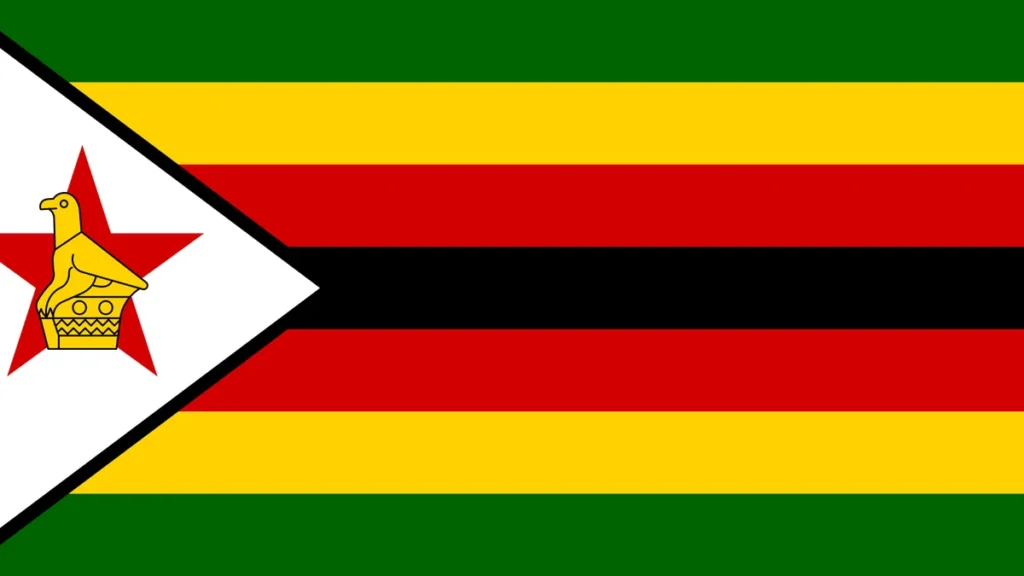
Zimbabwe — Expert Briefing
Zimbabwe at a glance: A resource-rich southern African state navigating a fragile economic recovery, entrenched political constraints, and growing regional significance as a minerals supplier in the global energy transition.
Overview
Capital: Harare. Population: approximately 16.7 million (World Bank, 2024 estimate), with a significant diaspora — conservatively estimated at 3–4 million — concentrated in South Africa, the United Kingdom, and the United States. Official languages: Zimbabwe recognises 16 official languages under its 2013 constitution, with Shona, Ndebele, and English functioning as the dominant languages of government, commerce, and education. Currency: the Zimbabwe Gold (ZiG), introduced in April 2024 as the latest attempt to establish a stable domestic currency after the collapse of the Zimbabwe Dollar. GDP per capita: broadly in the lower-middle-income band, estimated at approximately USD 1,700–1,900 in purchasing-power-adjusted terms, though official figures are contested and informal economic activity is substantial. Zimbabwe commands attention in 2026 for two intersecting reasons: its lithium and platinum-group metal reserves position it as a strategically important supplier for battery and clean-energy supply chains at precisely the moment global demand is accelerating; and its political trajectory — under a ruling party that has governed without interruption since independence in 1980 — continues to test the boundaries between competitive authoritarianism and managed liberalisation.
Government and Politics
Zimbabwe is a presidential republic. The president serves as both head of state and head of government, with executive authority concentrated in the presidency. Emmerson Dambudzo Mnangagwa, who assumed power following the military-assisted removal of Robert Mugabe in November 2017, is the incumbent president. Mnangagwa — a veteran ZANU-PF operative and former vice president — won the 2018 and 2023 general elections, both of which were disputed by opposition parties and criticised by international observer missions, including the Southern African Development Community (SADC) and the European Union, for irregularities in voter registration, media access, and the conduct of results transmission. The legislature is bicameral: the National Assembly (280 seats) and the Senate (80 seats) together constitute Parliament. ZANU-PF holds commanding majorities in both chambers following the August 2023 elections, in which the main opposition coalition, the Citizens Coalition for Change (CCC) led by Nelson Chamisa, performed below expectations amid a chaotic pre-election environment that included the recall of dozens of sitting CCC legislators by a rival faction. The next general elections are constitutionally due in 2028. The 2013 constitution — itself a product of a negotiated Government of National Unity — remains the governing framework, though critics argue that its provisions on judicial independence, media freedom, and devolution have been selectively implemented. A constitutional amendment process has been periodically discussed within ZANU-PF circles, particularly around term-limit provisions, though no formal amendment had been tabled as of mid-2025.
Economy
Zimbabwe’s GDP is estimated at approximately USD 26–28 billion in nominal terms (IMF, 2024 Article IV consultations), though the reliability of national accounts data is complicated by a large informal sector — some estimates place informality at over 60 percent of economic activity. Primary sectors include agriculture (tobacco remains the single largest foreign-currency earner among agricultural commodities), mining (gold, platinum-group metals, chrome, diamonds, and lithium), and a services sector dominated by trade and telecommunications. Key exports are gold, tobacco, ferrochrome, and increasingly lithium ore and concentrate. The currency situation is the single most consequential economic story of the past 24 months. The Zimbabwe Gold (ZiG), launched in April 2024 and backed by a combination of gold reserves and foreign currency held by the Reserve Bank of Zimbabwe, represented the country’s sixth attempt at a functioning domestic currency since the hyperinflationary collapse of the original Zimbabwe Dollar in 2008–2009. Initial market reception was cautious: the ZiG depreciated sharply against the US dollar within months of its introduction, and the US dollar — which had been the de facto currency of everyday commerce since dollarisation — continued to dominate transactions in both formal and informal markets. The government’s insistence on ZiG acceptance for tax payments and public-sector wages created friction with businesses and households that remained deeply sceptical of any domestically issued currency. Debt remains a severe structural constraint: Zimbabwe’s total public and publicly guaranteed debt stood at over USD 17 billion as of 2024, including substantial arrears to multilateral creditors including the World Bank and African Development Bank, which have blocked access to concessional financing. The Structured Dialogue Platform — a creditor engagement process involving the IMF, World Bank, African Development Bank, and bilateral creditors — has made incremental progress but a full debt resolution remains elusive, limiting Zimbabwe’s ability to attract sovereign-backed investment at scale.
Demographics and Society
Zimbabwe’s population is young and urbanising, with a median age estimated at approximately 19–20 years. The urban population share stands at roughly 32–35 percent, with Harare (the capital, population approximately 1.5–2 million in the greater metropolitan area) and Bulawayo (the second city, population approximately 650,000–700,000) as the principal urban centres. The country is ethnically and linguistically diverse: the Shona-speaking groups — comprising several sub-groups including the Karanga, Zezuru, Korekore, Manyika, and Ndau — constitute approximately 70–75 percent of the population, while the Ndebele-speaking population of Matabeleland accounts for roughly 15–20 percent. Smaller communities include the Tonga, Venda, Kalanga, and Shangaan, as well as a small but economically significant South Asian diaspora community. Christianity is the dominant religion, practised in various forms — mainline Protestant, Roman Catholic, and a wide range of African Initiated Churches — by the large majority of the population, alongside traditional religious practices that frequently coexist with Christian affiliation. The defining social trend of the current moment is the scale and character of youth emigration. Commonly described domestically as the “brain drain” or, more colloquially, as “Jukwa” (leaving), the departure of educated young Zimbabweans — nurses, teachers, engineers, and IT professionals — to the United Kingdom, Canada, Australia, and Gulf states has reached a pace that is visibly straining public health and education systems. The UK’s Health and Care Worker visa route, in particular, has drawn tens of thousands of Zimbabwean nurses and care workers since 2021, prompting a public debate about the ethics of recruitment from low-income health systems and the adequacy of remittance flows as compensation for institutional loss.
Key Issues Right Now
The lithium and critical minerals scramble. Zimbabwe holds some of the largest known lithium deposits in Africa, centred on the Arcadia and Bikita mines in Mashonaland East and Masvingo provinces respectively. The government’s 2022 ban on the export of unprocessed lithium ore — intended to force value addition and downstream processing within Zimbabwe — created significant tension with Chinese investors who had acquired major stakes in the sector and who had been exporting spodumene concentrate. The ban was partially relaxed and renegotiated through 2023–2024, but the underlying policy question — how to capture more domestic value from a commodity that global markets urgently want — remains unresolved and is the central economic policy debate of the Mnangagwa administration. The answer will shape Zimbabwe’s fiscal position and its leverage in international investment negotiations for the remainder of the decade.
Climate stress and food insecurity. The El Niño weather pattern that severely affected southern Africa in 2023–2024 hit Zimbabwe with particular force, producing the worst drought in decades across the Midlands, Masvingo, and Matabeleland South provinces. The government declared a state of disaster in 2024, and the World Food Programme estimated that over 7 million Zimbabweans — approaching half the population — faced acute food insecurity at the peak of the crisis. While seasonal rains partially recovered in 2024–2025, the structural vulnerability of smallholder agriculture to rainfall variability — compounded by limited irrigation infrastructure, degraded soils, and constrained access to inputs — means that climate-related food insecurity is now a near-permanent feature of the humanitarian landscape rather than an exceptional event.
Opposition fragmentation and civic space. The post-2023 election period has seen the Citizens Coalition for Change fracture into competing factions, with Nelson Chamisa — who resigned the CCC leadership in January 2024 — operating outside any formal party structure while remaining a significant political figure. The opposition landscape is currently fragmented and disorganised, which has reduced the immediate electoral threat to ZANU-PF but has also diminished the quality of parliamentary scrutiny. Simultaneously, civic space has remained constrained: the Private Voluntary Organisations Amendment Act, which imposes restrictive registration and reporting requirements on NGOs, has been used to limit the operational freedom of civil society organisations working on governance, human rights, and electoral monitoring. International human rights bodies and donor governments have raised consistent concerns about the law’s compatibility with constitutional guarantees of freedom of association.
Travel and Connectivity
Robert Gabriel Mugabe International Airport in Harare is the principal international gateway, handling the majority of long-haul and regional traffic. Joshua Mqabuko Nkomo International Airport in Bulawayo serves regional routes and charter traffic, and Victoria Falls International Airport — significantly upgraded in recent years — handles a growing volume of tourism-oriented international arrivals, including direct or near-direct services from key European source markets. Principal cities beyond Harare and Bulawayo include Mutare (eastern highlands, near the Mozambique border), Gweru (Midlands), and Masvingo (gateway to Great Zimbabwe). Tourism is a meaningful and recovering sector: Zimbabwe’s principal attractions include Victoria Falls (shared with Zambia), Hwange National Park, the Matobo Hills UNESCO World Heritage Site, and the Great Zimbabwe monument. The country positions itself as a premium wildlife destination, and visitor numbers have recovered toward pre-pandemic levels, supported by the broader rebound in southern African safari tourism. Internet penetration stands at approximately 35–45 percent of the population, with significant urban-rural disparity; mobile internet via 3G and 4G networks is the dominant mode of access. Mobile money adoption is high by regional standards: EcoCash, operated by Econet Wireless, remains the dominant platform and is deeply embedded in everyday commerce, salary payments, and remittance receipt, functioning as a de facto financial inclusion infrastructure in a country where formal banking penetration is limited.
Further Research
Analysts and researchers seeking to deepen their understanding of Zimbabwe should consult the following institutions and resources. The Reserve Bank of Zimbabwe publishes monetary policy statements, exchange rate data, and financial stability reports that are essential for tracking the currency situation and macroeconomic conditions. The Zimbabwe National Statistics Agency (ZIMSTAT) is the official source for census data, national accounts, trade statistics, and household survey results, though data timeliness and methodology should be assessed critically. The World Bank Zimbabwe country page provides regularly updated macro-fiscal data, project documentation, and the periodic Country Economic Memoranda that offer the most rigorous independent assessments of growth, poverty, and structural constraints. The Africa Center for Strategic Studies (based in Washington, D.C.) publishes analytical pieces on Zimbabwe’s governance, security, and civil-military relations that are particularly useful for political risk assessment. The Zimbabwe Human Rights NGO Forum produces detailed documentation of human rights conditions, civic space restrictions, and political violence incidents, and is an important primary source for journalists and governance analysts. Finally, the International Crisis Group has published periodic briefings on Zimbabwe’s political dynamics and regional implications that provide well-sourced, contextualised analysis for readers requiring a conflict-sensitive lens on the country’s trajectory.