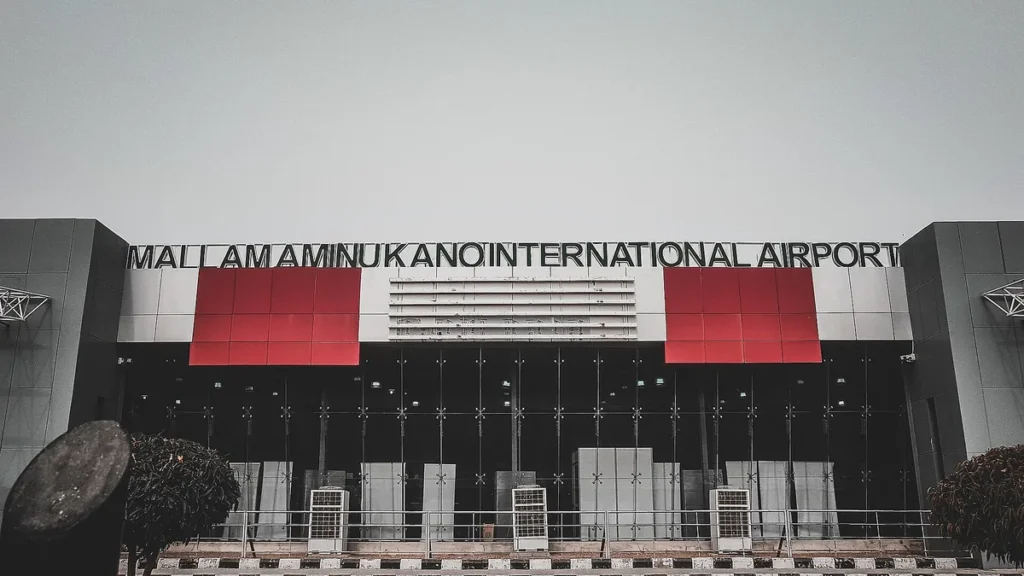
Mallam Aminu Kano International Airport
Mallam Aminu Kano International Airport
About
Mallam Aminu Kano International Airport (IATA: KAN / ICAO: DNKN) is one of Nigeria’s principal international gateways and a strategically significant node in West African aviation. Situated in Kano — Nigeria’s second-largest city by population and the commercial heartland of the country’s predominantly Muslim north — the airport serves a catchment area that extends well beyond state boundaries into Niger, Chad, and the broader Sahel corridor. For travellers, freight operators, and aviation analysts alike, KAN represents a critical pressure point in the continent’s air-transport infrastructure: a facility where domestic demand, regional connectivity, and long-haul ambition converge under conditions of persistent capacity strain.
The airport takes its name from Mallam Aminu Kano, the revered northern Nigerian politician and populist leader whose legacy remains deeply embedded in Kano’s civic identity. The facility was developed during Nigeria’s post-independence infrastructure expansion era and has operated as an international airport for several decades, handling scheduled services since the early years of Nigerian aviation. Ownership and operational oversight rest with the Federal Airports Authority of Nigeria (FAAN), the state body responsible for managing all federally designated airports across the country, under the policy supervision of the Federal Ministry of Aviation and Aerospace Development.
Over the years, KAN has undergone successive rounds of rehabilitation and partial modernisation. Runway resurfacing programmes, terminal refurbishment works, and upgrades to navigational aids have been carried out at various intervals, often in response to safety directives from the Nigerian Civil Aviation Authority (NCAA) or recommendations from ICAO’s regional office for Africa and the Indian Ocean (ESAF). As of 2026, the airport continues to be classified as a medium-capacity international hub within the FAAN network, ranking behind Lagos Murtala Muhammed International Airport and Abuja Nnamdi Azikiwe International Airport in overall passenger throughput, but retaining outsized strategic importance for northern Nigeria and cross-border trade routes.
Country
Nigeria is Africa’s most populous nation, with a population that demographers estimate has surpassed 220 million people, and it holds the continent’s largest economy by nominal GDP. The federal capital is Abuja, located in the Federal Capital Territory at the country’s geographic centre, while Lagos on the southwestern coast functions as the primary commercial and financial hub. Nigeria occupies a pivotal position in West Africa — a member of ECOWAS, a major oil and gas exporter, and an increasingly significant market for aviation growth, digital services, and consumer goods. Its northern region, anchored by Kano, is historically connected to trans-Saharan trade networks and today maintains strong economic and cultural ties with neighbouring Niger, Chad, and Cameroon. → Read the Nigeria expert briefing
Airlines Based Here
Mallam Aminu Kano International Airport does not function as a primary hub for any single carrier in the way that Lagos serves Air Peace or Abuja anchors certain point-to-point operations, but it is a significant focus city for several Nigerian domestic operators. Air Peace, Nigeria’s largest privately owned carrier, maintains scheduled services through KAN as part of its national network. Ibom Air, the Akwa Ibom State-backed carrier that has grown rapidly since its 2019 launch, also serves the route. United Nigeria Airlines and Overland Airways have at various points operated domestic frequencies into Kano, reflecting the city’s demand base.
On the international side, KAN has historically attracted Gulf carriers given the strong demand generated by Hajj and Umrah traffic — Saudi Arabia is among the most important international markets for Kano’s Muslim-majority population. Airlines including Saudi Arabian Airlines (Saudia) have operated seasonal and scheduled services into KAN. Ethiopian Airlines, which has aggressively expanded its West African footprint from its Addis Ababa hub, has been among the more consistent intercontinental operators at the airport. The presence of visiting international carriers fluctuates with commercial viability and regulatory conditions, and travellers are advised to verify current schedules directly with carriers or through the FAAN operational notices.
Flights and Destinations
The airport’s route network reflects both its domestic role within Nigeria and its international reach across Africa and the Middle East. Domestically, KAN connects to Lagos (LOS), Abuja (ABV), Port Harcourt (PHC), and Enugu, forming the core of its scheduled passenger operations. Regionally within Africa, connections to Accra (ACC) in Ghana and Niamey (NIM) in Niger serve the cross-border business and diaspora travel markets. Intercontinentally, Addis Ababa (ADD) via Ethiopian Airlines provides onward connectivity to East Africa, Asia, and Europe, while services to Jeddah (JED) and Medina (MED) — operating at elevated frequency during Hajj and Ramadan seasons — represent some of the airport’s highest-demand international movements. Industry observers note that demand for a direct London or Dubai connection from KAN has been discussed periodically, though as of 2026 such routes remain subject to commercial negotiation and bilateral air services agreement frameworks.
Facilities and Capacity
Mallam Aminu Kano International Airport operates with a single primary terminal building that handles both domestic and international departures and arrivals, with segregated processing zones for each traffic type. The terminal has been subject to phased refurbishment works managed by FAAN, though infrastructure observers and airline ground-handling agents have noted that capacity constraints — particularly in peak Hajj season — remain a recurring operational challenge. The airport is served by two runways, with the primary instrument runway oriented to accommodate the prevailing wind patterns of the Kano plateau; runway dimensions and declared distances are published in the official Aeronautical Information Publication (AIP) maintained by the Nigerian Airspace Management Agency (NAMA).
Cargo handling facilities exist on-site, supporting both belly-hold freight on passenger services and, to a more limited degree, dedicated freighter operations serving agricultural exports — Kano is a significant centre for leather goods, groundnuts, and textile trade. According to publicly disclosed traffic data reviewed by aviation analysts, KAN falls within the medium-hub classification for sub-Saharan Africa, with annual passenger volumes that, while substantial in absolute terms, remain well below the throughput of Lagos or Nairobi. Expansion plans, including proposals for a new international terminal and enhanced cargo apron, have been referenced in FAAN communications and Federal Ministry of Aviation policy documents, though confirmed construction timelines and budgetary allocations should be verified against the most current official disclosures.
Visa Regulations
Travellers arriving at Mallam Aminu Kano International Airport are subject to Nigeria’s national visa regime, administered by the Nigeria Immigration Service (NIS). As of 2026, Nigeria operates an eVisa system — the Nigeria Visa on Arrival and the online pre-approval eVisa portal — that has progressively expanded the range of nationalities able to obtain travel authorisation before or upon arrival, reducing reliance on embassy-issued sticker visas. Citizens of the United States, the United Kingdom, and European Union member states are generally required to obtain a visa prior to travel, with the eVisa route being the most commonly used channel; processing times and fees are subject to change and should be confirmed through the official NIS portal. Citizens of ECOWAS member states — including Ghana, Senegal, Côte d’Ivoire, and Niger — benefit from the ECOWAS free movement protocol, which permits entry without a visa for stays within the community’s standard allowances, though documentation requirements apply. Visa rules change frequently and individual circumstances vary significantly. → Check the live visa requirements lookup
Recent Developments
In the 24 months leading to mid-2026, Mallam Aminu Kano International Airport has been the subject of several notable operational and policy developments. FAAN has continued its system-wide rehabilitation programme, with KAN cited in ministerial communications as a priority site for terminal and airside upgrades under the Federal Government’s broader aviation sector reform agenda — an agenda that has included the concessioning of major airports to private operators as a means of mobilising infrastructure investment. The proposed concessioning framework, which has attracted interest from both Nigerian and international infrastructure funds, remained under active discussion as of the time of writing, with KAN among the airports referenced in transaction advisories.
On the commercial side, industry sources have noted renewed interest from Gulf carriers in expanding or restoring Kano services, driven by sustained demand from northern Nigeria’s large Muslim population for Umrah travel outside the formal Hajj season. The NCAA has also continued its safety oversight activities at the airport, consistent with Nigeria’s obligations under ICAO’s Universal Safety Oversight Audit Programme (USOAP). Travellers and operators are advised to monitor FAAN operational notices and NCAA safety bulletins for the most current information on service changes, runway maintenance closures, and ground-handling arrangements.
News and Reports
Ongoing operational and commercial news relating to Mallam Aminu Kano International Airport is best tracked through a combination of official and industry sources. The Federal Airports Authority of Nigeria (FAAN) publishes press releases and operational advisories through its official communications channels, and the Nigerian Civil Aviation Authority (NCAA) issues safety directives, audit findings, and regulatory notices relevant to all airports under its jurisdiction. The Nigerian Airspace Management Agency (NAMA) is the authoritative source for aeronautical information, NOTAMs, and AIP amendments affecting KAN’s instrument procedures and airspace structure. At the continental level, IATA’s Africa and Middle East regional office periodically publishes market intelligence and connectivity reports that contextualise KAN’s performance within broader West African aviation trends. ICAO’s Regional Office for Africa and the Indian Ocean (ESAF/WACAF) produces safety and regulatory oversight documentation relevant to Nigerian airports. Specialist aviation trade publications including ch-aviation, Cirium, and The Africa Report’s aviation coverage provide commercially oriented route and fleet intelligence. Researchers are encouraged to cross-reference multiple sources given the pace of change in Nigerian aviation policy.
Related Research
- Nigeria Expert Briefing — in-depth political, economic, and sectoral analysis
- Nigeria Statistics — population, GDP, trade, and infrastructure data
- African Airports Directory — profiles of major and regional airports across the continent
- African Airlines Guide — carrier profiles, fleet data, and route intelligence
- Visa Requirements Lookup — live, country-by-country entry requirement checker
- Country Comparison Tool — benchmark Nigeria against peer economies and aviation markets