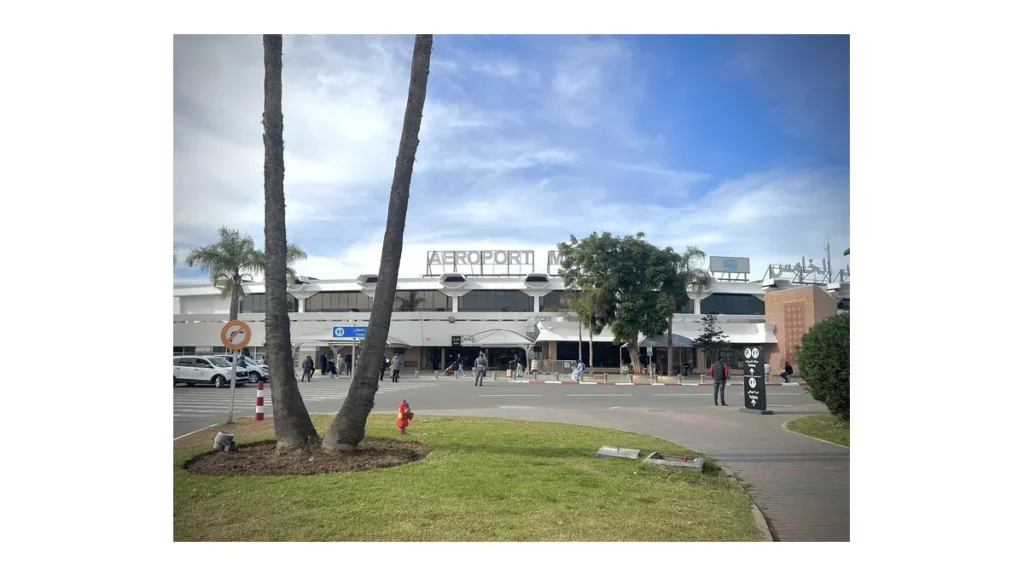
Mohammed V International Airport
Mohammed V International Airport
About
Mohammed V International Airport (IATA: CMN | ICAO: GMMN) is Morocco’s principal international gateway and one of the busiest and most strategically significant airports on the African continent. Situated approximately 30 kilometres south-east of central Casablanca, the airport functions as the primary hub for Royal Air Maroc and as a critical junction between Europe, sub-Saharan Africa, the Middle East, and the Americas. Its geographic position — Morocco sits at the north-western tip of Africa, separated from Spain by only 14 kilometres of water at the Strait of Gibraltar — gives CMN a natural advantage as a connecting point for passengers routing between continents. For aviation analysts, it represents one of the clearest examples of an African airport successfully positioning itself within global long-haul networks rather than remaining dependent on point-to-point regional traffic alone.
The airport was inaugurated in 1980, replacing the older Anfa Airport as Casablanca’s main commercial facility. It was named in honour of Mohammed V, the Sultan and later King of Morocco who led the country to independence from French and Spanish protectorate rule in 1956. Ownership and operation of the airport falls under the Office National des Aéroports (ONDA), the Moroccan state body responsible for managing the country’s network of civil airports. ONDA operates under the authority of the Ministry of Transport and Logistics and is the primary counterpart for airlines, ground handlers, and infrastructure investors seeking access to the Moroccan aviation market.
The airport has undergone several significant phases of expansion since its opening. Terminal 1 and Terminal 2 were developed in successive waves to accommodate growing passenger volumes, and a dedicated satellite terminal structure has been integrated to handle high-frequency short-haul traffic, particularly from low-cost carriers. Morocco’s hosting of major international events — and its broader ambition to position Casablanca as a financial and logistics hub for Africa — has driven sustained investment in airside and landside infrastructure. Further expansion works, aligned with Morocco’s co-hosting of the 2030 FIFA World Cup alongside Spain and Portugal, are either underway or in advanced planning stages as of 2026, with ONDA and the Moroccan government having publicly committed to upgrading capacity across the national airport network in preparation for the anticipated surge in visitor arrivals.
Country
Morocco is a constitutional monarchy located in North Africa, bordered by Algeria to the east, Mauritania to the south, and the Atlantic Ocean and Mediterranean Sea to the west and north respectively. Its capital is Rabat, though Casablanca — the country’s largest city — functions as the commercial and economic centre. With a population estimated at over 37 million people, Morocco occupies a pivotal position as both a Maghreb state and an increasingly active participant in sub-Saharan African economic affairs, having rejoined the African Union in 2017 after a 33-year absence. The country maintains strong trade and diplomatic ties with the European Union, the Gulf states, and a growing number of West and Central African nations, all of which are reflected in the connectivity patterns visible at Mohammed V International Airport.
→ Read the Morocco expert briefing
Airlines based here
Royal Air Maroc (IATA: AT) is the dominant carrier at Mohammed V International Airport and treats CMN as its primary hub for both passenger and cargo operations. The airline, which is majority state-owned, operates a wide network spanning Europe, North America, the Middle East, and an extensive web of African destinations that few other carriers on the continent can match in breadth. Royal Air Maroc joined the oneworld alliance in 2020, which has enhanced its interline and codeshare relationships and brought additional connecting traffic through Casablanca from partner carriers including British Airways, Iberia, Qatar Airways, and American Airlines.
Air Arabia Maroc, a low-cost joint venture between Air Arabia and Royal Air Maroc, also uses CMN as a base and focuses primarily on short-haul routes to European cities and domestic Moroccan destinations. Among visiting international carriers, the airport regularly handles services from Air France, Lufthansa, Turkish Airlines, Emirates, Air Algérie, Tunisair, EgyptAir, Transavia France, easyJet, Ryanair, and Iberia, among others. Several Gulf carriers maintain frequencies into Casablanca reflecting both the Moroccan diaspora market and transit demand. The low-cost sector has grown notably, with Ryanair and easyJet operating multiple routes to European leisure and VFR (visiting friends and relatives) markets.
Flights and destinations
Mohammed V International Airport supports one of the most geographically diverse route networks of any airport in Africa. Intercontinental services connect Casablanca directly to New York (JFK), Montreal, Washington Dulles, and other North American cities, primarily operated by Royal Air Maroc. Within Europe, the airport maintains high-frequency connections to Paris Charles de Gaulle, London Heathrow, Madrid Barajas, Amsterdam Schiphol, Brussels, Frankfurt, and Rome Fiumicino, served by a combination of Royal Air Maroc and European network and low-cost carriers. In the Middle East, Casablanca is linked to Dubai, Doha, and Riyadh.
The African network is a particular strength of the CMN hub. Royal Air Maroc operates services to Dakar, Abidjan, Accra, Lagos, Nairobi, Addis Ababa, Bamako, Conakry, and Libreville, among other destinations, making Casablanca one of the few African airports from which a traveller can connect to a wide range of other African cities without routing through a European hub. This intra-African connectivity is a deliberate strategic priority for both Royal Air Maroc and the Moroccan government, which has positioned the country as a gateway to the continent for international investors and institutions.
Facilities and capacity
Mohammed V International Airport operates with two main passenger terminals — Terminal 1 and Terminal 2 — along with associated satellite and pier structures that have been added over successive expansion phases. Terminal 1 handles the majority of international long-haul and network carrier traffic, while Terminal 2 and associated low-cost facilities process higher volumes of short-haul and charter movements. The airport is served by two parallel runways, oriented broadly north-east to south-west, which allow for simultaneous operations under instrument flight rules and support the airport’s role as a 24-hour hub. A dedicated cargo terminal serves freight operators and the belly-hold cargo operations of passenger airlines, with Royal Air Maroc Cargo being the principal freight brand associated with the hub.
In terms of passenger throughput, Mohammed V International Airport is classified as a large hub by African standards and consistently ranks among the top three or four busiest airports on the continent by international passenger movements, according to publicly disclosed traffic data from ONDA and cross-referenced industry estimates. Ground transport connections include a rail link — the Casa Voyageurs train service — connecting the airport to central Casablanca and onward to Rabat, which is a relatively rare amenity among African airports and reflects the broader infrastructure investment Morocco has made in multimodal connectivity. Ongoing and planned works tied to the 2030 World Cup preparations are expected to increase terminal capacity and improve passenger processing flows significantly before the end of the decade.
Visa regulations
Morocco operates a relatively open visa regime for travellers arriving at Mohammed V International Airport, though the precise rules vary by nationality and are subject to change. Citizens of the United States, the United Kingdom, and European Union member states are generally permitted to enter Morocco without a prior visa for stays of up to 90 days, making Casablanca an accessible entry point for the largest source markets of leisure and business travellers. Many Gulf Cooperation Council nationals also benefit from visa-free or simplified entry arrangements. For travellers holding passports from sub-Saharan African countries, the position is more varied: some nationalities enjoy visa-free access under bilateral agreements, while others are required to obtain a visa in advance from a Moroccan diplomatic mission. Morocco does not, as of the time of writing, operate a widely available visa-on-arrival scheme for most nationalities, nor a fully standardised eVisa platform comparable to those of some other African nations, though policy in this area has been evolving. Travellers are strongly advised to verify current requirements well in advance of travel, as visa regulations can change with limited notice.
→ For the most current visa requirements by passport nationality, use the live lookup tool at /visa-requirements/.
Recent developments
The period from 2024 to 2026 has been one of notable activity at Mohammed V International Airport. Royal Air Maroc has continued to expand its African network, adding or restoring frequencies to several West and Central African cities as part of its stated ambition to become the leading pan-African carrier. The airline has also taken delivery of additional aircraft — including further Boeing 787 Dreamliner widebodies — which have enabled the launch and strengthening of long-haul routes, particularly to North America. Several European low-cost carriers have added new seasonal and year-round routes to Casablanca in response to strong demand from the Moroccan diaspora community in Europe and growing inbound tourism.
On the infrastructure side, ONDA has publicly confirmed works associated with the broader national airports upgrade programme linked to Morocco’s 2030 World Cup co-hosting obligations. These works include terminal capacity enhancements, improvements to security processing lanes, and upgrades to airside ground handling equipment. The airport has also seen increased attention from cargo operators, reflecting Morocco’s growing role as a manufacturing and logistics base — particularly in the automotive and aerospace sectors — with Casablanca serving as an export gateway for goods produced in the country’s industrial zones.
News and reports
Researchers, journalists, and analysts tracking developments at Mohammed V International Airport have several authoritative sources to consult. The Office National des Aéroports (ONDA) publishes press releases, traffic statistics, and infrastructure announcements through its official communications channels, and is the primary source for verified operational data on the airport. The Direction Générale de l’Aviation Civile (DGAC) — Morocco’s civil aviation authority — issues regulatory notices, safety oversight reports, and policy documents relevant to the broader Moroccan aviation sector. At the regional and global level, IATA’s Africa and Middle East regional office produces periodic reports on African aviation market trends in which CMN frequently features as a reference hub. The ICAO Regional Office for Africa and the Indian Ocean (ESAF), based in Nairobi, and the ICAO Middle East Regional Office also publish safety and capacity oversight materials relevant to Moroccan airspace. Trade publications including Aviation Week Network, ch-aviation, and The Africa Report provide ongoing commercial and operational coverage of the airport and its carriers.
Related research
- Morocco Expert Briefing — in-depth political, economic, and investment context for Morocco
- Morocco Statistics — key demographic, economic, and trade data
- African Airports — comparative profiles of major airports across the continent
- African Airlines — analysis of carriers operating across African markets
- Visa Requirements — live lookup tool for entry requirements by nationality
- Country Comparison — benchmark Morocco against peer economies and aviation markets