Lungi International Airport
Lungi International Airport
About
Lungi International Airport (IATA: FNA / ICAO: GFLL) is Sierra Leone’s principal gateway to the world and one of West Africa’s most geographically distinctive commercial airports. Situated on the Lungi Peninsula, directly across the Sierra Leone River estuary from the capital Freetown, the airport occupies a position that is both strategically important and logistically challenging — a combination that has shaped its development, its passenger experience, and its long-term infrastructure agenda in equal measure. For travellers, journalists, and aviation analysts tracking connectivity across sub-Saharan Africa, Lungi represents a compelling case study in how geography, post-conflict reconstruction, and incremental investment intersect at a single piece of tarmac.
The airport’s origins trace to the colonial era, when the site was developed as a Royal Air Force base during the Second World War. Civil aviation operations expanded after Sierra Leone’s independence in 1961, and the facility was progressively upgraded to handle jet-age traffic. The airport is owned by the Government of Sierra Leone and has historically been operated under the oversight of the Sierra Leone Airports Authority (SLAA). Over the decades, the terminal building and airside infrastructure have undergone several rounds of rehabilitation, including post-civil-war restoration work in the early 2000s following the conflict that ended in 2002.
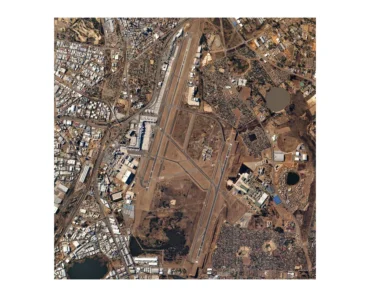
More recently, the airport has been the subject of sustained attention from both the Sierra Leonean government and international development partners, with proposals for a new passenger terminal and improved landside access forming the centrepiece of longer-term masterplanning discussions. The runway — a single asphalt strip designated 12/30, with a published length sufficient to accommodate wide-body aircraft including the Boeing 737 family and, under appropriate conditions, larger jets — remains the airport’s core operational asset. Capacity constraints, ageing terminal infrastructure, and the cross-estuary access problem have all featured prominently in government policy documents and donor assessments.
Country
Sierra Leone is a coastal West African nation bordered by Guinea to the north and east and Liberia to the southeast, with Freetown serving as both the capital and the country’s dominant economic and population centre. The country’s population is estimated in the low-to-mid millions, placing it among the smaller economies of the Economic Community of West African States (ECOWAS) bloc, though its deep-water natural harbour — one of the largest in the world — and its mineral resources give it an outsized strategic relevance within the sub-region. Sierra Leone is a member of ECOWAS, the African Union, and the Commonwealth, affiliations that shape both its aviation bilateral agreements and its visa policy architecture. → Read the Sierra Leone expert briefing
Airlines Based Here
Lungi International Airport does not currently host a full-service national flag carrier in the conventional sense — Sierra Leone’s earlier national airline ventures have not sustained long-term operations, and as of 2026 the airport functions primarily as a destination and transit point for visiting international carriers rather than as a hub for a home-based airline. African World Airlines and smaller regional operators have at various points offered services touching Freetown, and charter and air-taxi operators registered in Sierra Leone use the airport for domestic and sub-regional movements. The absence of a robust home carrier is a recurring theme in Sierra Leonean aviation policy discussions, with government statements periodically referencing ambitions to establish or attract an anchor carrier. Visiting carriers — those for whom FNA is a scheduled point on a wider African or intercontinental network — constitute the bulk of commercial traffic at the airport.
Flights and Destinations
The route network at Lungi is modest by the standards of larger African hubs but covers the key corridors that matter most to Sierra Leone’s traveller profile: diaspora passengers, business travellers, humanitarian and development sector workers, and a growing leisure segment. Brussels Airlines has been among the most consistent long-haul operators at FNA, maintaining scheduled service connecting Freetown to Brussels and, through that hub, to wider European and intercontinental points. Air France has served the Freetown–Paris Charles de Gaulle corridor, providing a second European long-haul option. Within Africa, carriers including Air Côte d’Ivoire and ASKY Airlines have offered regional connectivity, linking Freetown to Abidjan, Lomé, and Accra — the latter being a particularly important transit hub for onward connections across the continent and to North America. Gambia Bird and smaller West African operators have at various times provided sub-regional links to Banjul, Conakry, and Monrovia. The London Heathrow corridor, historically served by British Airways and subsequently by other carriers, remains commercially significant given the size of the Sierra Leonean diaspora in the United Kingdom. Industry observers note that the network’s depth is sensitive to seasonal demand fluctuations and to the broader financial health of West African aviation.
Facilities and Capacity
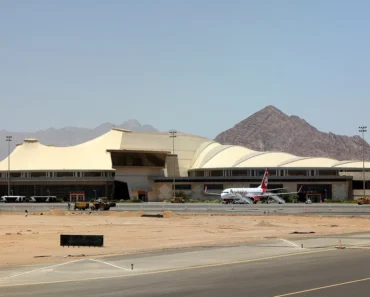
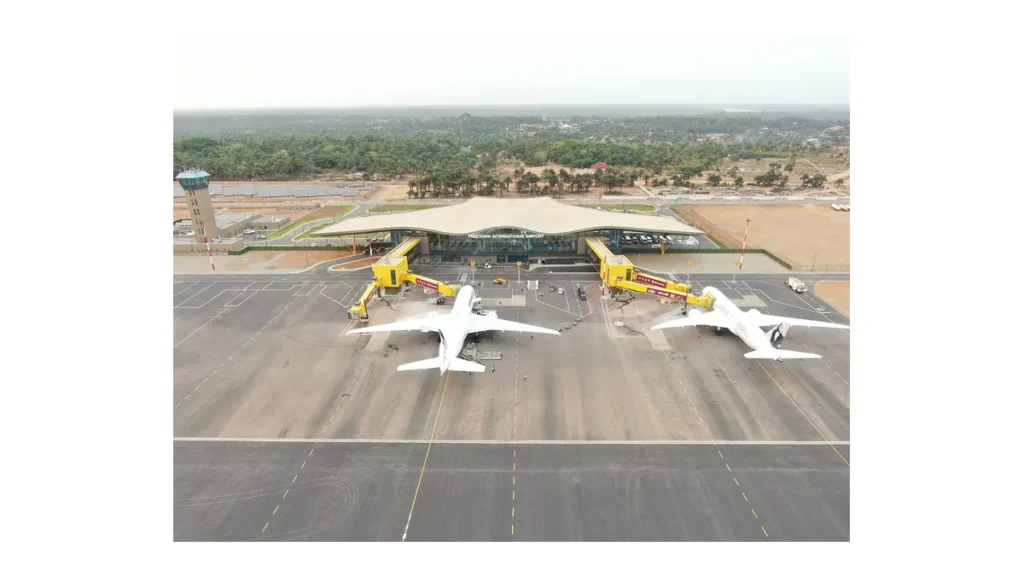
Lungi International Airport operates from a single terminal building that handles both arriving and departing international passengers. The terminal’s layout reflects its incremental development history: functional but constrained, with limited airside retail, basic food and beverage provision, and check-in and immigration facilities that can experience congestion during peak departure banks. The airport has a single runway (designated 12/30), which is the standard configuration for airports of this traffic class in West Africa. Cargo handling facilities exist on site, serving the humanitarian logistics sector — which is a significant user given Sierra Leone’s development profile — as well as commercial freight. According to publicly disclosed traffic data and industry estimates, Lungi handles passenger volumes consistent with classification as a small-to-medium international hub within the African context, with throughput well below the multi-million annual passenger figures recorded at major African gateway airports. Planned expansion works, including proposals for a new or substantially upgraded terminal, have been discussed in government and donor forums, though the timeline and financing structures for such projects remain subject to ongoing negotiation as of 2026.
Visa Regulations
Travellers arriving at Lungi International Airport are subject to Sierra Leone’s national visa regime, which has evolved in recent years toward greater accessibility for a range of source markets. Citizens of ECOWAS member states benefit from the bloc’s free movement protocols, generally allowing entry without a visa for short stays — though travellers are advised to verify current bilateral arrangements before travel. For passengers holding United States, United Kingdom, or European Union member-state passports, Sierra Leone has in recent years offered visa-on-arrival facilities at Lungi, alongside an eVisa system that allows pre-travel authorisation through an online application portal — reducing queuing time at the immigration hall on arrival. Visa fees, permitted durations of stay, and the precise list of nationalities eligible for each entry pathway are subject to change by the Sierra Leone Immigration Department, and travellers should not rely solely on information published in advance of their journey. For the most current and verified entry requirements applicable to your nationality, consult the live lookup tool: → Check visa requirements for Sierra Leone.
Recent Developments
The 24-month period leading into 2026 has seen a number of notable developments at and around Lungi International Airport. The long-standing challenge of cross-estuary access — passengers travelling between the airport and central Freetown have historically relied on ferry services, helicopters, or a lengthy road route — has remained a live policy issue, with feasibility discussions around a proposed bridge or tunnel crossing continuing to attract attention from government, the African Development Bank, and other institutional stakeholders. On the airside, the Sierra Leone Airports Authority has engaged in ongoing dialogue with ICAO’s West and Central Africa regional office regarding safety oversight standards and compliance with international certification requirements. Route network changes have reflected the broader volatility of West African aviation: some carriers have adjusted frequencies or suspended services in response to fuel cost pressures and currency exchange challenges, while the government has actively courted new airline entrants as part of its economic development agenda. Terminal improvement works, including upgrades to passenger processing areas, have been reported in SLAA communications, though the scale and completion status of specific works should be verified against current authority announcements.
News and Reports
Researchers and journalists tracking developments at Lungi International Airport and Sierra Leonean aviation more broadly should consult a layered set of primary and secondary sources. The Sierra Leone Airports Authority (SLAA) publishes operational notices, press releases, and policy statements through its official communications channels — these represent the most authoritative source for terminal, runway, and regulatory updates. The Sierra Leone Civil Aviation Authority (SLCAA) is the relevant regulatory body for safety oversight, licensing, and airspace management, and its publications are essential reading for compliance-focused analysts. At the continental level, IATA’s Africa regional reports and the African Airlines Association (AFRAA) publish periodic data and commentary on network trends, traffic performance, and infrastructure investment across the continent, within which Sierra Leone features as part of the West Africa sub-regional picture. ICAO’s West and Central Africa Regional Office (WACAF, based in Dakar) produces safety and technical oversight assessments relevant to airports in the GFLL area of responsibility. General aviation trade media — including ch-aviation, anna.aero, and The Africa Report — provide ongoing commercial and operational coverage of route changes and airline developments at FNA.