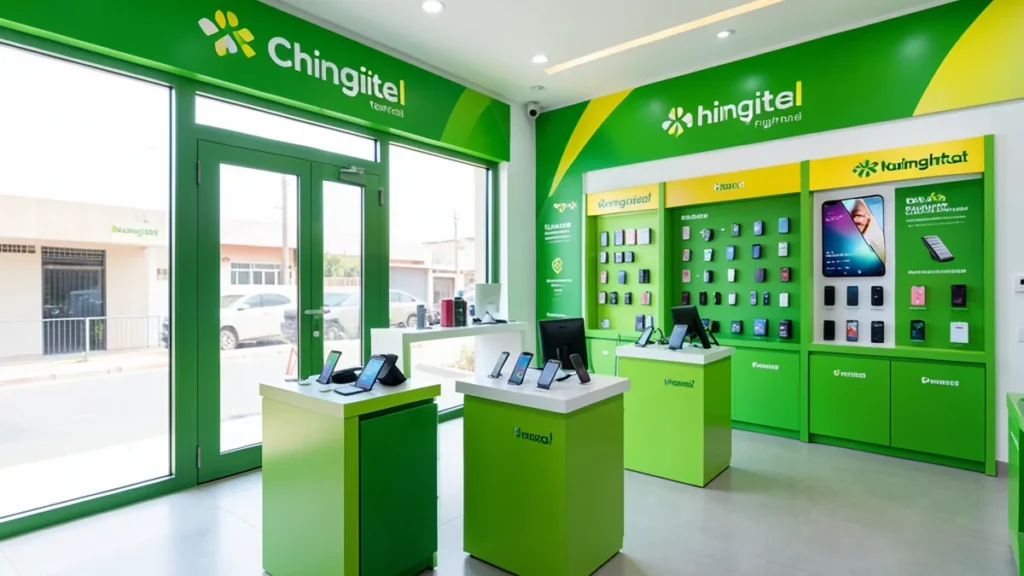
Chinguitel
Chinguitel
About
Chinguitel is one of Mauritania’s established mobile network operators, offering 2G, 3G, and 4G services from its headquarters in Nouakchott. Controlled by Sudatel, the Sudanese state-linked telecommunications group, Chinguitel occupies a distinct position in a compact but strategically important West African market — one where mobile connectivity remains the primary gateway to digital services for the majority of the population.
The operator was founded in the mid-2000s as part of a broader wave of liberalisation that opened Mauritania’s telecoms sector to new entrants. Chinguitel received its operating licence and entered commercial service as a challenger to the incumbent, bringing competitive pressure on pricing and expanding network reach into secondary towns and corridors previously underserved by existing players.
Ownership has remained anchored within the Sudatel group, which has pursued a regional African expansion strategy across several Sahel and sub-Saharan markets. That parent relationship gives Chinguitel access to group-level procurement, roaming agreements, and technical resources, though it also ties the operator’s strategic direction closely to decisions made in Khartoum — a dependency that has at times complicated long-term investment planning given political turbulence in Sudan.
Country market context
Mauritania’s mobile market is regulated by the Autorité de Régulation des Télécommunications et des Postes (ARTP). The country’s mobile penetration rate has grown steadily over the past decade, though according to the most recent regulator data it remains below the median for North and West African peer markets, reflecting a population dispersed across one of the world’s largest and most sparsely inhabited territories. The market supports three licensed mobile operators — Mauritel (the historical incumbent, majority-owned by Maroc Telecom), Mattel, and Chinguitel — with Mauritel holding the dominant subscriber and revenue share. Competition is most intense in Nouakchott and Nouadhibou, while rural and desert regions remain commercially marginal. → Read the Mauritania expert briefing
Network and technology
Chinguitel operates a multi-generation network spanning 2G (GSM), 3G (UMTS/HSPA), and 4G (LTE) technologies. Its coverage footprint prioritises the main population centres and the principal road axes linking Nouakchott to regional capitals, though industry observers note that meaningful 4G availability outside the two largest cities remains limited. The operator has invested in fibre backhaul on key urban routes to support data quality on its LTE layer. Spectrum holdings are consistent with licences awarded under ARTP processes, though no public disclosure of specific band allocations has been made in recent regulatory filings reviewed at time of writing. A 5G licence or commercial 5G launch had not been announced as of early 2026.
Products and services
Chinguitel’s core commercial offer comprises prepaid and postpaid voice, SMS, and mobile data bundles targeted at individual consumers and small businesses. The operator has pursued mobile financial services as a growth vector in line with regional trends: its branded mobile money platform enables person-to-person transfers, airtime top-up, and bill payment, serving a population where formal banking penetration remains low. On the enterprise side, Chinguitel offers dedicated data connectivity, virtual private network solutions, and managed services to corporate and government clients in Nouakchott. Fixed broadband services are offered on a limited basis, primarily through fixed-wireless access rather than a large-scale fibre-to-the-premises rollout.
Subscribers and market position
Industry estimates suggest Chinguitel holds the position of the second or third largest operator by subscriber count in Mauritania, trailing Mauritel but competing closely with Mattel for the remaining share of the market. Its subscriber base skews toward price-sensitive prepaid users in urban and peri-urban areas. Churn rates, as in most prepaid-dominated African markets, are structurally elevated, and multi-SIM usage means that active subscriber figures reported to the regulator may overstate genuine individual user penetration. The operator has sought to defend its position through competitive data pricing and periodic promotional campaigns rather than through significant network differentiation.
Financial situation
Chinguitel is not publicly listed, and detailed financial disclosures are not available in the public domain. Revenue trajectory is understood by industry analysts to reflect the broader pressures facing challenger operators in small African markets: voice revenue erosion driven by over-the-top substitution, partially offset by data revenue growth, against a backdrop of ongoing capital expenditure requirements to maintain network competitiveness. The operator’s financial health is materially linked to the stability and strategic priorities of its parent, Sudatel, which has itself faced balance-sheet pressures in recent years. No formal restructuring or insolvency proceedings have been publicly reported as of early 2026.
Recent developments
Over the 24 months to early 2026, Chinguitel’s most notable activity has centred on incremental 4G network densification in Nouakchott and efforts to grow its mobile money user base as Mauritania’s digital payments ecosystem matures. No change of ownership or merger transaction involving Chinguitel has been publicly announced in this period. The operator has engaged with ARTP processes relating to spectrum refarming and quality-of-service benchmarking that affect all three licensed operators. Broader uncertainty around the Sudatel parent group’s strategic direction — given ongoing political and economic conditions in Sudan — continues to be flagged by regional analysts as a medium-term risk factor for investment and network development commitments at the Mauritanian subsidiary level.
Related research
- Mauritania expert briefing
- Mauritania statistics
- Telecom research and analysis
- Country comparison tool