Ethiopia — Expert Briefing
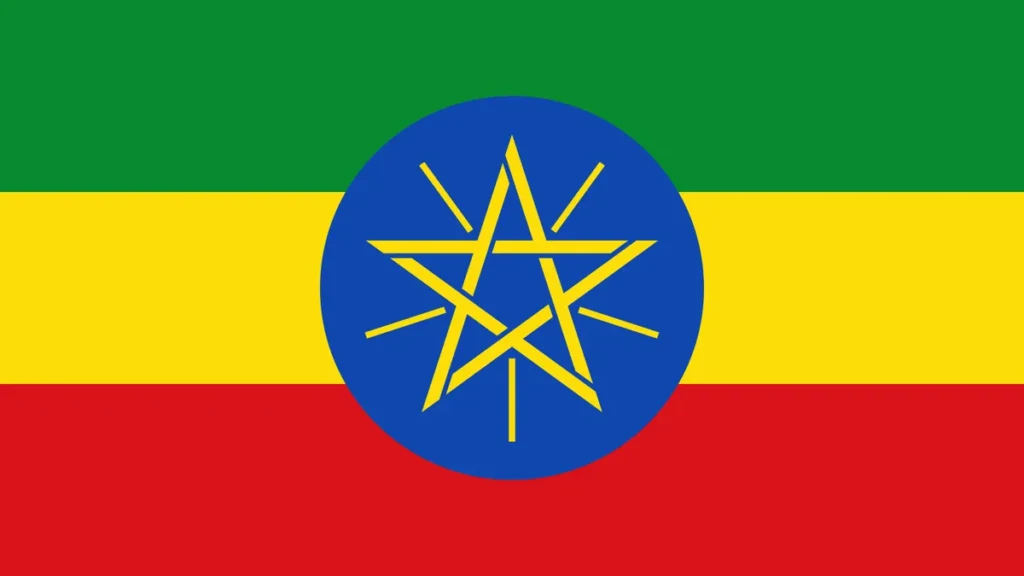
Ethiopia at a glance: Africa’s second-most populous nation is navigating a fragile post-conflict transition while positioning itself as a continental manufacturing hub — making it one of the most consequential, and most complex, countries on the continent in 2026.
Overview
Capital: Addis Ababa (also the seat of the African Union). Population: approximately 130 million (World Bank, 2025 estimate), making Ethiopia the second most populous country in Africa after Nigeria. Official languages: Amharic (federal working language); Afaan Oromo, Somali, Tigrinya, and more than 80 other languages hold regional official status. Currency: Ethiopian Birr (ETB). GDP per capita: low-income band, estimated at approximately USD 1,020–1,100 (World Bank Atlas method, 2024–25), though purchasing-power-adjusted figures are somewhat higher. Ethiopia matters in 2026 for two compounding reasons: it is simultaneously one of the world’s fastest-urbanising economies — with an industrial-park strategy that has drawn significant Chinese, Turkish, and Indian manufacturing investment — and a country still managing the political and humanitarian aftershocks of the 2020–2022 Tigray war, one of the deadliest conflicts of the twenty-first century. How Addis Ababa manages that dual reality will shape the Horn of Africa’s trajectory for a generation.
Government and Politics
Ethiopia is a federal parliamentary republic. Executive power is formally vested in the Prime Minister, while the President serves a largely ceremonial role. Prime Minister Abiy Ahmed Ali, who took office in April 2018 and was awarded the Nobel Peace Prize in 2019 for the Eritrea peace accord, leads the Prosperity Party (PP) — a pan-ethnic coalition formed in 2019 by merging the constituent parties of the former Ethiopian People’s Revolutionary Democratic Front (EPRDF). President Sahle-Work Zewde, the first woman to hold the office, continues in her largely protocol role. The federal legislature is bicameral: the House of People’s Representatives (lower house, 547 seats) and the House of the Federation (upper house, representing regional states). The most recent general election was held in June 2021, delayed from 2020 due to the COVID-19 pandemic and the Tigray conflict; the Prosperity Party won an overwhelming majority, though the poll was criticised by opposition groups and some international observers for being held while active conflict was ongoing in the north. The next scheduled general election is due in 2026, and its conduct — particularly whether Tigray and other conflict-affected regions can participate freely — will be a significant test of the Pretoria Agreement’s durability. No formal constitutional amendment has been enacted since the 1995 constitution, but the federal structure has been under sustained political pressure, with calls from several regional states for greater autonomy or boundary revisions.
Economy
Ethiopia’s GDP stood at approximately USD 155–165 billion in purchasing-power-parity terms (IMF World Economic Outlook, 2024), with nominal GDP estimated at around USD 160 billion, though figures carry significant uncertainty given data-collection constraints. The economy is dominated by agriculture, which accounts for roughly 35–40 percent of GDP and employs the majority of the workforce; coffee remains the single most important export commodity, contributing around 30–35 percent of merchandise export earnings. Floriculture, sesame, and gold are also significant. The industrial sector has grown around government-built industrial parks — notably Hawassa Industrial Park and Bole Lemi — anchored by garment and textile manufacturing for export to the United States and European markets. Ethiopia lost its preferential access to the US market under the African Growth and Opportunity Act (AGOA) in January 2022, following the Tigray conflict, dealing a serious blow to the apparel sector; partial restoration of trade relations has been discussed but, as of mid-2025, full AGOA reinstatement remains unresolved. The single most consequential economic story of the past 24 months is the July 2024 liberalisation of the Ethiopian Birr. After decades of a managed exchange rate, the National Bank of Ethiopia shifted to a market-determined exchange rate, causing the Birr to depreciate by approximately 30 percent against the US dollar almost immediately. The reform, supported by the IMF as part of a USD 3.4 billion Extended Credit Facility arrangement, was designed to unlock foreign direct investment and reduce the chronic parallel-market premium, but it has also driven imported inflation and squeezed urban households. Ethiopia carries a substantial external debt burden — estimated at over USD 28 billion — and successfully reached a debt restructuring agreement with official bilateral creditors under the G20 Common Framework in 2023, though implementation has been slow.
Demographics and Society
Ethiopia’s population of approximately 130 million is among the youngest in the world, with a median age estimated below 20 years and roughly 40 percent of the population under 15. The country is ethnically and linguistically extraordinarily diverse: the Oromo are the largest group (approximately 35–37 percent of the population), followed by the Amhara (approximately 27 percent), Somali (approximately 6 percent), Tigrinya-speaking Tigrayans (approximately 6 percent), and dozens of other groups including the Sidama, Afar, and Gurage. Religion is roughly split between Ethiopian Orthodox Christianity (approximately 43–44 percent) and Islam (approximately 34 percent), with Protestant Christianity — particularly Pentecostal movements — growing rapidly and now accounting for an estimated 18–20 percent of the population. Urbanisation is accelerating: Addis Ababa’s population is estimated at 5–6 million in the city proper, with the wider metropolitan area considerably larger, and secondary cities including Dire Dawa, Mekelle, Gondar, Hawassa, and Adama are expanding quickly. The defining social trend is the intersection of youth unemployment and political mobilisation. Ethiopia produces hundreds of thousands of university graduates annually into an economy that cannot yet absorb them, and the Qeerroo youth movement among Oromo youth — which was instrumental in bringing Abiy Ahmed to power in 2018 — illustrates how rapidly demographic pressure can translate into political force. Managing youth expectations while delivering economic opportunity is arguably the central domestic challenge of the decade.
Key Issues Right Now
Post-Tigray stabilisation and the Pretoria Agreement. The November 2022 Cessation of Hostilities Agreement signed in Pretoria between the Ethiopian federal government and the Tigray People’s Liberation Front (TPLF) formally ended the two-year war that killed an estimated 300,000–500,000 people and displaced millions. Implementation has been uneven. Disarmament of TPLF forces has proceeded partially, humanitarian access to Tigray has improved but remains constrained, and the restoration of basic services — electricity, banking, telecommunications — to the region is incomplete. Accountability mechanisms for atrocities committed by all parties, including federal forces, Eritrean troops, and Tigrayan fighters, remain largely absent. Meanwhile, a separate and serious conflict in the Amhara region — involving the Fano militia, which rose against federal authority from 2023 — has displaced hundreds of thousands and placed the region under a prolonged state of emergency, complicating any narrative of national stabilisation.
The Grand Ethiopian Renaissance Dam and Nile diplomacy. The Grand Ethiopian Renaissance Dam (GERD) on the Blue Nile — Africa’s largest hydroelectric dam — reached full operational capacity in stages between 2022 and 2024, with all 13 turbines now generating power. The dam is transformative for Ethiopia’s domestic energy ambitions and its plans to become a regional electricity exporter. However, it remains a source of acute diplomatic tension with Egypt, which views any reduction in Nile flow as an existential threat, and with Sudan. Negotiations under the African Union framework have repeatedly stalled. Egypt has escalated its rhetoric and has deepened military ties with Ethiopia’s neighbours, including Somalia, in what Addis Ababa characterises as deliberate encirclement. The GERD dispute is now firmly embedded in a broader regional geopolitical contest and shows no clear path to resolution in the near term.
Sea access and the Somalia/Somaliland dimension. Ethiopia lost its Red Sea coastline when Eritrea became independent in 1993, and access to reliable, affordable sea ports has been a strategic preoccupation ever since. In January 2024, Prime Minister Abiy Ahmed signed a Memorandum of Understanding with Somaliland — the self-declared republic that controls the Gulf of Aden coast — granting Ethiopia potential access to the port of Berbera and a possible naval base, in exchange for Ethiopian recognition of Somaliland’s statehood. The agreement provoked an immediate and furious response from the Federal Government of Somalia, which views Somaliland as its own territory, and triggered a serious diplomatic crisis between Addis Ababa and Mogadishu. The episode has drawn in Turkey (which brokered subsequent talks), Egypt, and the Arab League, and has reshaped the Horn of Africa’s diplomatic geometry in ways that are still unfolding.
Travel and Connectivity
Bole International Airport in Addis Ababa is the principal international gateway and serves as the hub for Ethiopian Airlines, one of Africa’s largest and most profitable carriers, operating intercontinental routes across Africa, Europe, Asia, and the Americas. Ethiopian Airlines is itself a significant national asset and a source of considerable soft power. Secondary airports with international or regional connections include Dire Dawa, Mekelle (though services were disrupted during and after the Tigray conflict), Gondar, and Lalibela. Tourism is anchored by UNESCO World Heritage Sites including the rock-hewn churches of Lalibela, the ancient obelisks of Aksum, the walled city of Harar, and the Simien Mountains National Park; the Omo Valley attracts specialist cultural and anthropological tourism. The sector was severely disrupted by the Tigray war and has been recovering gradually, though security advisories for parts of the Amhara region and the Afar corridor remain in place as of 2025–26. Internet penetration stands at approximately 20–25 percent of the population, relatively low by regional standards, though mobile connectivity is expanding rapidly. Telebirr, the mobile money platform launched by state-owned Ethio Telecom in 2021, has achieved remarkable adoption — surpassing 40 million registered users within three years — and is reshaping retail payments and financial inclusion, particularly in peri-urban and rural areas. The partial liberalisation of the telecoms sector, including the entry of Safaricom Ethiopia (backed by a consortium including Vodacom and the CDC Group), is increasing competition and coverage.
Further Research
Analysts, journalists, and investors seeking to deepen their understanding of Ethiopia should consult the following institutions and resources. The National Bank of Ethiopia publishes monetary policy statements, exchange rate data, and financial sector reports. The Ethiopian Statistics Service (formerly the Central Statistical Agency) is the primary source for demographic, agricultural, and economic survey data, including the Ethiopian Demographic and Health Survey. The World Bank Ethiopia country page provides macro-fiscal assessments, project documentation, and the Ethiopia Economic Update series, which offers rigorous quarterly analysis of economic conditions. The Africa Center for Strategic Studies (Washington DC) publishes regular security-focused briefings on the Horn of Africa, including detailed analysis of the Tigray conflict, the Amhara crisis, and regional dynamics. The International Crisis Group maintains an active Ethiopia watch, with published reports on the Pretoria Agreement’s implementation, the Amhara conflict, and Oromia security. Finally, the Ethiopian Studies programme at Addis Ababa University — alongside the Journal of Ethiopian Studies — provides peer-reviewed academic context on history, ethnicity, and political economy that is essential for understanding the deeper structural forces at work in the country.