National Museum and House of Culture (Dar es Salaam)
National Museum and House of Culture (Dar es Salaam)
About
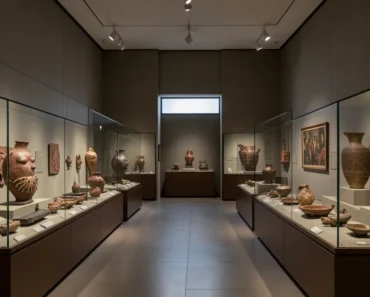
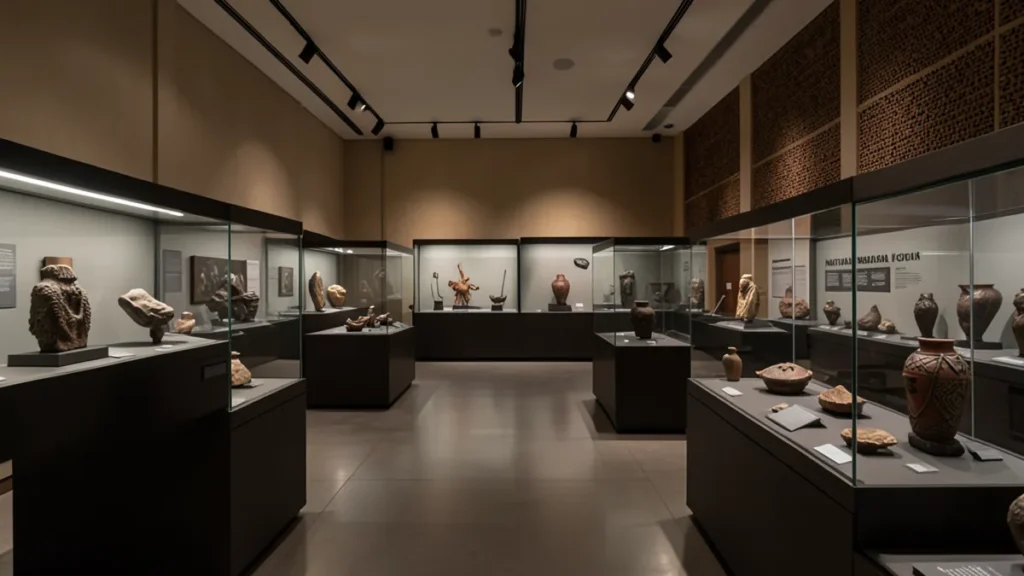
The National Museum and House of Culture in Dar es Salaam is Tanzania’s principal public museum and one of the most significant cultural institutions in East Africa. It holds the country’s foremost collections in archaeology, natural history, and ethnography, and serves as the custodian of some of the most important hominin fossil casts in the world — material directly linked to the Olduvai Gorge discoveries that reshaped our understanding of human origins. For researchers, students, and curious travellers alike, it offers a rare opportunity to encounter deep African history in the city where that history is most actively debated and celebrated.
The museum was founded in 1934 under British colonial administration as the King George V Memorial Museum, a name that reflected the political context of its establishment rather than the communities whose heritage it was built to house. It was renamed the National Museum of Tanzania following independence in 1963, and later expanded in mandate to become the National Museum and House of Culture, signalling a deliberate shift toward broader cultural programming alongside its collections work.
The institution sits under the umbrella of the National Museum of Tanzania, a parastatal body that also oversees regional sites including the Village Museum on the northern outskirts of Dar es Salaam. Over the decades, the museum has benefited from the contributions of notable researchers and curators who have shaped its collections and interpretive frameworks, working alongside international partners from Europe and North America — partnerships that have, in more recent years, become subjects of productive scrutiny regarding ownership, access, and representation.
Country and city context
Tanzania is a country of extraordinary geographic and cultural range, stretching from the Indian Ocean coast through the Great Rift Valley to the slopes of Kilimanjaro, and encompassing more than 120 ethnic groups and a Swahili-speaking majority that gives the nation a distinctive cultural coherence. Dar es Salaam — whose name translates loosely from Arabic as “haven of peace” — is the country’s largest city and commercial capital, a fast-growing Indian Ocean port city of more than five million people that blends colonial-era architecture, vibrant street culture, and an increasingly prominent arts scene. The museum sits near the city centre, making it accessible from most visitor accommodation and a natural anchor for any cultural itinerary in the region. → Read the Tanzania expert briefing
Collection highlights
The following represent some of the museum’s most significant holdings and display areas:
- Olduvai Gorge fossil casts — Casts of hominin remains associated with the Leakey excavations at Olduvai, including material related to Homo habilis and Australopithecus boisei, presented with stratigraphic context that traces human evolution across nearly two million years.
- Zinjanthropus display — A dedicated exhibit around the famous “Zinj” skull (OH 5), discovered by Mary Leakey in 1959, one of the landmark finds in paleoanthropology and a centrepiece of the museum’s prehistory galleries.
- Ethnographic collections — Artefacts representing the material cultures of numerous Tanzanian ethnic groups, including tools, ceremonial objects, textiles, and musical instruments gathered across the twentieth century.
- German colonial-era exhibits — Documentary and material records from the period of German East Africa (1885–1919), presented with increasing critical framing in recent years.
- Natural history gallery — Specimens covering Tanzanian flora, fauna, and geology, offering ecological context for the country’s extraordinary biodiversity.
- The Shirazi and Swahili Coast section — Material relating to the Indian Ocean trading networks that shaped coastal Tanzania, including ceramics, coins, and navigational artefacts reflecting centuries of exchange with Arabia, Persia, and South Asia.
Architecture and building
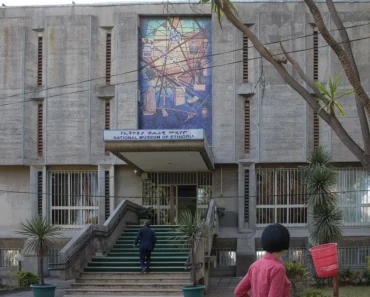
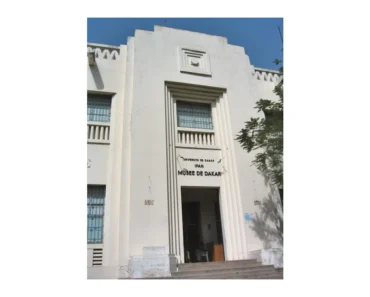
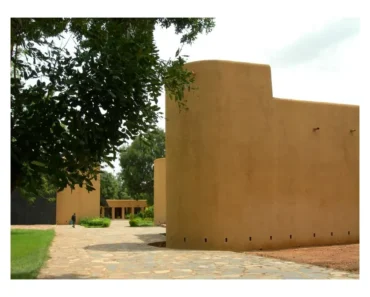
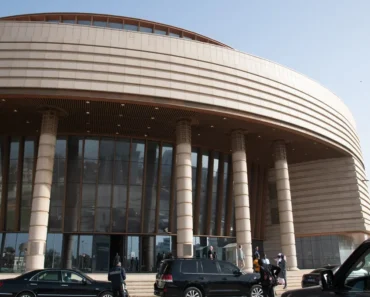
The main museum building dates to the colonial period and reflects the institutional architecture common to British East African public buildings of the mid-twentieth century — functional, low-rise, and designed for tropical climates with shaded verandas and high-ceilinged galleries. The building is not attributed to a single widely documented architect in publicly available sources. It has undergone several phases of renovation and extension since independence, with improvements to gallery space and visitor facilities carried out in the 1990s and 2000s with support from international development partners. The grounds also accommodate the House of Culture performance and events space, which was developed as part of the institution’s expanded cultural mandate.
Visiting practical
The National Museum and House of Culture is located on Shaaban Robert Street in central Dar es Salaam, within walking distance of the Botanical Garden and a short taxi or bajaji ride from most city-centre hotels. The museum is generally open Tuesday through Sunday, with Monday closures standard, though visitors should confirm current hours directly with the institution before travelling, as schedules can vary around public holidays and special events. Admission fees fall in the low-cost band by international standards — typically a few US dollars or the local shilling equivalent for foreign visitors, with reduced or nominal rates for Tanzanian nationals and students. The site is largely accessible at ground level, though some gallery areas may present challenges for visitors with significant mobility requirements; it is advisable to contact the museum in advance if specific accessibility arrangements are needed.
Repatriation and debates
Like many African national museums whose collections were shaped during the colonial era, the National Museum and House of Culture exists within an ongoing global conversation about the provenance and ownership of cultural objects. Tanzania’s ethnographic holdings include material collected under conditions that would not meet contemporary ethical standards for consent and community participation, and some objects of Tanzanian origin remain in European institutions — particularly in Germany, given the history of German East Africa. The broader debate around repatriation of African cultural heritage, accelerated by the 2018 Sarr-Savoy report commissioned by the French government and subsequent policy shifts in several European countries, is directly relevant to Tanzanian collections. The museum and the Tanzanian government have engaged in diplomatic discussions regarding the return of specific cultural and historical objects, though formal repatriation agreements have moved slowly. Researchers and visitors with an interest in provenance questions will find the museum’s own framing of its collections an instructive reflection of where these conversations currently stand.
Recent developments
Specific details about exhibitions, leadership appointments, or infrastructure changes at the National Museum and House of Culture in the 24 months prior to mid-2025 are not fully verified in publicly available sources at the time of writing, and africa-research.org does not publish unconfirmed institutional news. What is broadly documented is that the museum has continued to develop its public programming in line with Tanzania’s growing cultural tourism sector, and that the institution remains an active participant in regional museum networks across East Africa. Readers with current information about recent developments are encouraged to consult the museum directly or follow announcements through the National Museum of Tanzania’s official communications. This profile will be updated as verified information becomes available.