CemAir
CemAir
About
CemAir occupies a distinctive niche in South African and broader sub-Saharan aviation: a privately held regional carrier that has consistently punched above its weight, connecting smaller domestic markets and underserved routes that the continent’s larger flag carriers have historically overlooked. Operating under IATA code 5Z and ICAO designator KEM, and headquartered at Johannesburg’s O.R. Tambo International Airport (JNB), CemAir has built its identity around schedule reliability and operational flexibility in a market where both remain hard-won commodities.
CemAir was founded in the mid-2000s, initially operating charter and ad-hoc services before transitioning into scheduled regional operations. The airline is privately owned, with the Cemmenis family having played a central role in its founding and strategic direction — a structure that has allowed it to move with greater agility than state-backed competitors, though it also means the carrier operates without the capital cushion that government ownership can provide. Over the years, CemAir has periodically expanded and contracted its network in response to South Africa’s turbulent aviation environment, which has seen the collapse of several carriers including SA Express and Comair.
Those high-profile exits from the market created both opportunity and risk for CemAir. On one hand, slots, routes, and passengers became available; on the other, the broader structural weaknesses — high jet fuel costs, a volatile rand, and constrained consumer spending — that contributed to those collapses did not disappear. CemAir’s corporate response has been to maintain a lean operational model, focus on routes with demonstrable demand, and avoid overextension into long-haul markets where it lacks competitive advantage.
Bases and Hubs
Johannesburg O.R. Tambo International (JNB) — CemAir’s primary hub and operational base, where the airline conducts the majority of its maintenance, crew scheduling, and network coordination.
Cape Town International (CPT) — A key focus city for CemAir, reflecting the high-demand leisure and business corridor between South Africa’s two largest urban centres.
Margate Airport (MGH) and other secondary South African points — CemAir has historically served smaller regional airports on the KwaZulu-Natal coast and elsewhere, precisely the thin-route markets that define its competitive positioning.
Fleet
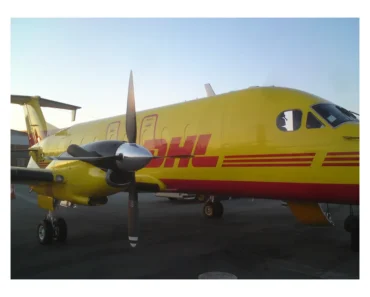
CemAir has operated a mixed fleet suited to regional and thin-route flying. According to publicly disclosed fleet data and civil aviation registry records, the airline has at various points operated Bombardier CRJ-series regional jets — including the CRJ200 and CRJ700 variants — alongside turboprop types appropriate for shorter sectors and lower-density routes. The carrier has also operated Beechcraft 1900 aircraft on its smallest-gauge operations. Industry observers note that CemAir’s fleet strategy prioritises right-sizing aircraft to route demand rather than standardising around a single type, which carries both cost and scheduling complexity trade-offs. Any recent fleet renewal activity or additions should be confirmed against the South African Civil Aviation Authority (SACAA) registry, as fleet composition at this scale can shift materially within a single operating season.
Destinations
CemAir’s network is predominantly domestic South African, with the Johannesburg–Cape Town trunk route sitting at the commercial heart of its schedule. Beyond that primary corridor, the airline has served leisure-oriented coastal destinations including Margate and Richards Bay, as well as connecting Johannesburg to points in the Eastern Cape. The carrier has at times extended its reach into neighbouring southern African states, reflecting the broader regional mandate implied by its positioning, though intra-African flying beyond South Africa’s borders has remained opportunistic rather than structural. CemAir does not operate intercontinental services; its competitive proposition is explicitly regional, and the airline has shown little strategic appetite for long-haul expansion.
Codeshare and Alliance
CemAir is not a member of any of the three major global airline alliances — Star Alliance, SkyTeam, or oneworld. As a privately held regional carrier of its scale, formal alliance membership would be atypical. The airline has, however, engaged in interline and codeshare arrangements with larger carriers operating through Johannesburg, enabling passengers on connecting itineraries to access CemAir’s thinner domestic routes. Specific codeshare agreements should be verified directly with the airline or through IATA’s published interline database, as such arrangements are subject to revision. Prospective partners and investors should note that CemAir’s independence from alliance structures gives it commercial flexibility but limits its visibility to global frequent-flyer ecosystems.
Notable Incidents
Based on publicly available records and reporting reviewed for this profile, CemAir does not have major accidents or hull-loss incidents prominently documented in its recent operational history. The airline operates under SACAA oversight and is subject to the same airworthiness and safety reporting frameworks that govern all South African-registered carriers. Readers requiring a comprehensive safety audit trail should consult the Aviation Safety Network database and SACAA’s published incident reports directly, as this profile does not substitute for primary regulatory sources.
Financial and Operational Situation
As a privately held company, CemAir does not publish audited financial statements in the public domain, and no verified revenue or profit figures are available for citation here. Industry estimates suggest the airline operates on the thin margins characteristic of regional aviation in emerging markets, where fuel costs — typically denominated in US dollars against rand-denominated ticket revenues — represent a structurally challenging cost line. The airline’s survival through a period that claimed SA Express, Comair, and Kulula speaks to operational discipline, though it also reflects the reality that CemAir occupies route segments where competition, while present, is less intense than on major trunk corridors. The broader South African aviation market remains constrained by weak consumer confidence and high operating costs as of 2026, conditions that weigh on all domestic carriers regardless of ownership structure.
Recent Developments
In the 24 months leading into 2026, CemAir has navigated a South African aviation landscape still recalibrating after the pandemic-era consolidation wave. The airline has faced periodic regulatory scrutiny from the SACAA — as have several South African carriers — relating to operational certification and airworthiness compliance, matters that received coverage in South African aviation and business media. Any specific regulatory outcomes or route licence changes should be confirmed against SACAA’s published determinations. On the commercial side, the continued absence of SA Express from the market has sustained demand on several secondary routes that CemAir serves, and the airline has explored opportunities to formalise interline relationships with international carriers feeding traffic through JNB. Fleet and network announcements, if any, are expected to be communicated through the airline’s official channels and the SACAA registry.