Air Arabia Maroc
Air Arabia Maroc
About
Air Arabia Maroc occupies a distinctive position in African aviation: a low-cost carrier operating out of one of the continent’s most strategically located gateway cities, bridging North Africa, sub-Saharan Africa, and the European diaspora market with a no-frills model that has reshaped price expectations on Morocco’s busiest corridors. As the Moroccan affiliate of Sharjah-based Air Arabia — one of the Middle East’s most established budget carriers — it brings the discipline of a proven low-cost framework to a market that was, for decades, dominated by the full-service flag carrier Royal Air Maroc.
Air Arabia Maroc was established in 2009 as a joint venture between Air Arabia and a consortium of Moroccan investors, launching operations the same year. The ownership structure reflects Morocco’s broader aviation liberalisation drive, which accelerated following the country’s Open Sky agreement with the European Union. The airline is registered in Morocco, operates under IATA code 3O and ICAO designator MAC, and is headquartered at Casablanca Mohammed V International Airport (CMN).
The airline has grown steadily since its founding, expanding its route network and fleet in step with rising Moroccan outbound travel demand and the growth of inbound tourism. Its parent, Air Arabia, has pursued a multi-hub affiliate strategy across the region — including operations in Egypt and Jordan — and Air Arabia Maroc fits within that broader architecture as the group’s western anchor. No major ownership restructuring has been publicly announced as of early 2026, and the airline continues to operate as a commercially independent entity under the Air Arabia group umbrella.
Bases and Hubs
Casablanca Mohammed V International Airport (CMN) — The airline’s principal hub and operational headquarters, CMN is Morocco’s largest airport by passenger volume and the natural centre of gravity for any carrier seeking pan-African and transatlantic connectivity.
Fès–Saïss Airport (FEZ) — A secondary focus city serving Morocco’s cultural heartland, with routes connecting the imperial city to European leisure and diaspora markets.
Marrakech Menara Airport (RAK) — One of Morocco’s highest-traffic tourist gateways, where Air Arabia Maroc competes with European low-cost carriers for leisure traffic from France, Spain, Italy, and the United Kingdom.
Nador International Airport (NDR) — A focus point for the Moroccan diaspora community in northern Europe, particularly travellers of Rif region origin based in the Netherlands, Belgium, and Germany.
Fleet
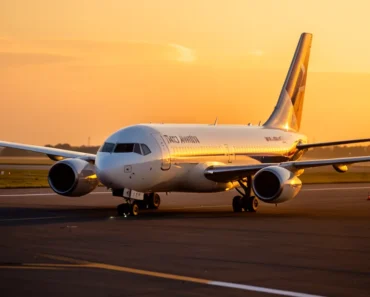
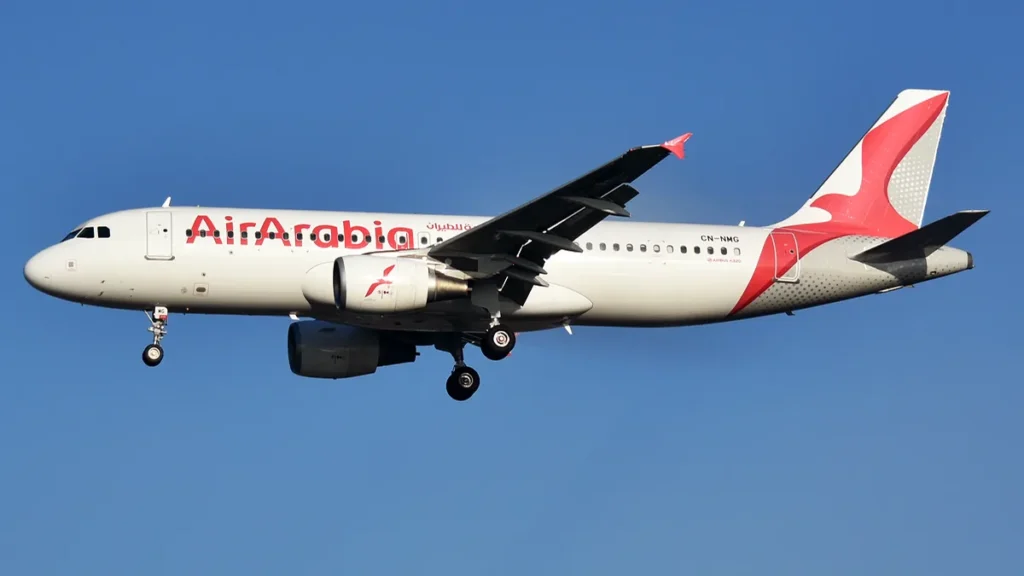
Air Arabia Maroc operates an all-Airbus narrowbody fleet, centred on the A320 family — consistent with the wider Air Arabia group’s standardisation strategy. According to publicly disclosed fleet data, the airline operates a mix of A320-200 and A321 variants, offering a capacity range suited to both thin regional routes and higher-density European corridors. The A320ceo (current engine option) has formed the backbone of operations, though industry observers note that the Air Arabia group has been progressively introducing A320neo-family aircraft across its affiliates in line with fuel efficiency and emissions targets. Whether Air Arabia Maroc has received neo-family deliveries directly or operates them under group wet-lease arrangements is subject to periodic revision; travellers and analysts should consult current fleet tracking sources for the most precise configuration. No widebody aircraft are operated.
Destinations
The airline’s network is shaped primarily around three demand pillars: Moroccan diaspora traffic to Western Europe, inbound European leisure tourism, and a growing set of intra-African and Middle Eastern routes. Europe accounts for the largest share of seat capacity, with France — particularly Paris Orly (ORY) and Lyon (LYS) — representing headline routes given the size of the Franco-Moroccan community. Spain (Madrid, Barcelona), Italy (Milan, Rome), Belgium (Brussels), the Netherlands (Amsterdam), and Germany (Frankfurt, Düsseldorf) are also well-served.
Within Africa, the airline operates select routes connecting Casablanca to West and Central African capitals, positioning CMN as a transit point for travellers who might otherwise route through Paris or Madrid. Routes to cities such as Dakar (DSS) and Abidjan (ABJ) reflect the airline’s ambition to participate in intra-African connectivity, a segment that remains structurally underserved across the continent. Middle Eastern connectivity — notably to Sharjah (SHJ), the home base of the parent group — provides an additional intercontinental thread.
Codeshare and Alliance
Air Arabia Maroc is not a member of any of the three major global airline alliances — Star Alliance, SkyTeam, or oneworld. This is consistent with the low-cost carrier model, which typically prioritises direct distribution and cost control over interline complexity. The airline benefits from its relationship with parent Air Arabia, which enables informal network coordination and, in some cases, connecting itineraries sold through the Air Arabia booking platform. No major codeshare agreements with third-party carriers have been prominently disclosed as of early 2026, though the airline’s routes from CMN naturally intersect with Royal Air Maroc’s network at the hub level.
Notable Incidents
Air Arabia Maroc does not appear on the public record as having been involved in any major safety incident, hull loss, or fatal accident. The airline’s safety oversight falls under the Moroccan civil aviation authority, and the Air Arabia group as a whole has maintained a creditable safety profile since its founding. Travellers and researchers seeking the most current safety ratings are advised to consult the ICAO Safety Audit (USOAP) findings for Morocco and independent databases such as the Aviation Safety Network.
Financial and Operational Situation
Air Arabia Maroc does not publish standalone financial results; its performance is subsumed within the Air Arabia group’s consolidated reporting, which is listed on the Abu Dhabi Securities Exchange. Industry estimates suggest the Moroccan affiliate has benefited from the post-pandemic recovery in leisure and diaspora travel, both of which rebounded strongly from 2022 onwards. The low-cost model — high seat density, ancillary revenue reliance, point-to-point routing — provides a structurally lower cost base than Royal Air Maroc, enabling competitive fares on shared corridors. The airline carries no known state subsidy and operates as a commercially driven entity, though Morocco’s broader aviation policy environment, which actively courts low-cost carriers to stimulate tourism, creates a supportive regulatory backdrop.
Recent Developments
Morocco’s selection as co-host of the 2030 FIFA World Cup — alongside Spain and Portugal — has materially raised the strategic importance of every carrier operating into and out of the country. Air Arabia Maroc is widely expected to be a beneficiary of the infrastructure investment and passenger volume uplift associated with the tournament, and industry observers anticipate network and fleet expansion in the years leading up to 2030. The airline has continued to add or restore European routes as slot availability and demand patterns have normalised following the COVID-19 disruption period. Broader Air Arabia group fleet orders for A320neo-family aircraft, announced in prior years, are expected to cascade benefits to affiliates including the Moroccan operation as deliveries progress. Regulatory engagement with Moroccan authorities on expanded bilateral air service agreements — particularly with sub-Saharan African states — remains an ongoing area of commercial development.