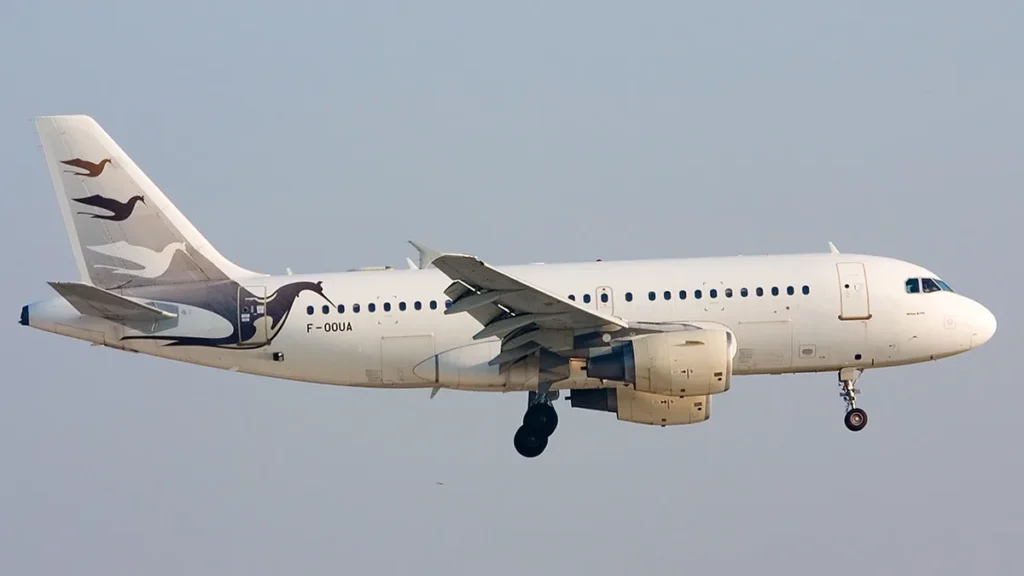
Air Burkina
Air Burkina
About
Air Burkina is the flag carrier of Burkina Faso, one of West Africa’s landlocked nations, and occupies a modest but strategically significant position in the regional aviation landscape. Operating under IATA code 2J and ICAO code VBW, the airline connects a country with limited surface transport infrastructure to the wider continent, making it an essential lifeline for business travellers, diaspora passengers, and humanitarian workers moving in and out of Ouagadougou.
The airline traces its origins to 1967, when it was established as Air Volta — named after the country then known as Upper Volta — before rebranding as Air Burkina following the nation’s renaming in 1984 under Thomas Sankara’s revolutionary government. For much of its early history the carrier operated as a fully state-owned enterprise, reflecting the broader pattern of African flag carriers of that era. A partial privatisation in the early 2000s brought the Aga Khan Fund for Economic Development (AKFED) in as a significant shareholder, a move that brought fresh capital and management discipline to the airline and aligned it with AKFED’s broader portfolio of African aviation investments, which has historically included stakes in carriers such as Air Mali and Precision Air.
Ownership and governance have remained a recurring theme in the airline’s corporate story. The Burkinabè state has retained a meaningful stake, and the political turbulence that has characterised Burkina Faso since the 2022 military coups has inevitably cast a shadow over long-term strategic planning. Industry observers note that the transitional government’s posture toward state enterprises, including the airline, continues to evolve, and the precise current ownership structure should be verified against the most recent official disclosures before any investment or partnership decision is made.
Bases and Hubs
Ouagadougou International Airport (OUA) — The airline’s principal hub and sole significant base of operations, OUA serves as the gateway to Burkina Faso and the operational centre for all of Air Burkina’s scheduled services. The airport’s single-runway configuration and constrained infrastructure place practical limits on the airline’s growth ambitions, though upgrade discussions have periodically featured in government infrastructure plans.
Bobo-Dioulasso Airport (BOY) — Burkina Faso’s second city has historically featured as a domestic focus point for the airline, though service frequency and continuity have varied considerably depending on demand and the security situation in the country’s interior regions.
Fleet
According to publicly disclosed fleet data and industry tracking sources, Air Burkina has historically operated a small, mixed narrowbody fleet suited to the thin regional routes that characterise West African intra-continental flying. The airline has operated Embraer regional jets — including the ERJ-145 family — alongside older turboprop and narrowbody types at various points in its history. Industry estimates suggest the operational fleet remains compact, reflecting both the airline’s route network scale and the financial constraints that have limited aggressive fleet renewal. Any prospective partner or investor should seek current fleet certification data from the Direction Générale de l’Aviation Civile du Burkina Faso (DGAC-BF) and cross-reference with ACMI and wet-lease arrangements that may supplement the owned fleet at any given time.
Destinations
Air Burkina’s network is fundamentally regional and intra-African in character, with no intercontinental services operated under its own metal. The airline’s route map connects Ouagadougou to key West and Central African hubs, with Abidjan (ABJ) in Côte d’Ivoire, Dakar (DSS) in Senegal, Bamako (BKO) in Mali, Lomé (LFW) in Togo, Cotonou (COO) in Benin, and Niamey (NIM) in Niger representing the core of its historically published schedule. Accra (ACC) and Douala (DLA) have also featured as destinations at various points. The network reflects the economic and diplomatic geography of francophone West Africa, with Abidjan — the region’s dominant commercial hub — serving as arguably the airline’s single most commercially important route. Domestic services between Ouagadougou and Bobo-Dioulasso have been operated intermittently. The security deterioration across the Sahel since 2022 has materially affected route viability, and travellers should verify current schedules directly with the airline or through GDS systems before travel.
Codeshare and Alliance
Air Burkina is not a member of any of the three major global airline alliances — Star Alliance, SkyTeam, or oneworld. The airline has historically maintained interline and codeshare arrangements with regional partners, and its association with the AKFED aviation portfolio has facilitated some degree of commercial cooperation with fellow AKFED-linked carriers. However, no major long-haul codeshare agreements with European or Gulf carriers are publicly documented as active at the time of writing. Journalists and researchers should treat any claimed partnership announcements with appropriate scrutiny and seek confirmation from both parties.
Notable Incidents
Air Burkina does not have a pattern of major hull-loss accidents or catastrophic incidents prominently documented in authoritative aviation safety databases such as the Aviation Safety Network in recent years. As with any carrier operating in the West African environment — where infrastructure, ATC capacity, and weather present genuine operational challenges — the airline is subject to the same safety oversight framework administered by DGAC-BF and, at the regional level, by the Agence pour la Sécurité de la Navigation Aérienne en Afrique et à Madagascar (ASECNA). Researchers requiring a comprehensive safety record should consult the Aviation Safety Network, the Bureau d’Enquêtes et d’Analyses (BEA) for any French-language investigation reports, and ICAO’s safety audit disclosures directly.
Financial and Operational Situation
Air Burkina’s financial position is best characterised as structurally challenged, a description that applies to a significant proportion of sub-Saharan Africa’s smaller flag carriers. The airline operates in a market defined by thin passenger volumes, high fuel and maintenance costs relative to revenue, a weak domestic travel base, and a currency — the West African CFA franc — that, while stable against the euro by design, creates its own constraints in a dollar-denominated industry. The political crisis that has gripped Burkina Faso since the military takeovers of 2022 has compounded these structural pressures, with the security situation deterring foreign business travel and NGO traffic that would otherwise support yield on key routes. Industry estimates suggest the airline has required periodic state support to maintain operations, though the precise terms of any such support are not publicly disclosed in detail. Investors and lenders considering exposure to the airline should commission independent due diligence and engage directly with the transitional government’s ministry responsible for transport.
Recent Developments
The period from 2024 to 2026 has been defined more by operational resilience under difficult conditions than by expansion. The broader Sahel security crisis — which has seen Burkina Faso, Mali, and Niger align themselves in the Alliance des États du Sahel and distance themselves from Western partners — has reshaped the diplomatic and commercial environment in which Air Burkina operates. Route suspensions and reduced frequencies on certain corridors have been reported by regional aviation media, linked both to security advisories and to reduced demand from international organisations scaling back in-country presence. On the regulatory front, ASECNA’s continued role as the air navigation service provider across the region provides a degree of operational continuity regardless of domestic political shifts. Any fleet renewal discussions or new route announcements that may have occurred within the airline’s planning cycle in this period should be verified against the airline’s own press releases and DGAC-BF notifications, as the information environment around Burkinabè state enterprises has become less transparent since 2022.
Related Research
- Burkina Faso Expert Briefing — full country profile covering politics, economy, security, and investment climate
- African Airlines — the africa-research.org pillar covering the continent’s carriers, market structure, and regulatory environment
- African Airports — infrastructure profiles, capacity data, and development plans across the continent’s gateway airports
- Country Comparison Tool — benchmark Burkina Faso against peer markets across aviation, trade, and economic indicators