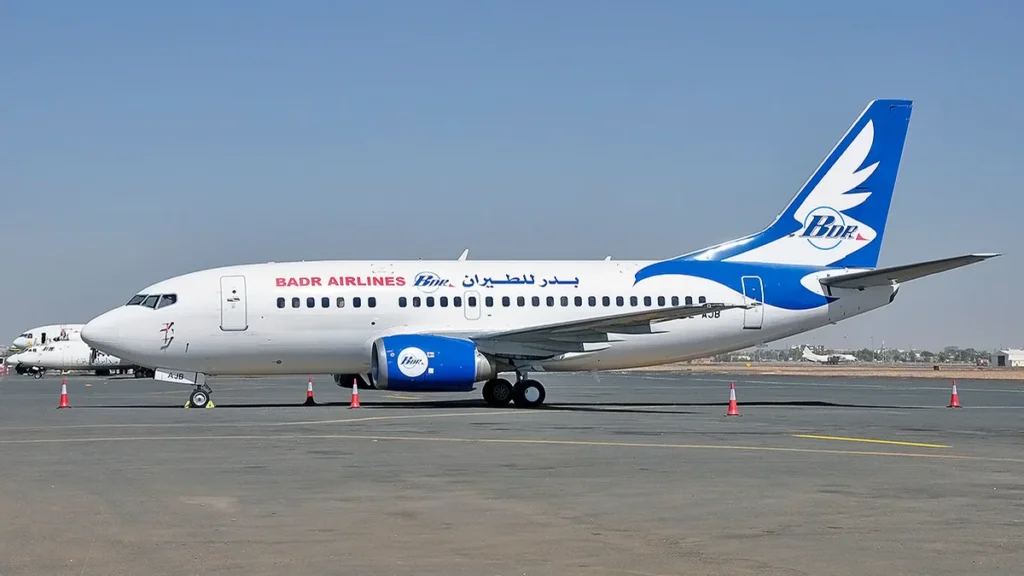
Badr Airlines
Badr Airlines
About
Badr Airlines is a Sudanese scheduled carrier operating under IATA code J4 and ICAO designator BDR, headquartered at Khartoum International Airport (KRT). In a regional aviation landscape shaped by political turbulence, infrastructure constraints, and the slow post-pandemic recovery of African air travel, Badr occupies a niche as one of the few privately oriented Sudanese airlines attempting to maintain scheduled international connectivity for a country that has faced extraordinary operational headwinds since the outbreak of conflict in April 2023.
The airline was established in Sudan and has operated as a scheduled carrier serving both domestic Sudanese points and a selection of regional international destinations. Ownership has historically reflected the mixed private-commercial structures common to smaller African carriers, though the precise composition of its shareholder base has not been extensively disclosed in public filings available to international observers. Industry analysts have noted that the airline, like many Sudanese operators, has had to navigate a regulatory and financial environment shaped heavily by Sudan’s broader economic isolation and the successive sanctions regimes that affected the country’s banking and aviation sectors.
In the period following the April 2023 outbreak of fighting between the Sudanese Armed Forces and the Rapid Support Forces, Khartoum International Airport was rendered non-operational for extended periods, forcing Sudanese carriers including Badr to suspend, reroute, or dramatically curtail services. By 2025 and into 2026, the airline had been working to reconstitute whatever operational capacity remained available to it, with Port Sudan emerging as a functional alternative gateway for carriers still seeking to serve Sudanese passengers.
Bases and Hubs
Khartoum International Airport (KRT) — The airline’s registered principal hub and historic centre of operations, though the airport’s operational status has been severely disrupted since 2023 and its role as an active hub remains contingent on the security situation in the capital.
Port Sudan International Airport (PZU) — Port Sudan has functioned as a de facto operational alternative for Sudanese carriers during the Khartoum disruption, and industry observers note that Badr, alongside other Sudanese operators, has used this Red Sea coast gateway to maintain some level of international connectivity.
Fleet
According to publicly disclosed fleet data and regional aviation registry records, Badr Airlines has historically operated narrowbody jet equipment consistent with the operational requirements of short-to-medium-haul African and Middle Eastern routes. Aircraft from the Boeing 737 family have been associated with the carrier’s operations, a type widely used across African scheduled carriers for its range flexibility and relatively accessible maintenance support on the continent. The precise current composition of the active fleet is difficult to verify independently given the disruption to Sudanese aviation since 2023, and industry estimates suggest the operational fleet may be significantly reduced from pre-conflict levels. No major publicly announced fleet renewal order or new aircraft acquisition programme has been confirmed for Badr Airlines in recent available reporting.
Destinations
Badr Airlines has historically shaped its network around three broad categories: domestic Sudanese services connecting Khartoum with secondary Sudanese cities; regional African routes to neighbouring countries; and short-haul intercontinental services to the Middle East, a corridor of high commercial importance given the large Sudanese diaspora and labour migration flows to Gulf states. Headline routes have included services to destinations such as Cairo (CAI) in Egypt, a natural first point of connectivity given geographic proximity and strong passenger demand, as well as Gulf region points including Dubai (DXB) and Jeddah (JED), the latter being particularly significant for Umrah and Hajj traffic from Sudan’s majority-Muslim population. Intra-African connectivity to East African and Horn of Africa points has also featured in the carrier’s published schedules at various times, though network breadth has fluctuated considerably with the airline’s operational capacity.
Codeshare and Alliance
Badr Airlines is not a member of any of the three major global airline alliances — Star Alliance, SkyTeam, or oneworld. No formal codeshare agreements with major international network carriers have been publicly confirmed in available industry sources. This is consistent with the profile of smaller African regional carriers that operate largely on a point-to-point basis without the interline infrastructure that alliance membership or bilateral codeshare arrangements require. Should the airline’s operational situation stabilise and network scope expand, codeshare partnerships with regional carriers or Gulf-based operators would represent a logical commercial development, though no such agreements have been announced as of current reporting.
Notable Incidents
No major safety incidents involving Badr Airlines aircraft appear on its public safety record in recent years based on available reporting from recognised aviation safety databases. Readers and researchers requiring a comprehensive safety assessment should consult the Aviation Safety Network and the ICAO Universal Safety Oversight Audit Programme records for Sudan as a state of registry.
Financial and Operational Situation
Badr Airlines’ financial position must be understood against the backdrop of one of the most severe operational environments facing any African carrier in recent memory. Sudan’s economy has been under acute stress since the 2023 conflict began, with currency instability, banking sector dysfunction, and the physical destruction of key infrastructure compounding the already difficult economics of operating a small scheduled airline in a frontier aviation market. No audited financial statements or revenue figures for Badr Airlines are publicly available to international analysts, and industry estimates of its financial health are necessarily qualitative. The airline is widely regarded as operating with constrained liquidity, and its ability to sustain scheduled services is closely tied to the broader trajectory of Sudan’s humanitarian and political situation. Whether the carrier has received any form of state support or emergency capitalisation has not been publicly confirmed.
Recent Developments
The defining development for Badr Airlines across 2024 and into 2025–2026 has been the ongoing effort to maintain any form of viable scheduled operation in the context of Sudan’s civil conflict. With Khartoum International Airport closed or severely restricted for extended periods, the airline has been among the Sudanese carriers forced to evaluate Port Sudan as an operational base. Regional aviation bodies and the African Airlines Association (AFRAA) have flagged the situation of Sudanese carriers as a case study in the vulnerability of small national airlines to state-level political crises. No new route launches, fleet orders, or major commercial partnerships have been publicly announced by Badr Airlines in the 24-month window to mid-2026, and the carrier’s immediate operational priority appears to be continuity rather than expansion. Observers will be watching closely for any signals of network reconstitution should a durable ceasefire or political settlement create conditions for the reopening of Khartoum’s airport infrastructure.
Related Research
- Sudan Expert Briefing — full country profile, political economy, and aviation sector context
- African Airlines — the africa-research.org carrier directory and analysis pillar
- African Airports — infrastructure profiles across the continent including KRT and PZU
- Country Comparison Tool — benchmark Sudan’s aviation market against regional peers