Lomé–Tokoin Airport
Lomé–Tokoin Airport
Lomé–Tokoin Airport (LFW) — Airport Profile
Lomé–Tokoin Airport is one of West Africa’s most strategically positioned international gateways, serving the Togolese capital of Lomé from a coastal site that places it within a short flight of Lagos, Accra, Abidjan, and Dakar. Designated by IATA code LFW and ICAO code DXXX, the airport functions as a genuine continental hub rather than a simple point-of-entry facility, anchored by the regional ambitions of ASKY Airlines and supported by a growing roster of intercontinental carriers. For travellers, journalists, and aviation analysts tracking the evolution of African air connectivity, Lomé–Tokoin represents a compelling case study in how a small coastal nation can punch well above its weight in regional aviation.
About
Lomé–Tokoin Airport sits on the western edge of Lomé, close to the Gulf of Guinea coastline, and has served as Togo’s primary civil aviation facility since the mid-twentieth century. The airport’s origins trace to the colonial era, with formal international operations developing in the years following Togolese independence in 1960. Ownership and operational oversight rests with the Togolese state, administered through the national civil aviation authority, with day-to-day airport management handled under frameworks that have evolved alongside successive infrastructure investment cycles.
The airport’s most transformative period came in the 2010s, when Lomé was selected as the hub city for ASKY Airlines — a pan-African carrier backed in part by Ethiopian Airlines — which elevated Tokoin from a modest regional stop into a genuine connecting hub. Terminal upgrades, apron expansions, and improved ground-handling capacity accompanied that strategic shift. A dedicated cargo terminal has also been developed to support Lomé’s role as a logistics corridor for landlocked neighbours including Burkina Faso, Niger, and Mali.
Subsequent expansion phases have focused on passenger processing capacity, airside retail, and technical facilities. The airport is classified as a medium-sized international hub by regional standards, capable of handling wide-body aircraft on its primary runway, which measures approximately 3,600 metres — sufficient for long-haul operations including transatlantic and intercontinental services. A second, shorter runway supports general aviation and overflow operations.
Country
Togo is a narrow, elongated West African nation bordering Ghana to the west, Benin to the east, Burkina Faso to the north, and the Gulf of Guinea to the south. Its capital, Lomé, is one of the few African capital cities situated directly on a national border — sharing a land crossing with Ghana at the Aflao frontier. With a national population estimated in the range of nine to ten million people as of the mid-2020s, Togo occupies a modest demographic footprint but a disproportionately significant commercial position, owing to the Port of Lomé — one of the deepest natural harbours on the West African coast — and to the country’s liberal trade and aviation policies. The CFA franc monetary zone, relative political stability compared to several neighbours, and an active free-trade zone around the port all reinforce Lomé’s status as a regional commercial node.
→ Read the Togo expert briefing
Airlines Based Here
ASKY Airlines is the dominant carrier at Lomé–Tokoin and treats the airport as its primary hub. Founded in 2010 and headquartered in Lomé, ASKY operates a fleet of Boeing 737 series aircraft across a wide pan-African network, with Ethiopian Airlines holding a significant strategic and operational stake. ASKY’s hub model means that a substantial proportion of passengers transiting through LFW are connecting between West, Central, and East African cities rather than originating or terminating in Togo itself — a dynamic that shapes the airport’s traffic profile considerably.
Beyond ASKY, the airport attracts a range of visiting carriers that use Lomé as a destination or technical stop. Ethiopian Airlines operates its own services into LFW, reinforcing the Addis Ababa–Lomé corridor. Air France has historically maintained a Paris–Lomé service, providing a key intercontinental link for the Francophone business and diaspora market. Royal Air Maroc connects Lomé to Casablanca, offering onward connections to Europe and North America via Morocco. Kenya Airways has served the Nairobi route, linking Lomé into East African networks. Regional carriers including Air Côte d’Ivoire and Afrijet have also operated services touching Lomé. The precise current schedule of any carrier should be verified directly with the airline or through a global distribution system, as West African route networks remain subject to seasonal and commercial adjustment.
Flights and Destinations
Lomé–Tokoin supports a network that spans continental African routes, intercontinental services to Europe, and shorter regional hops within West and Central Africa. Representative destinations served from LFW — subject to current scheduling — include Addis Ababa (Ethiopian Airlines, ASKY), Paris Charles de Gaulle (Air France), Casablanca (Royal Air Maroc), Nairobi (Kenya Airways), Abidjan (ASKY, Air Côte d’Ivoire), Lagos (ASKY), Accra (ASKY), Dakar (ASKY), Douala (ASKY), and Libreville (ASKY or Afrijet). The Paris route remains the most commercially significant intercontinental service, reflecting Togo’s Francophone ties and the volume of business, government, and diaspora travel between West Africa and France. Analysts tracking African aviation connectivity note that ASKY’s hub-and-spoke model through Lomé has meaningfully improved intra-African connectivity for travellers who would otherwise face indirect routings through European hubs.
Facilities and Capacity
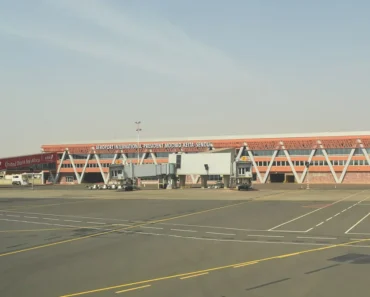
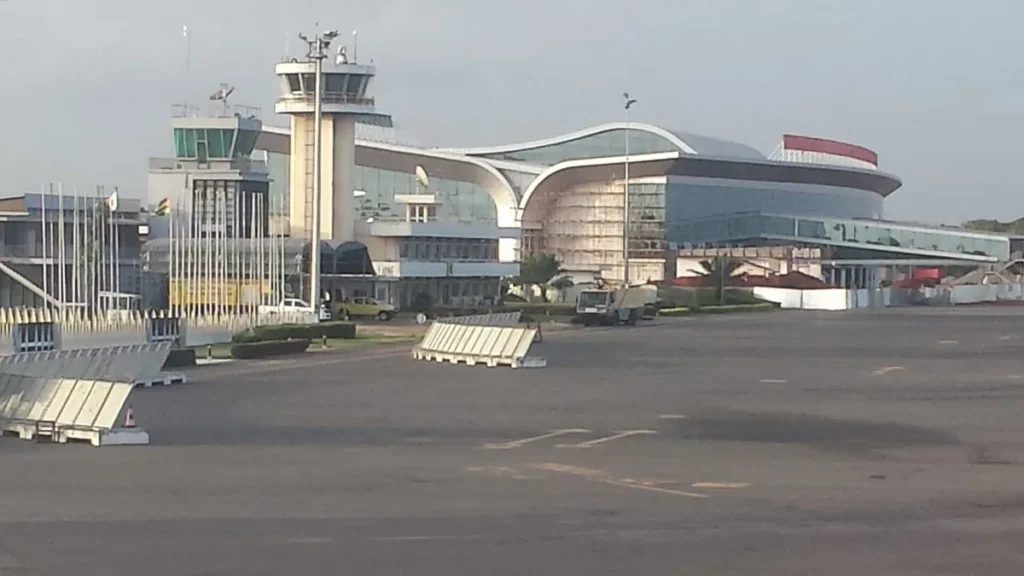
The airport operates a single main passenger terminal that has been progressively modernised to accommodate ASKY’s hub operations, including expanded check-in hall capacity, an extended airside transit zone, and improved immigration and customs processing lanes. The primary runway — approximately 3,600 metres in length — is capable of accommodating wide-body aircraft including the Boeing 787 and Airbus A330, enabling the long-haul services that connect Lomé to Europe. A secondary runway serves general aviation, charter, and overflow traffic. The cargo terminal, developed in alignment with Lomé’s role as a logistics gateway for the Sahel hinterland, handles both belly-hold freight from passenger services and dedicated freighter operations. According to publicly disclosed traffic data reviewed by regional aviation bodies, Lomé–Tokoin falls within the medium-hub category for sub-Saharan Africa, with passenger throughput that, while modest by global standards, is significant within the West African context. Apron capacity has been expanded to accommodate simultaneous wide-body parking, a prerequisite for efficient hub connectivity banking.
Visa Regulations
Togo operates a relatively open visa regime that has been progressively liberalised in line with the country’s ambitions as a regional commercial hub. As of 2026, travellers from many African Union member states benefit from visa-free or visa-on-arrival access under bilateral agreements and the broader African Continental Free Trade Area framework, though the precise list of eligible nationalities varies and should be confirmed before travel. Citizens of the United States, the United Kingdom, and European Union member states are generally eligible to obtain a visa on arrival at Lomé–Tokoin Airport, or to apply in advance through Togo’s eVisa portal — an online system that has been available for several years and allows pre-approved electronic authorisation before departure. Visa fees, permitted durations of stay, and documentation requirements are subject to change by the Togolese immigration authorities. Travellers, journalists on assignment, and researchers visiting Togo are strongly advised to verify current requirements well in advance of travel.
→ Check the live visa requirements lookup for Togo
Recent Developments
In the twenty-four months leading into 2026, Lomé–Tokoin has seen continued activity on both the commercial and infrastructure fronts. ASKY Airlines has pursued network consolidation following the turbulence that affected African aviation in the post-pandemic recovery period, with industry estimates suggesting the carrier has worked to restore and in some cases expand its frequency on key West and Central African routes. The airport authority has progressed works related to passenger terminal upgrades, with particular attention to airside capacity and the transit passenger experience — a commercial priority given that connecting traffic represents a substantial share of total movements. New or resumed route announcements from visiting carriers have periodically featured Lomé as a destination, reflecting the city’s improving commercial profile. Regulatory coordination with the Togolese Autorité de l’Aviation Civile (ANAC Togo) has continued in alignment with ICAO safety oversight frameworks, and the airport has maintained its operational certification for international services. Observers of African aviation note that Lomé’s competitive positioning relative to Accra and Abidjan remains a live strategic question as all three cities invest in their aviation infrastructure.
News and Reports
Ongoing operational and commercial news about Lomé–Tokoin Airport is best tracked through several authoritative sources. The Togolese civil aviation authority — Agence Nationale de l’Aviation Civile (ANAC Togo) — publishes regulatory notices, safety oversight updates, and official communications relevant to the airport’s operational status. ASKY Airlines issues press releases and route announcements through its own corporate communications channels. At the regional and global level, IATA’s Africa and Middle East regional office produces periodic reports on African aviation market trends, connectivity indices, and infrastructure investment, within which Lomé frequently features. The ICAO Western and Central African regional office (WACAF) publishes safety and regulatory oversight data relevant to Togolese airspace. Aviation trade publications including ch-aviation, The Africa Report, and Airline Business provide commercial analysis and route news. Researchers and analysts are encouraged to cross-reference multiple sources, as traffic data and route information for West African carriers can lag in public reporting cycles.
Related Research
- Togo Expert Briefing — political, economic, and investment context
- Togo Statistics — population, GDP, trade, and development indicators
- African Airports — comparative profiles across the continent
- African Airlines — carrier profiles, fleet data, and route networks
- Visa Requirements — live lookup tool for entry requirements by nationality
- Country Comparison — benchmark Togo against regional peers