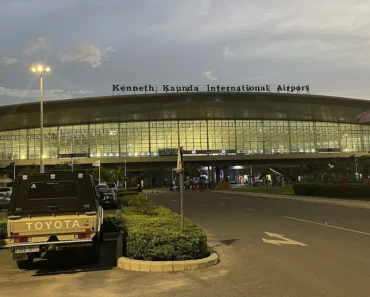
Aden Adde International Airport
Aden Adde International Airport
About
Aden Adde International Airport (IATA: MGQ | ICAO: HCMM) is Somalia’s principal gateway to the world and one of the most strategically consequential airports on the Horn of Africa. Named after Aden Abdullah Osman Aden — Somalia’s first post-independence president — the airport serves Mogadishu, a city that has spent three decades rebuilding its institutions, its economy, and its connections to the global aviation network. For travellers, journalists, aid workers, and business delegations, MGQ is not merely a point of entry: it is a barometer of Somalia’s broader recovery and a critical node in East African connectivity.
The airport’s origins trace to the colonial and early post-independence era, when Mogadishu was developing the infrastructure of a newly sovereign state. The facility was formally established and expanded through the 1960s and 1970s as Somalia sought to position itself as a regional hub. The collapse of the Siad Barre government in 1991 and the subsequent civil conflict severely degraded the airport’s physical infrastructure and effectively suspended scheduled international service for much of the 1990s and 2000s.
Rehabilitation efforts accelerated following the establishment of the Federal Government of Somalia and the gradual stabilisation of Mogadishu from the early 2010s onward. The airport is operated under the authority of the Somali Civil Aviation Authority (SCAA), with the Federal Government of Somalia holding ownership. Successive rounds of rehabilitation — supported in part by international partners and development finance — have restored and upgraded the terminal building, airside infrastructure, and navigational aids. The airport today functions as a medium-capacity international facility, though its operational environment remains shaped by the broader security and institutional context of the country.
Country
Somalia is located on the Horn of Africa, bordered by Ethiopia to the west, Kenya to the southwest, Djibouti to the northwest, and the Indian Ocean and Gulf of Aden to the east and north. Mogadishu serves as the national capital and is the country’s largest city, with Somalia’s total population estimated in the tens of millions across a territory of approximately 637,000 square kilometres. The country occupies a position of considerable geopolitical significance, commanding one of the longest coastlines on the African continent and sitting astride key maritime trade routes linking the Red Sea to the Indian Ocean. Somalia is a member of the African Union, the Arab League, and the Intergovernmental Authority on Development (IGAD).
→ Read the Somalia expert briefing
Airlines Based Here
Jubba Airways is the carrier most closely associated with Aden Adde International Airport, operating domestic routes across Somalia as well as a number of regional international services. The airline functions as a de facto home carrier for the airport and has historically provided the most consistent scheduled connectivity from Mogadishu. Daallo Airlines, a Djibouti-registered carrier with deep operational ties to the Somali market, has also maintained a significant presence at MGQ, offering services across the Horn of Africa and beyond. African Express Airways, a Kenyan carrier, has served the Mogadishu route as part of its East African network. On the international side, Turkish Airlines has been among the most prominent visiting full-service carriers, operating scheduled service to Mogadishu as part of its extensive African network expansion. Fly Dubai has also served the route, reflecting demand from the Somali diaspora community in the Gulf. The airport does not currently host a full-service national flag carrier in the traditional sense, a gap that has been the subject of ongoing policy discussion within the Federal Government.
Flights and Destinations
The route network operating through Aden Adde International Airport reflects both the airport’s recovery trajectory and the particular demand patterns of the Somali market — shaped heavily by diaspora travel, humanitarian logistics, trade, and government business. Domestically, services connect Mogadishu to key Somali cities including Hargeisa (the capital of Somaliland), Garowe, Kismayo, and Baidoa. Regionally within East Africa, Nairobi (Jomo Kenyatta International Airport) is among the most heavily trafficked routes, serving as a critical connection point for onward international travel. Djibouti City and Addis Ababa also feature in the regional network. Intercontinentally, Istanbul (Istanbul Airport) is served by Turkish Airlines and represents one of the most significant long-haul connections, providing onward access to Europe and beyond. Dubai is served via Fly Dubai, catering to the substantial Somali community in the UAE. Industry observers note that the airport’s intercontinental network remains limited relative to the size of the Somali diaspora, with many travellers still routing through Nairobi or Dubai for connections to Europe and North America.
Facilities and Capacity
Aden Adde International Airport operates with a single primary runway, which according to published aeronautical information is capable of accommodating wide-body jet aircraft, enabling the Turkish Airlines and similar services that form the backbone of its intercontinental connectivity. The terminal building has undergone rehabilitation and partial modernisation in recent years, though the facility is generally characterised by industry analysts as a small-to-medium international hub by African standards — functional and improving, but operating with infrastructure that has not yet reached the capacity levels of major regional peers such as Nairobi, Addis Ababa, or Dar es Salaam. Cargo handling facilities are present and serve a critical function given the volume of humanitarian and commercial freight moving through Mogadishu. According to publicly disclosed traffic data and ICAO regional assessments, passenger throughput has grown steadily as security conditions in Mogadishu have improved, though the airport has not yet published audited annual traffic figures that allow precise year-on-year comparison. Planned and ongoing expansion works have been referenced in Federal Government communications, with ambitions to increase terminal capacity and improve airside infrastructure, though the scope and timeline of these projects remain subject to funding and implementation progress.
Visa Regulations
Travellers arriving at Aden Adde International Airport are subject to Somalia’s national visa regime, which has evolved in recent years as the Federal Government has sought to regularise entry procedures. As of 2026, Somalia operates a visa-on-arrival system for many nationalities, including citizens of the United States, the United Kingdom, and European Union member states, allowing travellers to obtain entry documentation upon arrival at MGQ. Citizens of a number of African Union member states may also be eligible for visa-on-arrival or simplified entry arrangements, though this varies by bilateral agreement. Somalia has made progress toward eVisa infrastructure, and travellers are advised to verify the current status of online pre-registration options before departure, as these systems have been subject to change. It is important to note that visa and entry regulations in Somalia can change with limited advance notice, and travellers should consult official Somali government sources and their own national foreign affairs ministries for current requirements. For a live and regularly updated lookup of visa requirements for Somalia by passport nationality, see the dedicated resource below.
→ Check current visa requirements for Somalia
Recent Developments
The period from 2024 to 2026 has seen a number of notable developments at Aden Adde International Airport. Turkish Airlines has maintained and in some periods expanded its Mogadishu service, reinforcing Istanbul as the primary intercontinental hub connection for Somali travellers. The Somali Civil Aviation Authority has continued engagement with ICAO’s Eastern and Southern African regional office as part of efforts to improve safety oversight ratings and align national aviation regulation with international standards — a process that has direct implications for which foreign carriers are willing to operate to MGQ. Rehabilitation works on airside infrastructure have been referenced in government communications, with particular attention to navigational aids and runway condition. The airport has also seen increased activity from charter and humanitarian operators, reflecting ongoing international engagement in Somalia. New or resumed route discussions with additional Gulf and East African carriers have been reported in regional aviation trade media, though not all announced services have entered sustained operation. The broader security environment in and around Mogadishu continues to influence airline risk assessments and insurance classifications for the route.
News and Reports
Ongoing operational and regulatory news relating to Aden Adde International Airport is best tracked through several authoritative sources. The Somali Civil Aviation Authority (SCAA) periodically publishes notices, regulatory updates, and operational advisories through its official channels, and represents the primary domestic authority on airport and airspace matters. The Federal Government of Somalia’s Ministry of Transport and Civil Aviation issues policy statements and project updates relevant to the airport’s development. At the international level, ICAO’s Eastern and Southern African Regional Office (ESAF, based in Nairobi) publishes safety oversight assessments and regional aviation development reports that include Somalia. IATA’s Africa regional communications and its annual World Air Transport Statistics report provide broader context on African airport and airline performance, including markets such as Mogadishu. Regional aviation trade publications — including those covering the East African and Horn of Africa aviation sectors — provide more frequent operational reporting. Researchers and journalists are advised to cross-reference multiple sources given the variable consistency of official data publication from Somali authorities.