Praia International Airport
Praia International Airport
About
Praia International Airport — designated IATA code RAI and ICAO code GVNP — serves as the principal gateway to Cabo Verde’s capital city of Praia, on the island of Santiago. In the broader context of African aviation, the airport occupies a strategically significant position: it sits at the crossroads of transatlantic routes connecting West Africa to Europe and the Americas, functioning as both a domestic hub within the Cabo Verdean archipelago and an international port of entry for the wider Atlantic corridor. For travellers, journalists, and aviation analysts tracking the development of sub-Saharan and Atlantic-African air connectivity, Praia International Airport represents a compelling case study in how a small island nation can leverage geography to punch above its weight in regional aviation.
The airport’s origins trace to the mid-twentieth century, when basic aerodrome infrastructure was established under Portuguese colonial administration. Following Cabo Verde’s independence in 1975, the facility was progressively upgraded to meet the demands of a newly sovereign state reliant on air transport for both inter-island connectivity and international trade. The airport is operated under the authority of ASA — Aeroportos e Segurança Aérea, the state-owned enterprise responsible for managing all of Cabo Verde’s airports and air navigation services. ASA operates under the oversight of the national civil aviation authority and reports to the relevant ministry responsible for transport and infrastructure.
Over the decades, the airport has undergone successive rounds of infrastructure investment aimed at expanding passenger throughput, improving ground handling, and meeting ICAO safety and security standards. A significant modernisation phase in the 2000s and 2010s extended the terminal building and improved apron capacity. As of 2026, the airport is classified broadly as a medium-sized international hub by regional standards — large enough to accommodate widebody aircraft on long-haul routes, yet compact enough that congestion and capacity constraints remain live operational concerns during peak tourist and diaspora travel seasons.
Country
Cabo Verde is an archipelago nation of ten islands located in the central Atlantic Ocean, approximately 570 kilometres off the coast of West Africa. Praia, situated on the island of Santiago, serves as the national capital and is the country’s most populous city. With a national population in the low hundreds of thousands, Cabo Verde is one of Africa’s smaller states by population, yet it maintains a disproportionately large diaspora — particularly in Portugal, the Netherlands, the United States, and Senegal — which drives significant volumes of VFR (visiting friends and relatives) air traffic through Praia International Airport. Regionally, Cabo Verde is a member of the Economic Community of West African States (ECOWAS) and has cultivated a reputation for political stability, democratic governance, and openness to foreign investment, all of which contribute to its attractiveness as an aviation market.
→ Read the Cabo Verde expert briefing
Airlines based here
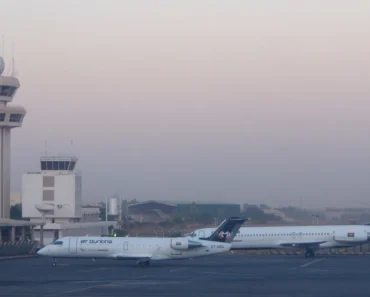
The dominant home carrier operating through Praia International Airport is Cabo Verde Airlines (formerly TACV — Transportes Aéreos de Cabo Verde), the national flag carrier. Cabo Verde Airlines uses Praia as one of its primary operational bases alongside Sal’s Amílcar Cabral International Airport, operating both inter-island domestic services and international routes to Europe and West Africa. The airline has historically been the backbone of air connectivity for the archipelago, though it has faced periods of financial restructuring and fleet rationalisation that have affected its network scope.
Beyond the national carrier, Praia International Airport attracts a range of visiting international carriers. TAP Air Portugal maintains a presence reflecting the deep historical and diaspora ties between Cabo Verde and Portugal. TACV’s codeshare and interline arrangements have at various points brought additional European connectivity. Regional African carriers and charter operators serving the tourism and diaspora markets also use the airport on a seasonal or scheduled basis. The airport does not currently host a second home-based carrier of significant scale, making Cabo Verde Airlines the central commercial aviation actor at RAI.
Flights and destinations
The route network operating through Praia International Airport reflects the airport’s dual role as a domestic inter-island hub and an international gateway. Within the archipelago, Praia connects to other Cabo Verdean islands including São Vicente (Cesária Évora Airport, VXE), Sal (Amílcar Cabral International Airport, SID), Fogo, and São Nicolau, forming the backbone of domestic air mobility in a country where inter-island ferry services are the primary alternative. Internationally, the airport’s most established long-haul corridor runs to Lisbon (LIS), serving the substantial Portuguese-Cabo Verdean diaspora community. Additional European destinations served — on a scheduled or seasonal basis — have included Amsterdam (AMS), Boston (BOS) in the United States, and various points in West Africa. Dakar (DSS) in Senegal represents a key regional African connection given geographic proximity and trade ties. Industry observers have also noted interest in developing or strengthening connections to London, Paris, and other European diaspora hubs, though route sustainability remains subject to demand cycles and airline commercial decisions.
Facilities and capacity
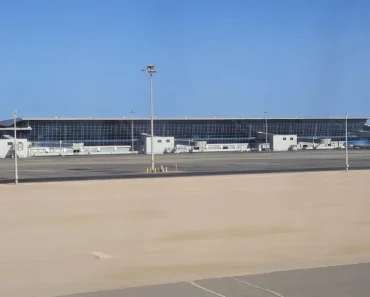
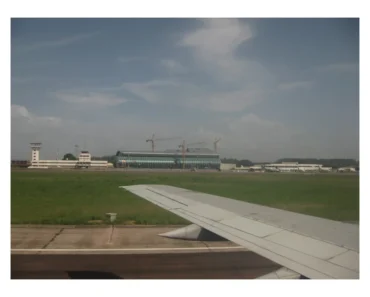
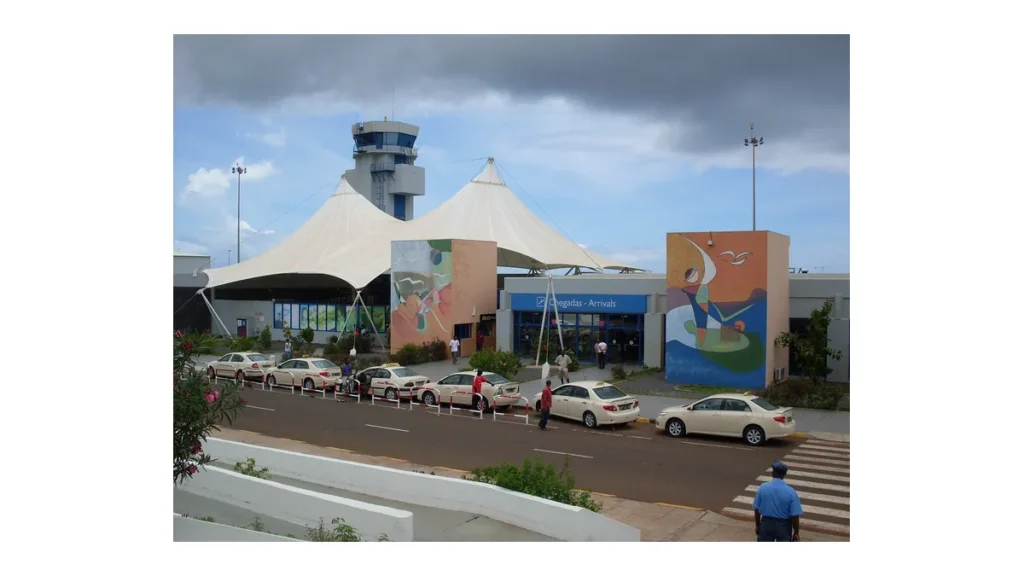
Praia International Airport operates with a single primary terminal building that handles both international and domestic departures and arrivals. The terminal layout is relatively compact by the standards of major African hub airports, with a limited number of jet bridges and a reliance on apron-level boarding for a portion of operations. The airport’s single runway — oriented to accommodate the prevailing wind patterns of the Santiago island environment — is capable of handling widebody aircraft including long-haul jets, which is essential for the transatlantic and European routes that define the airport’s commercial significance. Cargo facilities exist to support both belly-hold freight on passenger services and dedicated cargo operations, the latter being important for Cabo Verde’s import-dependent economy. According to publicly disclosed traffic data from ASA and ICAO regional reporting, the airport processes passenger volumes consistent with a medium-sized African international airport, with throughput subject to pronounced seasonality driven by tourism peaks and diaspora travel around holidays. Planned or ongoing capacity enhancements — including apron expansion and terminal upgrades — have been discussed in the context of Cabo Verde’s broader aviation development strategy, though specific budgetary commitments and timelines should be verified against current ASA and government announcements.
Visa regulations
Travellers arriving at Praia International Airport should be aware that Cabo Verde operates a relatively accessible visa regime designed in part to facilitate tourism and diaspora travel. Citizens of the European Union, the United Kingdom, and the United States have generally been able to obtain a visa on arrival or access an eVisa system prior to travel, though the precise conditions — including fees, permitted lengths of stay, and documentation requirements — are subject to change and should be confirmed before departure. Holders of ECOWAS member state passports benefit from the free movement provisions applicable within the regional bloc, facilitating travel from West African neighbours without the same visa requirements that apply to non-ECOWAS nationals. As with all visa matters, regulations can change at short notice due to bilateral agreements, public health considerations, or policy shifts. Travellers, journalists on assignment, and researchers visiting Cabo Verde are strongly advised to consult the most current official guidance. → Check the live visa requirements lookup
Recent developments
In the twenty-four months leading into 2026, Praia International Airport and the wider Cabo Verdean aviation sector have seen a number of noteworthy developments. Cabo Verde Airlines has continued efforts to stabilise and selectively expand its international network following earlier restructuring, with industry estimates suggesting renewed focus on European diaspora routes and potential new partnerships with regional African carriers. Infrastructure works at the airport — consistent with ASA’s ongoing capital investment programme — have addressed apron and ground handling capacity, though the pace and scope of works have been shaped by the fiscal constraints typical of small island developing states. The post-pandemic recovery of tourism-driven traffic to Santiago and the broader archipelago has been a positive demand signal for the airport, with load factors on European routes reportedly recovering toward pre-pandemic norms according to airline industry commentary. Regulatory alignment with ICAO standards and IATA operational safety audits (IOSA) has remained an ongoing priority for Cabo Verde’s aviation authorities, reflecting the country’s ambition to maintain credibility as a reliable aviation partner in the Atlantic-African region.
News and reports
Researchers and journalists seeking current operational news and data on Praia International Airport have several authoritative source categories to consult. ASA — Aeroportos e Segurança Aérea — publishes press releases and operational updates through its official communications channels and should be the first port of call for infrastructure, traffic statistics, and concession announcements. The Cabo Verde civil aviation authority (ANAC — Agência Nacional de Aviação Civil) issues regulatory notices, safety directives, and policy documents relevant to all operators at RAI and across the archipelago. At the continental level, IATA’s Africa and Middle East regional office produces periodic market analysis and connectivity reports that contextualise Cabo Verde within broader African aviation trends; these are accessible through IATA’s official publications portal. The ICAO West and Central Africa regional office (WACAF, based in Dakar) covers Cabo Verde within its safety oversight and technical assistance remit and publishes relevant regional documentation. Aviation trade publications including ch-aviation, Cirium, and the African Aviation Tribunal also provide route-level and fleet-level intelligence that can supplement official sources for analysts tracking the airport’s commercial development.