ASKY Airlines
ASKY Airlines
About
ASKY Airlines occupies a distinctive and strategically important position in African aviation: a privately anchored, pan-African carrier operating out of one of West Africa’s most centrally located capitals, connecting a continent where intra-regional air travel remains chronically underserved. Registered in Togo and operating under IATA code KP and ICAO code SKK, ASKY has grown since its founding into one of the most recognisable names in West and Central African commercial aviation, offering a hub-and-spoke model that treats Lomé not merely as a national gateway but as a genuine continental interchange point.
ASKY Airlines was founded in 2008 and commenced operations in 2010, backed by a consortium that included Ethiopian Airlines as a significant strategic and operational partner — a relationship that has shaped the carrier’s training standards, operational procedures, and long-term network philosophy. The Ethiopian Airlines partnership brought not only equity participation but also technical expertise, crew training frameworks, and access to a broader African aviation ecosystem, giving ASKY a level of institutional depth unusual for a carrier of its age and size.
The airline’s ownership structure reflects a pan-African investment thesis: alongside Ethiopian Airlines, shareholders have included the ECOWAS Bank for Investment and Development (EBID) and other regional institutional investors, positioning ASKY as a carrier with a developmental mandate as well as a commercial one. In recent years the airline has undertaken a series of corporate consolidation moves aimed at strengthening its balance sheet and clarifying its strategic direction as competition across the West African corridor intensifies.
Bases and Hubs
Lomé – Gnassingbé Eyadéma International Airport (LFW), Togo — ASKY’s principal hub and the operational heart of its network, chosen for its central geographic position within West Africa and its capacity to serve as a transit point between the region’s major economic centres.
Cotonou – Cadjehoun Airport (COO), Benin — A secondary focus city reflecting the airline’s close commercial ties with the Beninese market and its role as an overflow and feeder point for the Lomé hub.
Douala International Airport (DLA), Cameroon — A key focus city in Central Africa, underlining ASKY’s ambition to bridge West and Central African markets through its Lomé hub.
Fleet
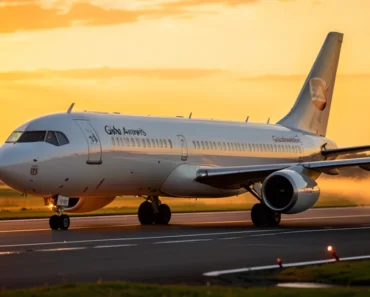
ASKY Airlines operates a narrowbody jet fleet centred on the Boeing 737 family, which has formed the backbone of its operations since the carrier’s early years. According to publicly disclosed fleet data, the airline has operated variants within the 737 Next Generation series, providing the range and capacity appropriate for the short-to-medium-haul intra-African routes that define its network. The carrier has also operated the Boeing 737 MAX series as part of a broader modernisation trajectory aligned with Ethiopian Airlines’ own fleet strategy, bringing improved fuel efficiency to routes where thin margins make operating economics critical. Industry observers note that fleet renewal remains a live strategic priority for ASKY as it seeks to reduce unit costs and meet evolving emissions expectations from airport authorities and institutional partners across the continent.
Destinations
ASKY’s network is fundamentally intra-African in character, with the Lomé hub serving as the pivot for a spoke system that reaches across West Africa, into Central Africa, and selectively into East Africa. The airline connects major West African commercial capitals including Lagos (LOS), Accra (ACC), Abidjan (ABJ), Dakar (DKR), and Bamako (BKO), providing a level of regional connectivity that few carriers on the continent can match at comparable frequency. Central African destinations including Libreville, Douala, and Bangui extend the network eastward, while select routes into East Africa — facilitated in part by the Ethiopian Airlines relationship — give the carrier a genuinely pan-continental footprint. ASKY does not currently operate long-haul intercontinental services under its own metal, positioning itself instead as the regional feeder and distributor within Africa rather than a competitor on transatlantic or Europe-Africa trunk routes.
Codeshare and Alliance
ASKY Airlines is not a member of any of the three major global airline alliances — Star Alliance, SkyTeam, or oneworld. Its most significant interline and codeshare relationship is with Ethiopian Airlines, its strategic equity partner, which allows passengers to connect across Ethiopian’s extensive intercontinental network via Addis Ababa (ADD) onto ASKY’s West and Central African services. This arrangement effectively gives ASKY passengers access to a global network without the carrier itself bearing the cost and complexity of long-haul operations. The airline has also maintained interline agreements with other African and international carriers as part of its broader connectivity strategy, though the Ethiopian Airlines axis remains the defining commercial partnership.
Notable Incidents
ASKY Airlines does not have a major accident or hull-loss event on its publicly documented safety record. The airline has operated within the regulatory frameworks of Togo’s civil aviation authority and has been subject to periodic IOSA (IATA Operational Safety Audit) oversight consistent with its IATA membership obligations. As with all carriers operating in the West African environment, the airline navigates challenging infrastructure conditions at some outstations, but no specific incident meeting the threshold of a significant safety event has been identified in the airline’s public record at the time of writing.
Financial and Operational Situation
ASKY’s financial profile reflects the structural realities of intra-African aviation: high fuel costs relative to yield, thin passenger volumes on some spokes, and currency exposure across multiple West and Central African markets with varying foreign exchange liquidity. Industry estimates suggest the carrier has faced profitability pressures consistent with those experienced across the regional aviation sector, particularly in the post-pandemic recovery period when demand recovery was uneven across African markets. The airline’s institutional shareholder base — including development finance institutions — has historically provided a degree of financial resilience that purely commercial carriers in the region may lack. Operational efficiency improvements tied to the fleet modernisation programme and the deepening of the Ethiopian Airlines partnership are understood to be central to the carrier’s medium-term financial strategy.
Recent Developments
In the 24 months to early 2026, ASKY has continued to rebuild and expand its post-pandemic network, restoring frequencies on core West African routes and selectively adding new destinations in response to demand signals from the business travel and diaspora segments. The airline’s ongoing integration of more fuel-efficient aircraft into its operational fleet has been a consistent theme, with the Boeing 737 MAX’s role in the network attracting attention from industry analysts tracking cost-per-seat-kilometre improvements across the region. Partnership deepening with Ethiopian Airlines has remained a strategic constant, with discussions around expanded codeshare scope and joint network planning reported in regional aviation trade media. Regulatory engagement with ECOWAS aviation bodies around the implementation of the Single African Air Transport Market (SAATM) framework has also featured in the airline’s public positioning, as liberalisation of intra-African air rights would directly benefit a hub-and-spoke carrier of ASKY’s profile.