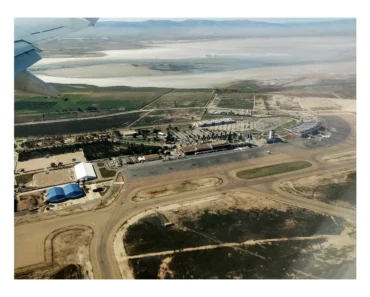
Maun Airport
Maun Airport
About
Maun Airport (IATA: MUB / ICAO: FBMN) occupies a quietly pivotal position in African aviation that its modest physical footprint does little to advertise. Situated at the edge of the Okavango Delta in north-western Botswana, it functions as the principal air gateway to one of the continent’s most celebrated wilderness ecosystems — a UNESCO World Heritage Site that draws high-value, low-volume tourism from across the globe. For travellers, journalists covering conservation, and aviation analysts tracking niche safari-market dynamics, Maun Airport is a case study in how a small regional hub can punch well above its weight in economic and ecological significance.
The airport traces its origins to the mid-twentieth century, when Maun served as a remote administrative and cattle-trading outpost in what was then the Bechuanaland Protectorate. Early airstrip infrastructure was rudimentary, designed primarily to support government and missionary flights into an area with limited road connectivity. Following Botswana’s independence in 1966, investment in civil aviation infrastructure gradually increased as the government recognised the strategic importance of air access to the country’s northern wildlife corridors.
Ownership and operational oversight of Maun Airport rests with the Botswana Civil Aviation Authority (BCAA), the statutory body responsible for regulating and managing the country’s principal aerodromes. Over the decades, the airport has undergone incremental expansions to its terminal building, apron areas, and navigational aids, reflecting the steady growth of the safari tourism sector. While it has never been repositioned as a major international hub, targeted infrastructure improvements have allowed it to accommodate jet aircraft and handle the logistical complexity of coordinating dozens of small bush-plane transfers daily.
Country
Botswana is a landlocked, upper-middle-income country in southern Africa, bordered by Zimbabwe, Zambia, Namibia, and South Africa. Its capital is Gaborone, located in the south-east of the country, while Maun serves as the de facto capital of the north-west. With a population estimated in the low millions — making it one of the more sparsely populated nations on the continent relative to its land area — Botswana has built a reputation for political stability, sound resource governance, and a conservation-led development model anchored in its extraordinary natural heritage. It is a member of the Southern African Development Community (SADC) and the African Union, and its currency, the Botswana pula, is among the more stable in sub-Saharan Africa.
→ Read the Botswana expert briefing
Airlines Based Here
Maun Airport does not function as a primary hub for any major full-service international carrier, but it is a critical focus city for several operators whose networks are built around the safari and wildlife tourism market. Air Botswana, the national flag carrier, has historically operated scheduled services into Maun as part of its domestic network connecting Gaborone’s Sir Seretse Khama International Airport and Kasane Airport in the Chobe region. Smaller charter and scheduled operators — including Mack Air and Wilderness Air, both of which are deeply embedded in the Okavango tourism ecosystem — use Maun as an operational base for light aircraft transfers to remote bush camps and private concessions that are otherwise inaccessible by road. These operators are not airlines in the conventional commercial sense, but they are integral to the airport’s daily traffic rhythm and its economic rationale. Visiting carriers from South Africa, including Airlink (formerly SA Airlink), have provided regional jet connectivity, linking Maun to Johannesburg’s O.R. Tambo International Airport on a scheduled basis.
Flights and Destinations
The route network operating through Maun Airport is shaped almost entirely by the demands of the tourism and conservation sectors rather than by conventional origin-and-destination passenger flows. The airport’s most commercially significant scheduled link is to Johannesburg (O.R. Tambo International), which serves as the primary international connection point for travellers arriving from Europe, North America, and the rest of Africa. Domestically, services connect Maun to Gaborone and Kasane, allowing itinerary flexibility for visitors moving between the Okavango Delta and the Chobe National Park corridor. Charter and scheduled light-aircraft services extend the network to a constellation of remote airstrips within the delta and surrounding concession areas, including destinations such as Xaxaba, Chitabe, Mombo, and Vumbura — names that appear on no commercial airline timetable but are well known to safari operators and high-end travel planners. Intercontinental connectivity is achieved almost exclusively via Johannesburg, though some travellers route through Nairobi’s Jomo Kenyatta International Airport or Addis Ababa’s Bole International Airport depending on their point of origin.
Facilities and Capacity
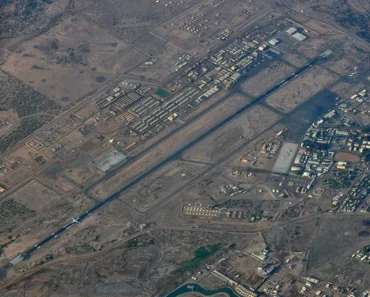
Maun Airport operates a single passenger terminal building that, by the standards of African regional airports, is functional and adequately equipped for its traffic class, which industry observers would characterise as a small regional hub. The terminal handles both arriving and departing passengers through a compact but organised facility that includes check-in desks, a small arrivals hall, and basic airside amenities. The airport is served by a single paved runway — runway 08/26 — which is of sufficient length to accommodate turboprop regional aircraft and smaller jet types, including those operated by Airlink on the Johannesburg route. A dedicated general aviation apron supports the high volume of light aircraft movements that are central to the airport’s operational identity. Cargo facilities are limited in scale, reflecting the airport’s primary orientation toward passenger and tourism traffic rather than freight. According to publicly disclosed infrastructure assessments, the BCAA has periodically identified Maun as a priority site for capacity enhancement, though the pace and scope of any expansion works have been subject to budgetary and planning constraints typical of smaller national aviation authorities in the region.
Visa Regulations
Travellers arriving at Maun Airport are subject to Botswana’s national visa regime, which is administered by the Department of Immigration. Botswana operates a relatively open visa policy for many of the source markets that generate the bulk of its tourism arrivals. Citizens of the United States, the United Kingdom, and most European Union member states are generally permitted to enter Botswana visa-free for short stays, typically up to 90 days, for tourism and business purposes — though travellers should confirm the precise conditions applicable to their nationality before departure. Citizens of most SADC member states benefit from visa-free or simplified entry arrangements under regional protocols. Botswana has also made progress in developing electronic visa (eVisa) mechanisms to streamline pre-arrival processing, though the availability and functionality of such systems should be verified against current official guidance. Visa regulations are subject to change without notice, and the information above reflects general policy contours rather than a definitive legal determination. For a live, country-specific lookup, visit our visa requirements tool.
Recent Developments
In the period spanning approximately 2024 to 2026, Maun Airport has continued to reflect broader trends in African aviation recovery and safari-market resilience following the disruptions of the early 2020s. Regional scheduled services have shown signs of stabilisation, with Airlink maintaining its Johannesburg link as a commercially viable route underpinned by consistent leisure demand. The BCAA has signalled ongoing interest in upgrading navigational infrastructure and improving ground handling standards at Maun as part of a wider national aviation safety and efficiency agenda. The Botswana government’s continued commitment to high-value, low-volume tourism policy — which deliberately limits visitor numbers to protect ecological integrity — has shaped the airport’s development philosophy, discouraging mass-market expansion in favour of quality-focused capacity management. Industry observers have noted growing interest from specialist charter operators in expanding light-aircraft connectivity to new concession areas as the tourism sector matures and diversifies. Any specific new route announcements or terminal project completions should be verified against current BCAA communications and airline press releases.
News and Reports
Researchers and journalists seeking current operational intelligence on Maun Airport should consult several authoritative source categories. The Botswana Civil Aviation Authority publishes regulatory notices, aerodrome information, and policy updates through its official communications channels and the Aeronautical Information Publication (AIP) for Botswana, which is the primary technical reference for runway, airspace, and procedural data. Air Botswana and Airlink both maintain press release archives on their respective corporate websites that document route changes and operational updates. At the continental level, IATA’s Africa and Middle East regional office produces periodic market analysis reports that contextualise Botswana’s aviation performance within broader sub-Saharan trends. The ICAO regional office for eastern and southern Africa (ESAF), based in Nairobi, is the relevant intergovernmental body for safety oversight and infrastructure standards applicable to FBMN. Trade publications including ch-aviation, anna.aero, and the African Business Aviation Association (AfBAA) provide ongoing coverage of the charter and business aviation segment that is central to Maun’s operational character.