Kasane Airport
Kasane Airport
About
Kasane Airport (IATA: BBK / ICAO: FBKE) occupies a quietly strategic position in African aviation that its modest footprint does not immediately suggest. Situated in the far north-eastern corner of Botswana, at the confluence of four national borders — Botswana, Zambia, Zimbabwe, and Namibia — the airport serves as the principal air gateway to the Chobe ecosystem, one of the most ecologically significant wildlife corridors on the African continent. For travellers, journalists, and researchers working across southern Africa, BBK is less a transit hub than a purposeful destination: a facility whose entire operational logic is shaped by the demands of high-value, low-volume conservation tourism and the logistical needs of a remote but internationally watched region.
The airport has operated in various forms since the mid-twentieth century, growing in step with Botswana’s post-independence development of its northern tourism infrastructure. Its origins lie in a basic airstrip serving government and charter traffic, and it was progressively formalised as commercial demand from safari operators and lodge groups expanded through the 1980s and 1990s. Ownership and operational oversight sit with the Civil Aviation Authority of Botswana (CAAB), the statutory body responsible for regulating and managing the country’s civil aviation infrastructure.
A significant upgrade programme was undertaken in the 2000s and into the 2010s, improving runway surfaces, terminal facilities, and navigational aids to accommodate larger regional jet aircraft. The airport remains classified as a small regional facility rather than an international hub in the conventional sense, though it does handle scheduled international traffic from neighbouring countries. Its role in the broader Botswana aviation network is complementary to Sir Seretse Khama International Airport in Gaborone and Maun Airport, the latter being its closest functional peer in the safari-gateway category.
Country
Botswana is a landlocked republic in southern Africa, bordered by South Africa, Namibia, Zimbabwe, and Zambia. Its capital is Gaborone, located in the south-east of the country. With a population estimated in the low-to-mid millions, Botswana is one of Africa’s more sparsely populated nations relative to its land area, much of which is occupied by the Kalahari Desert. The country is widely regarded as one of the continent’s more stable democracies and has historically leveraged diamond revenues and conservation-led tourism to sustain comparatively high per-capita income levels by regional standards. Its northern districts, including the Chobe District in which Kasane sits, are the engine of its wildlife tourism economy. → Read the Botswana expert briefing
Airlines Based Here
Kasane Airport does not function as a hub for any major carrier in the conventional sense, but it is a focus city for Botswana’s domestic and regional scheduled services. Air Botswana, the national flag carrier, has historically operated scheduled services through BBK as part of its domestic network connecting Kasane with Gaborone and Maun. The airline’s presence at Kasane reflects the government’s policy commitment to maintaining air connectivity in remote districts. Beyond the flag carrier, the airport is heavily served by charter and air-taxi operators — many of them based in Maun or Johannesburg — who move high-spending safari guests between Kasane, the Chobe lodges, and the Okavango Delta. Operators in this segment have included Wilderness Air and similar specialist safari aviation companies, which treat BBK as a routine waypoint in multi-destination itineraries rather than a base of operations. Visiting regional carriers have at various points operated cross-border services connecting Kasane with Livingstone in Zambia and Victoria Falls in Zimbabwe, reflecting the airport’s position at the heart of the Kavango–Zambezi Transfrontier Conservation Area (KAZA TFCA).
Flights and Destinations
The route network at Kasane Airport is compact but purposefully constructed around the needs of tourism and regional connectivity. Scheduled and charter services link BBK to a range of destinations within Botswana and across the immediate sub-region. Representative destinations in the network include Gaborone (Sir Seretse Khama International), Maun, Johannesburg (O.R. Tambo International), Livingstone (Harry Mwanga Nkumbula International) in Zambia, and Victoria Falls Airport in Zimbabwe. Within Botswana, connections to smaller bush airstrips in the Okavango Delta and Linyanti areas are facilitated through charter operators using BBK as a staging point. There are no long-haul intercontinental scheduled services operating directly from Kasane; travellers connecting onward to Europe, North America, or Asia typically route through Johannesburg or Gaborone. The airport’s intercontinental relevance is therefore indirect but real: it sits at the end of a feeder chain that draws visitors from major global source markets including the United Kingdom, Germany, the United States, and Australia.
Facilities and Capacity
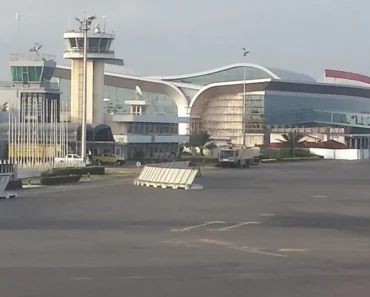
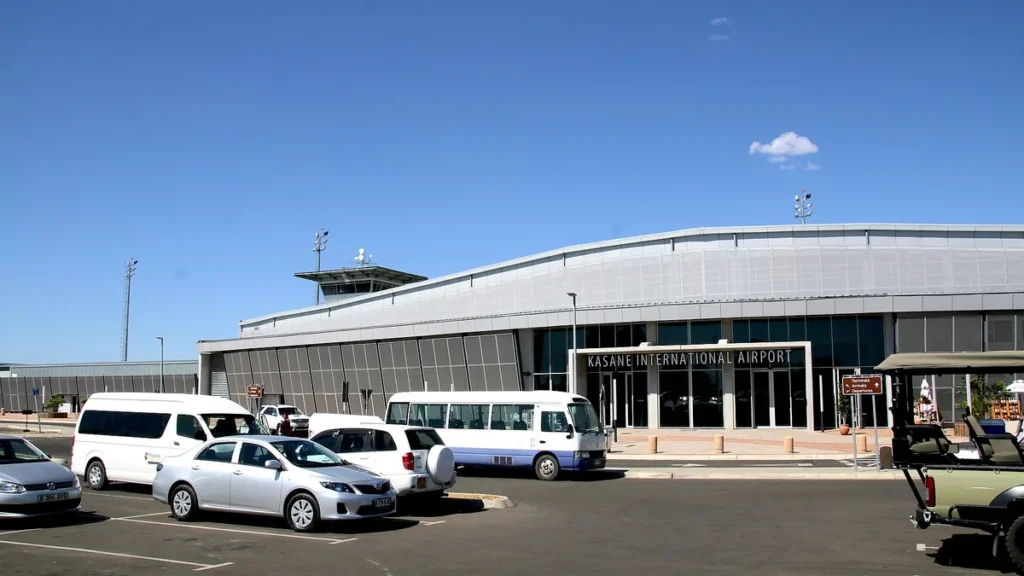
Kasane Airport operates a single terminal building that handles both arriving and departing passengers, with facilities scaled to the airport’s small-regional classification. The terminal includes check-in desks, a departure lounge, and basic landside amenities appropriate to its traffic volumes. The airport has one paved runway, which according to publicly available aeronautical data is capable of accommodating turboprop and regional jet aircraft of the type commonly operated in southern African domestic markets, including aircraft in the ATR and smaller jet categories. Instrument approach procedures are in place, improving operational reliability during adverse weather conditions. Cargo handling exists in a limited form, primarily supporting lodge supply chains and light freight rather than commercial cargo operations at scale. According to industry estimates, the airport handles passenger volumes consistent with a small regional facility, with traffic heavily skewed toward the dry-season tourism peak running roughly from May through October. No large-scale terminal expansion was under active public construction as of early 2026, though the CAAB has periodically signalled interest in upgrading northern Botswana’s aviation infrastructure in line with national tourism growth targets.
Visa Regulations
Travellers arriving at Kasane Airport are subject to Botswana’s national visa regime, which is administered by the Department of Immigration. Botswana operates a relatively open visa policy for many major source markets. Citizens of the United States, the United Kingdom, and European Union member states have generally been able to enter Botswana visa-free for short stays, typically up to 30 or 90 days depending on nationality, under arrangements that have been in place for a number of years. Citizens of most southern African Development Community (SADC) member states similarly benefit from visa-free or visa-on-arrival arrangements reflecting regional integration commitments. An eVisa system has been developed to facilitate advance authorisation for nationalities that require a visa, reducing the administrative burden at the point of entry. However, visa regulations are subject to change, and travellers are strongly advised to verify current requirements before travel. → Check the live visa requirements lookup
Recent Developments
In the 24 months leading into 2026, Kasane Airport’s operational environment has been shaped by the broader recovery and reconfiguration of southern African tourism aviation following the disruptions of the early 2020s. Route reinstatement and capacity rebuilding have been the dominant themes, with charter operators in particular reporting strong demand from the high-end conservation tourism segment that Chobe serves. Discussions around improving cross-border air connectivity within the KAZA TFCA have continued at a policy level, with Kasane identified as a logical node in any expanded transfrontier air network. Air Botswana has undergone a period of strategic review as the Botswana government has considered the future structure and ownership model of the national carrier, and the implications of any restructuring for domestic routes including Kasane have been watched closely by the travel trade. Infrastructure maintenance and navigational system updates have proceeded under CAAB oversight, consistent with the authority’s obligations under ICAO standards. No significant regulatory incidents or safety events at BBK have been reported in publicly available CAAB or ICAO documentation during this period.
News and Reports
Researchers and journalists tracking developments at Kasane Airport and in Botswana civil aviation more broadly should consult several authoritative sources. The Civil Aviation Authority of Botswana publishes regulatory notices, aeronautical information publications, and periodic operational updates through its official channels. Air Botswana’s corporate communications provide route and schedule information relevant to BBK’s scheduled service picture. At the continental level, IATA’s Africa and Middle East regional office produces periodic market analysis and traffic outlook reports that contextualise Botswana within broader southern African aviation trends. The ICAO regional office for eastern and southern Africa (ESAF), based in Nairobi, publishes safety oversight and infrastructure development documentation relevant to airports across the region including those in Botswana. The Botswana Tourism Organisation and the KAZA TFCA secretariat also periodically publish material relevant to the tourism aviation ecosystem that Kasane Airport serves. For breaking operational news, specialist aviation trade publications covering the African market provide timely reporting on route changes, airline developments, and infrastructure announcements.