O. R. Tambo International Airport
O. R. Tambo International Airport
About
O. R. Tambo International Airport — IATA code JNB, ICAO code FAOR — is Sub-Saharan Africa’s busiest and most strategically significant aviation gateway. Situated approximately 25 kilometres east of Johannesburg’s central business district, the airport functions as the primary intercontinental hub for the African continent, connecting southern Africa to Europe, North America, Asia, the Middle East, and the rest of Africa with a frequency and breadth that no other airport on the continent currently matches. For travellers, it is the most likely point of entry into southern Africa. For journalists and researchers, it is a barometer of African economic connectivity. For aviation analysts, it is the benchmark against which other African hub ambitions are measured.
The airport’s origins trace to the 1940s, when it was established as Jan Smuts Airport, serving the then-Union of South Africa. It was renamed Johannesburg International Airport following the democratic transition of 1994, and renamed again in 2006 to honour Oliver Reginald Tambo, the late president of the African National Congress and a towering figure in the anti-apartheid movement. The renaming was not merely symbolic: it signalled a deliberate repositioning of the facility as a post-apartheid national asset and a continental institution.
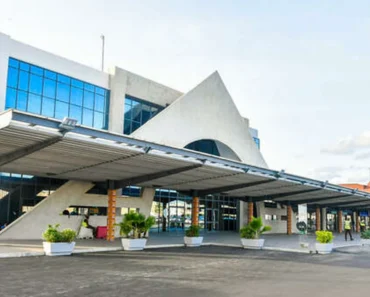
Ownership and operation rest with Airports Company South Africa (ACSA), the state-owned entity that manages South Africa’s principal commercial airports. ACSA operates under a concession framework regulated by the South African Civil Aviation Authority (SACAA) and the Department of Transport. A landmark expansion programme was completed in time for the 2010 FIFA World Cup, delivering the current Pier B and Pier C terminal extensions, an expanded international arrivals hall, and significantly upgraded landside infrastructure. That investment transformed the airport’s processing capacity and gave it the physical footprint it broadly retains today.
Country
South Africa occupies the southern tip of the African continent and is home to a population estimated at well over 60 million people, making it one of Africa’s most populous and economically consequential nations. Pretoria serves as the executive capital, Cape Town as the legislative capital, and Bloemfontein as the judicial capital — a constitutional arrangement that reflects the country’s complex federal history. South Africa is a member of the African Union, the Southern African Development Community (SADC), and the G20, and its economy, though facing structural challenges, remains among the largest on the continent by GDP. Its geographic position, infrastructure base, and financial sector make Johannesburg the de facto commercial capital of southern Africa and a natural anchor for regional aviation.
→ Read the South Africa expert briefing
Airlines based here
South African Airways (SAA) uses O. R. Tambo as its primary hub and home base, operating domestic trunk routes, regional African services, and long-haul intercontinental flights. SAA has undergone significant restructuring in recent years following its 2020 business rescue process, and its network, while leaner than at its peak, continues to anchor the airport’s hub function. Airlink, an independently owned South African carrier, operates an extensive regional network from JNB, serving smaller South African cities and numerous destinations across southern and eastern Africa; it is one of the most active carriers by frequency at the airport. FlySafair, a low-cost carrier, operates a high-frequency domestic network from JNB, competing primarily on the Johannesburg–Cape Town and Johannesburg–Durban corridors.
Among visiting international carriers, Emirates operates one of its highest-frequency African services through JNB, connecting Johannesburg to Dubai and onward to global points. British Airways (operated by Comair until that carrier’s 2022 liquidation, and subsequently by IAG’s own operation) maintains a Johannesburg–London Heathrow service. Lufthansa, Air France, KLM, Qatar Airways, Ethiopian Airlines, Kenya Airways, and Singapore Airlines are among the carriers that maintain scheduled services at the airport, reflecting its status as a genuine intercontinental hub rather than a regional spoke.
Flights and destinations
The route network radiating from O. R. Tambo is the most extensive of any airport in Sub-Saharan Africa. Domestically, the airport connects Johannesburg to Cape Town, Durban, Port Elizabeth (now Gqeberha), East London, and George, among other points. Regionally within Africa, scheduled services link JNB to Nairobi, Lusaka, Harare, Maputo, Luanda, Lagos, Accra, Addis Ababa, and Mauritius, among many others — making it the most connected intra-African hub on the continent by most measures. Intercontinentally, passengers can reach London Heathrow, Frankfurt, Paris Charles de Gaulle, Amsterdam, Dubai, Doha, Hong Kong, Singapore, São Paulo, and New York JFK on direct or near-direct routings. The airport’s geographic position in the southern hemisphere, combined with South Africa’s open-skies bilateral agreements, has historically attracted carriers seeking a credible African anchor point for long-haul operations.
Facilities and capacity
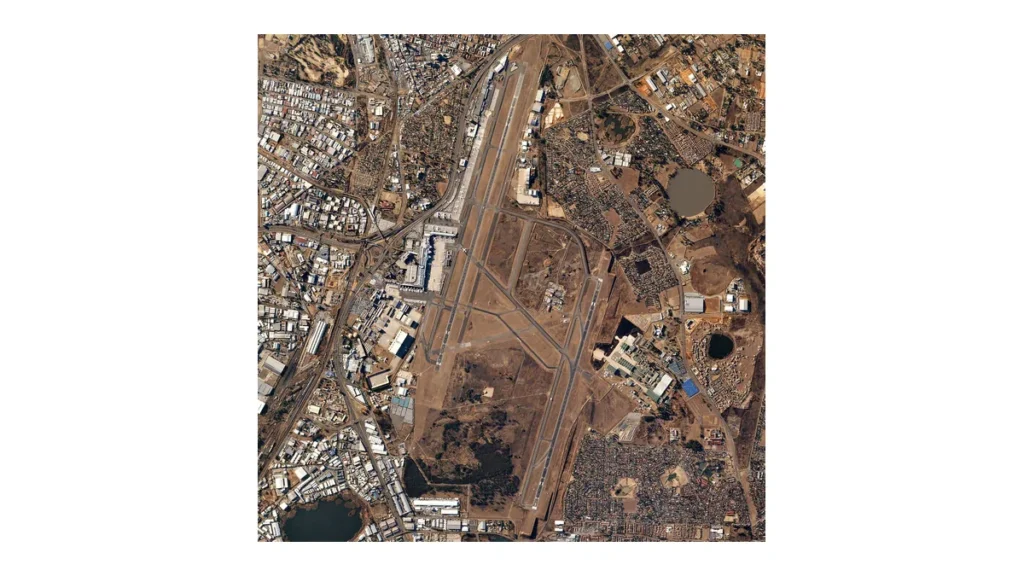
O. R. Tambo International Airport is classified as a large hub by continental standards. The terminal complex is organised around a central terminal building with three principal piers: Pier A serves domestic and some regional operations; Pier B and Pier C serve international and intercontinental traffic, with Pier B handling the majority of wide-body international arrivals and departures. The airport operates two parallel runways — designated 03L/21R and 03R/21L — both capable of handling the full range of current commercial aircraft types, including the Airbus A380 and Boeing 747-8. A dedicated cargo precinct, situated on the northern apron, handles significant volumes of perishable exports — most notably fresh fruit, flowers, and seafood — as well as general freight, making JNB one of Africa’s most active air cargo nodes. According to publicly disclosed traffic data from ACSA, the airport has historically processed tens of millions of passengers annually, placing it firmly in the top tier of African airports by throughput. ACSA has signalled ongoing interest in further capacity investment, though specific expansion budgets and timelines remain subject to regulatory and fiscal approval processes as of 2026.
Visa regulations
South Africa operates a tiered visa regime that travellers transiting or arriving at O. R. Tambo should review carefully before travel. Citizens of the United States, the United Kingdom, and most European Union member states currently benefit from visa-free entry for short stays — typically up to 30 days for tourism, though the precise duration and conditions vary by nationality and are subject to bilateral agreement. Many southern African Development Community (SADC) passport holders also enjoy visa-free or simplified entry arrangements under regional protocols. Citizens of a number of other African countries, as well as travellers from parts of Asia and South Asia, are generally required to obtain a visa in advance through a South African diplomatic mission; South Africa does not operate a universal visa-on-arrival scheme, and the availability of an eVisa system has been subject to phased rollout. Visa policy is an area of active policy development in South Africa, and conditions can change with limited notice. Travellers, journalists on assignment, and researchers are strongly advised to verify current requirements before travel.
→ Check the live visa requirements lookup for South Africa
Recent developments
The period from 2024 to 2026 has seen a number of notable developments at O. R. Tambo. South African Airways has continued its post-restructuring network rebuild, adding or restoring routes as aircraft and commercial agreements have allowed, with its long-haul programme remaining a subject of close industry attention. Several international carriers have adjusted frequencies or gauge on their JNB services in response to shifting demand patterns and fuel economics, while new entrants from the Middle East and East Africa have explored or announced expanded access to the Johannesburg market. On the infrastructure side, ACSA has undertaken ongoing maintenance and upgrade works across the terminal complex, with particular attention to landside passenger processing and digital wayfinding systems. South Africa’s broader aviation regulatory environment has also been active, with the SACAA engaging with ICAO on safety oversight frameworks and the government continuing to develop its long-term aviation sector strategy. Industry estimates suggest that passenger traffic at JNB has been on a recovery trajectory following the severe disruption of the COVID-19 pandemic years, though the pace of recovery relative to pre-pandemic benchmarks remains a subject of ongoing analysis.
News and reports
Authoritative and ongoing coverage of O. R. Tambo International Airport can be sourced from several institutional channels. Airports Company South Africa publishes operational updates, traffic statistics, and corporate announcements through its official communications office and annual reports. The South African Civil Aviation Authority (SACAA) issues regulatory notices, safety directives, and audit findings relevant to the airport and the broader national aviation system. At the continental level, IATA’s Africa and Middle East regional office produces periodic market analysis and policy commentary that frequently references JNB as a data point. The ICAO Regional Office for Eastern and Southern Africa, based in Nairobi, publishes safety and efficiency assessments covering South African airspace. Specialist aviation trade publications including ch-aviation, Cirium, and Aviation Week Network provide route-level data, fleet tracking, and commercial analysis. For general news, South African business press outlets with dedicated transport desks offer timely reporting on airline and airport developments in the domestic market.