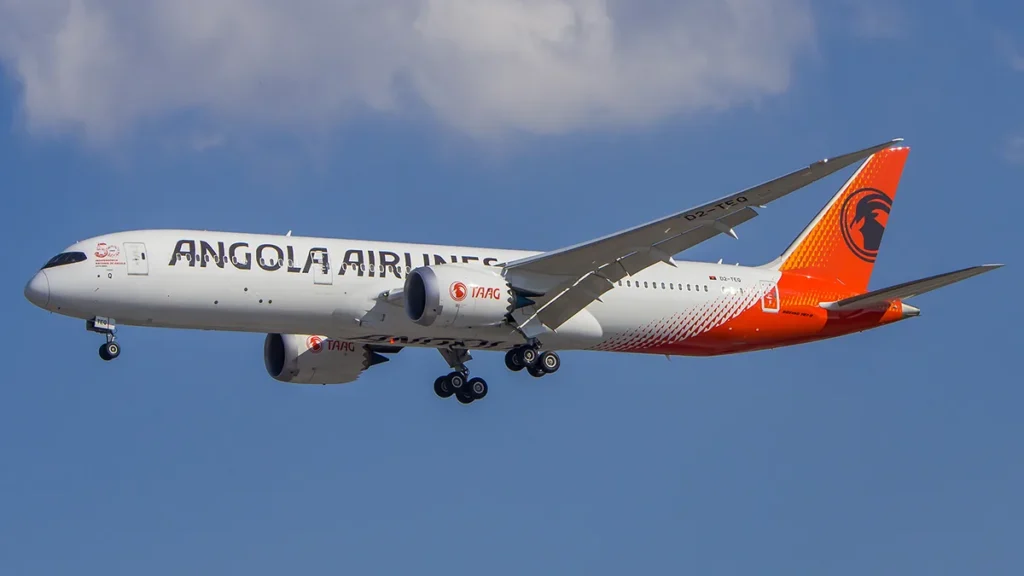
TAAG Angola Airlines
TAAG Angola Airlines
About
TAAG Angola Airlines is Angola’s national flag carrier and one of sub-Saharan Africa’s most strategically positioned long-haul operators, connecting a resource-rich, rapidly urbanising economy to Europe, South America, and a growing roster of African capitals. Operating under IATA code DT and ICAO designator DTA, and headquartered at Luanda’s Quatro de Fevereiro International Airport (LAD), TAAG occupies a dual role that is common among African state carriers: it is simultaneously a commercial airline and a critical piece of national infrastructure, linking Angola’s provincial cities to each other and to the world at a scale that no private competitor currently matches.
TAAG was founded in 1938 under Portuguese colonial administration as Divisão de Exploração dos Transportes Aéreos (DTA), making it one of the older aviation institutions on the continent. Following Angolan independence in 1975, the airline was nationalised and rebranded as Linhas Aéreas de Angola, before adopting the TAAG Angola Airlines identity that it carries today. The Angolan state, through the Ministry of Finance and associated sovereign entities, remains the dominant shareholder, and the airline’s strategic direction is closely tied to government economic policy.
In recent years, TAAG has pursued a measured modernisation agenda, working to shed the operational inefficiencies that have historically burdened state-owned African carriers. Corporate governance reforms, fleet renewal discussions, and a renewed focus on revenue-generating intercontinental routes have all featured in the airline’s public positioning, even as it continues to navigate the structural challenges — currency volatility, fuel import costs, and thin domestic purchasing power — that shape aviation economics across Angola.
Bases and Hubs
Luanda – Quatro de Fevereiro International Airport (LAD): TAAG’s principal hub and the centre of all long-haul and most regional operations; LAD handles the overwhelming majority of the airline’s passenger throughput and serves as its maintenance and crew base.
Lubango (SDD): A key domestic focus city in southern Angola, serving as a regional gateway for the Huíla Province and an important node in TAAG’s domestic network.
Cabinda (CAB): The exclave city of Cabinda, separated from mainland Angola, relies heavily on TAAG services for connectivity to Luanda, giving the route strategic as well as commercial significance.
Huambo (NOV): Angola’s second-largest city is served as a domestic focus point, reflecting the airline’s mandate to bind together a geographically dispersed national territory.
Fleet
According to publicly disclosed fleet data and industry tracking sources, TAAG operates a mixed fleet built around Boeing widebody and narrowbody types. The Boeing 777-300ER has served as the backbone of the airline’s intercontinental operations, providing the range and capacity needed for routes to Europe and South America. Boeing 737 family aircraft — including Next Generation variants — have historically covered regional African and domestic routes. TAAG has also operated the Boeing 777-200ER on medium- and long-haul services.
Industry observers have noted that fleet renewal remains a live topic for the airline. Discussions around introducing more fuel-efficient narrowbody types to replace ageing 737 variants have been reported in aviation trade media, though the precise composition and timing of any confirmed order should be verified against TAAG’s most recent official communications. The airline’s fleet size, while modest by global standards, is among the larger operated by any carrier based in Lusophone Africa.
Destinations
TAAG’s network is structured across three distinct tiers. Domestically, the airline provides the connective tissue for Angola’s provincial cities, operating routes that link Luanda to destinations including Lubango, Huambo, Cabinda, Benguela, and Malanje — services that carry both commercial and social obligation characteristics.
On the intra-African tier, TAAG serves a selection of regional capitals and commercial hubs, with routes to destinations including Johannesburg (JNB), Nairobi (NBO), São Tomé (TMS), and Kinshasa (FIH) forming part of its published network. These routes serve the business travel and diaspora markets that are central to TAAG’s revenue mix.
Intercontinentally, TAAG’s most commercially significant routes connect Luanda to Lisbon (LIS) — a high-frequency corridor underpinned by deep historical, cultural, and business ties between Angola and Portugal — as well as services to other European points and to São Paulo (GRU) in Brazil, reflecting Angola’s Lusophone connections across the Atlantic. These long-haul routes, operated with widebody equipment, represent the airline’s highest-yield flying.
Codeshare and Alliance
TAAG Angola Airlines is not a member of any of the three major global airline alliances — Star Alliance, SkyTeam, or oneworld — as of the time of writing. The airline has historically maintained codeshare and interline arrangements with a number of carriers, most notably TAP Air Portugal (TP), which is a natural partner given the Lisbon corridor’s importance to both airlines. Additional interline relationships have been reported with other African and European carriers, though the active status of specific agreements should be confirmed with the airline directly, as codeshare portfolios in this segment of the market can shift with commercial circumstances.
Notable Incidents
TAAG’s safety history includes incidents from earlier decades that have been documented in public aviation safety databases, including events during the period of Angola’s civil conflict when operating conditions across the country were severely compromised. In recent years, however, the airline has not featured prominently in major incident reporting, and industry safety analysts have noted improvements in its operational standards commensurate with its fleet modernisation. Readers requiring a precise and verified incident history are directed to the Aviation Safety Network (ASN) and the ICAO Universal Safety Oversight Audit Programme (USOAP) public disclosures, which represent the authoritative sources for this category of information.
Financial and Operational Situation
As a state-owned enterprise, TAAG does not publish audited financial results in the manner of a publicly listed airline, and independently verified profitability data is limited. Industry estimates suggest the airline, like many African flag carriers, has faced persistent structural pressures: Angola’s kwanza has experienced significant volatility against the US dollar and euro, creating acute cost challenges given that aviation fuel, aircraft leases, and maintenance contracts are predominantly dollar-denominated. The post-pandemic recovery in international travel has provided some revenue tailwind, particularly on the Luanda–Lisbon corridor, which benefits from strong business and diaspora demand.
The Angolan government has periodically provided financial support to TAAG, consistent with the pattern seen across state-owned carriers in the region. Broader economic reforms under Angola’s ongoing IMF-supported adjustment programme have introduced pressure to improve the commercial performance of state enterprises, and TAAG has been cited in that context. Whether the airline is on a trajectory toward operational self-sufficiency remains, in the view of most external analysts, an open question that will depend heavily on the pace of Angola’s wider economic stabilisation.
Recent Developments
In the 24 months leading into 2026, TAAG has been active on several fronts that merit attention from investors and industry observers. The airline has signalled intent to expand its intra-African footprint, with new or resumed route announcements to additional sub-Saharan destinations reflecting both commercial ambition and Angola’s broader diplomatic and economic engagement with the continent. Fleet renewal conversations have continued, with trade media reporting interest in more fuel-efficient narrowbody types to modernise the domestic and regional operation.
On the partnership front, TAAG has engaged in discussions aimed at deepening commercial relationships with other African carriers as part of the broader Single African Air Transport Market (SAATM) framework, to which Angola is a signatory. Regulatory developments at LAD, including infrastructure investment at Luanda’s airport, have also featured in the airline’s operational planning horizon. Travellers and journalists covering the airline should monitor TAAG’s official communications channels and Angola’s Civil Aviation Institute (INAVIC) for the most current route and regulatory updates.