Tunisia — Expert Briefing
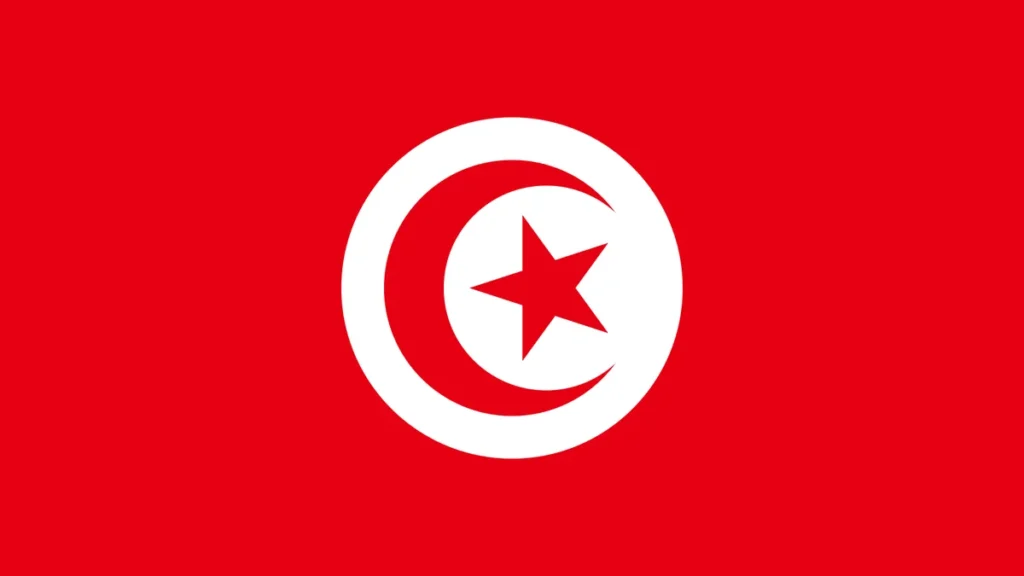
Tunisia at a glance: A small but strategically pivotal North African state navigating an authoritarian consolidation at home while remaining a critical node in Mediterranean migration, energy transit, and regional security dynamics.
Overview
Capital: Tunis. Population: approximately 12.1 million (World Bank, 2024 estimate). Official language: Arabic; French functions as a de facto language of business, higher education, and government administration. Currency: Tunisian Dinar (TND). GDP per capita: broadly in the lower-middle-income band, estimated at approximately USD 3,800–4,100 at current prices, placing Tunisia in the World Bank’s lower-middle-income category. Tunisia matters in 2026 for two converging reasons: it sits at the intersection of European migration policy and Saharan instability, making it a frontline state for both the EU’s border externalisation agenda and the westward spread of jihadist networks from the Sahel. Simultaneously, its domestic political trajectory — marked by President Kais Saied’s systematic dismantling of the post-2011 democratic architecture — is being watched across the Arab world as a test case for whether authoritarian retrenchment can be economically sustained without external financial collapse.
Government and Politics
Tunisia is a presidential republic, though analysts increasingly describe its current configuration as a hyper-presidentialist or competitive authoritarian system. President Kais Saied — a former constitutional law professor who won the 2019 election on an anti-establishment platform — holds near-total executive authority following his self-described “corrective movement” of 25 July 2021, when he suspended parliament, dismissed the prime minister, and assumed rule by decree. A new constitution, approved by referendum in July 2022 with officially reported turnout of approximately 30 percent, formally enshrined this concentration of power: it abolished the semi-presidential system established under the 2014 constitution, eliminated meaningful checks on the presidency, and reduced the legislature to a largely consultative role. The bicameral parliament — comprising the Assembly of the Representatives of the People (ARP) and the newly created National Council of Regions and Districts — was reconstituted through elections in December 2022 and January 2023, which were boycotted by most opposition parties and drew turnout of under 11 percent in the first round, the lowest in Tunisia’s post-independence history. Saied was re-elected in October 2024 with an officially reported 90.7 percent of the vote in a contest that international observers and domestic civil society groups described as neither free nor fair, with leading opposition candidates barred or imprisoned. The next scheduled legislative elections are due in 2027. The judiciary has been progressively subordinated to executive authority; dozens of politicians, journalists, lawyers, and civil society figures have faced prosecution under a broad cybercrime decree. The main opposition formations — including Ennahda, the Islamist-rooted party that dominated post-revolution politics — have been effectively neutralised through legal proceedings and the imprisonment of their leadership.
Economy
Tunisia’s GDP is estimated at approximately USD 46–48 billion at current prices (IMF, 2024 Article IV projections), with real growth hovering in the 1.5–2.5 percent range — insufficient to absorb a young and growing labour force or to reduce unemployment, which officially stands above 15 percent and is substantially higher among youth and university graduates. The economy rests on four principal pillars: tourism and hospitality (recovering strongly post-pandemic, with arrivals approaching pre-2011 levels); phosphate mining and fertiliser production (Tunisia holds some of the world’s largest phosphate reserves, though output has been chronically disrupted by social unrest in the mining basin of Gafsa); textiles and light manufacturing oriented toward European markets; and remittances from the Tunisian diaspora, primarily in France, Italy, and Germany, which constitute a significant share of household income and foreign exchange inflows. Olive oil is the dominant agricultural export. The most consequential economic story of the past 24 months has been Tunisia’s fraught and ultimately stalled negotiation with the International Monetary Fund over a USD 1.9 billion Extended Fund Facility. Talks collapsed in 2023 after Saied publicly rejected IMF-mandated subsidy reforms as “dictates,” leaving the government to finance a fiscal deficit — running at roughly 7–8 percent of GDP — through domestic borrowing, central bank financing, and bilateral loans from Gulf states and the EU. Public debt has risen to approximately 80 percent of GDP. The Tunisian Dinar has faced sustained depreciation pressure, and foreign exchange reserves, while not yet at crisis levels, have been drawn down. The EU’s EUR 105 million migration-linked financial package agreed in 2023 provided some short-term relief but did not resolve the structural fiscal position. Inflation peaked above 10 percent in 2023 before moderating, but the cost-of-living squeeze on middle- and lower-income households remains acute.
Demographics and Society
Tunisia’s population of approximately 12.1 million is ethnically and linguistically relatively homogeneous by regional standards: the overwhelming majority are Arab-Berber, with a small Amazigh (Berber) community concentrated in the south and on Djerba island that has seen modest cultural and linguistic revival since 2011. The country is almost entirely Sunni Muslim (approximately 99 percent), with a small Jewish community — one of the oldest in Africa — centred on Djerba, and a negligible Christian minority. Arabic is the official language; Tunisian Arabic (Darija) is the spoken vernacular, distinct from Modern Standard Arabic; French retains strong functional presence in professional and educational contexts. Urbanisation is advanced by African standards: approximately 70 percent of the population lives in urban areas, with the Greater Tunis metropolitan region accounting for roughly a quarter of the national population. The coastal strip from Tunis to Sfax is markedly more developed than the interior regions — Kasserine, Sidi Bouzid, Gafsa — where the 2010–11 revolution originated and where economic marginalisation remains a live grievance. The defining social trend of the current moment is emigration: Tunisia has become one of the principal departure points for sub-Saharan African migrants crossing to Italy, but it is also experiencing a significant and accelerating outflow of its own educated citizens — engineers, doctors, IT professionals — seeking opportunities in Europe and the Gulf. This “brain drain” dynamic is widely discussed in Tunisian civil society as an existential challenge to the country’s human capital base and long-term development prospects.
Key Issues Right Now
Migration and the EU relationship. Tunisia has become the single largest point of departure for irregular crossings to Italy, overtaking Libya in volume terms in 2023. The EU-Tunisia Memorandum of Understanding signed in July 2023 — brokered by European Commission President von der Leyen alongside the Italian and Dutch prime ministers — tied financial support, trade facilitation, and energy cooperation to Tunisian border enforcement. The arrangement has drawn sustained criticism from human rights organisations documenting the violent pushback of migrants, including Tunisian nationals, into desert border zones with Libya and Algeria. For Saied, migration management has become both a revenue stream and a diplomatic lever; for the EU, the deal represents the clearest articulation yet of its border externalisation model, with significant implications for how similar arrangements may be structured with other African states.
Civil liberties and the shrinking civic space. The arrest in 2023 of prominent figures including lawyer and opposition leader Abir Moussi, former president Moncef Marzouki (tried in absentia), and multiple journalists under Decree 54 — a 2022 cybercrime law criminalising the spread of “false news” — has drawn condemnation from Amnesty International, Human Rights Watch, Reporters Without Borders, and the UN Human Rights Office. The practical effect has been a measurable self-censorship across Tunisian media and civil society. Tunisia, once celebrated as the sole democratic success story of the Arab Spring, has been downgraded to “Not Free” by Freedom House and to “Hybrid Regime” or lower by most electoral democracy indices. The trajectory matters beyond Tunisia’s borders: it is being studied in capitals from Cairo to Algiers as a model for managed authoritarian consolidation that avoids the overt brutality that triggers Western sanctions.
Energy transition and climate vulnerability. Tunisia is a modest hydrocarbon producer — natural gas and some oil — but domestic energy demand is growing while production declines, making the country a net energy importer in structural terms. The government has articulated ambitions for renewable energy development, particularly solar and wind, and Tunisia’s geographic position makes it a potential corridor for green hydrogen exports to Europe under frameworks being developed through the EU’s Global Gateway initiative. However, investment has been slow to materialise given the political risk environment and the difficulty of securing project financing without an IMF programme in place. Climate vulnerability is a parallel concern: Tunisia faces desertification pressure in the south, water scarcity (it is among the most water-stressed countries in the MENA region), and increasing frequency of extreme weather events including flash flooding in coastal areas and prolonged drought affecting the agricultural interior.
Travel and Connectivity
Tunisia’s principal international gateway is Tunis-Carthage International Airport, which handles the majority of international traffic and connects to major European hubs including Paris, Rome, Frankfurt, London, and Istanbul, as well as Gulf destinations. Enfidha-Hammamet International Airport serves the central coastal resort belt and handles significant charter traffic from European markets. Djerba-Zarzis International Airport in the south serves the island’s substantial tourism economy. Principal cities beyond Tunis include Sfax (the country’s second city and commercial hub), Sousse, Monastir, Kairouan (a UNESCO-listed Islamic heritage site), and Gabès. Tourism is a significant economic sector: Tunisia attracted approximately 9–10 million visitors annually in the pre-pandemic period and has been recovering toward those levels, drawing primarily European visitors to its Mediterranean beaches, Roman ruins (Carthage, El Djem, Dougga), medinas, and Saharan landscapes. The country is generally considered safe for tourists in coastal and urban areas, though the interior and border regions with Libya and Algeria carry elevated risk advisories from multiple governments. Internet penetration stands at approximately 65–70 percent of the population, relatively high by regional standards, with mobile internet the dominant mode of access. Mobile money adoption remains limited compared to sub-Saharan African markets; Tunisia’s banking sector is more formalised, though financial inclusion gaps persist in rural and interior regions. The national carrier Tunisair operates regional and international routes, though it has faced financial difficulties and fleet constraints.
Further Research
Analysts and researchers seeking to deepen their understanding of Tunisia should consult the following institutions and resources. The Central Bank of Tunisia (Banque Centrale de Tunisie) publishes monetary policy reports, balance of payments data, and financial stability assessments in Arabic and French. The Tunisian National Institute of Statistics (Institut National de la Statistique — INS) is the primary source for demographic, labour market, and economic data. The World Bank Tunisia country page provides regularly updated macroeconomic indicators, project documentation, and poverty assessments. The International Monetary Fund’s Tunisia country page contains Article IV consultation reports and staff assessments that offer the most rigorous independent analysis of the fiscal and external position. The Africa Center for Strategic Studies (Washington DC) publishes security-focused briefings on North Africa, including analysis of jihadist dynamics, migration, and civil-military relations relevant to Tunisia’s regional context. The Carnegie Middle East Center and its associated scholars have produced substantial peer-reviewed and policy analysis on Tunisian politics, the Saied consolidation, and comparative Arab democratisation, and represent a strong starting point for political economy research.