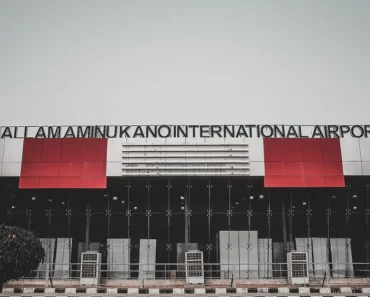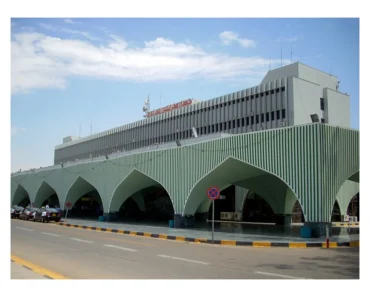
Conakry International Airport
Conakry International Airport
About
Conakry International Airport (IATA: CKY / ICAO: GUCY) is the principal gateway to the Republic of Guinea and one of the key air-transport nodes along West Africa’s Atlantic coast. Sitting at the tip of the Kaloum Peninsula on which the capital Conakry is built, the airport handles the overwhelming majority of the country’s international passenger and cargo traffic, connecting Guinea to regional African networks as well as to Europe and the Middle East. For a country whose economy is anchored in bauxite, gold, and iron-ore extraction — sectors that generate a steady flow of business travellers, technical specialists, and freight movements — the airport carries an economic weight that exceeds what its physical footprint might initially suggest.
The airport’s origins trace to the colonial period, when the facility was developed to serve French West Africa. Following Guinea’s independence in 1958 — the first francophone African nation to break from France under Sékou Touré — the airport was brought under national authority and progressively expanded to meet the demands of a sovereign state. Ownership and operational oversight have historically rested with the Guinean state through its civil aviation authority, the Autorité de l’Aviation Civile de Guinée (ACAG), though successive governments have explored public-private partnership models to attract investment capital for infrastructure renewal.
Significant rehabilitation work has been carried out on the airfield over the decades, including runway resurfacing programmes and upgrades to navigation and approach lighting systems intended to improve all-weather operational reliability. The passenger terminal has undergone periodic refurbishment, though observers and industry analysts have consistently noted that capacity constraints and ageing infrastructure remain challenges that require sustained capital commitment to resolve fully.
Country
Guinea is a coastal West African republic bordered by Guinea-Bissau, Senegal, Mali, Côte d’Ivoire, Liberia, and Sierra Leone. Conakry serves as both the capital and the country’s dominant urban centre, home to a substantial share of a national population that, according to recent United Nations estimates, stands in the range of thirteen to fourteen million people. Guinea occupies a strategically significant position in the sub-region: it is the source of the Niger, Senegal, and Gambia rivers, holds some of the world’s largest bauxite reserves, and sits at a crossroads of Mande, Fula, and coastal cultural zones that give it outsized influence in West African affairs. The country has experienced considerable political turbulence in recent years, including a military transition following the 2021 coup, which has shaped both the investment climate and the operating environment for aviation stakeholders.
→ Read the Guinea expert briefing
Airlines Based Here
Conakry International Airport does not currently host a full-service national flag carrier in the traditional sense. Guinea’s state aviation sector has historically struggled to sustain a viable national airline, and as of 2026 the airport functions primarily as a destination and transit point for foreign carriers rather than as a hub for a home-based operator. Fly Conakry, a privately held Guinean carrier, has at various points operated domestic and limited regional services using the airport as its base, though its network and fleet have remained modest. Travellers and analysts should verify the current operational status of any Guinean-registered carrier directly with ACAG or the airline, as schedules and operating certificates in this market have historically been subject to change.
The more consistent and commercially significant airline presence at CKY comes from visiting international carriers. Air France has maintained a long-standing service connecting Conakry to Paris-Charles de Gaulle, reflecting the historical and commercial ties between Guinea and France. Brussels Airlines operates the airport as part of its West African network, providing onward connectivity into its Brussels hub. Air Maroc — operating as Royal Air Maroc — connects Conakry to Casablanca, which functions as a major African hub and onward gateway to Europe, North America, and the Middle East. Ethiopian Airlines, one of the continent’s most expansive network carriers, serves Conakry as part of its pan-African route map, offering connections through Addis Ababa Bole International Airport. Kenya Airways and Air Côte d’Ivoire have also featured in the airport’s route portfolio, providing intra-African connectivity.
Flights and Destinations
The route network at Conakry International Airport reflects Guinea’s dual identity as a resource-driven economy with deep ties to francophone Europe and an increasingly connected participant in intra-African aviation. Intercontinental services link Conakry most reliably to Paris (Charles de Gaulle) and Brussels, the two European cities with the strongest diaspora and business communities connected to Guinea. Casablanca (Mohammed V International) serves as a critical hub connection, enabling onward travel to dozens of destinations across Europe, the Americas, and the Gulf. Addis Ababa provides a further intercontinental pivot point, particularly for travellers heading to East Africa, Asia, or North America via Ethiopian Airlines’ network.
Within Africa, representative destinations served from CKY include Abidjan (Félix Houphouët-Boigny International), Dakar (Blaise Diagne International), Bamako (Modibo Keïta International), Accra (Kotoka International), Lagos (Murtala Muhammed International), and Freetown (Lungi International). These routes serve both business travellers operating across the Mano River Union and ECOWAS zones and diaspora passengers maintaining family and commercial links across the sub-region. Seasonal and charter services have also connected Conakry to destinations in the Middle East, particularly for Hajj and Umrah pilgrim traffic given Guinea’s predominantly Muslim population.
Facilities and Capacity
Conakry International Airport operates with a single passenger terminal building that handles both departing and arriving international traffic. The terminal layout is functional but compact, and industry observers have noted that peak-hour congestion — particularly around the departure banks of European-bound flights in the evening — can place significant strain on check-in, security, and immigration processing capacity. The airport is generally classified within the small-to-medium hub category by African aviation analysts, handling a volume of passengers that, according to publicly disclosed traffic data from ACAG and IATA regional reporting, places it below the continent’s major hubs but within a tier of airports that are commercially significant at the sub-regional level.
The airfield is served by a single primary runway, oriented to accommodate the prevailing wind patterns of the Atlantic coastal zone. The runway has been subject to periodic resurfacing and maintenance interventions to preserve its load-bearing capacity for wide-body aircraft operations, including the Airbus A330 and Boeing 787 variants operated by some of the airport’s long-haul carriers. Instrument landing system (ILS) equipment and approach lighting have been upgraded as part of safety-improvement programmes supported by international civil aviation bodies. Cargo facilities exist on the airfield, serving the import and export needs of Guinea’s mining sector and general trade, though dedicated freighter operations remain limited compared to larger West African cargo hubs such as Abidjan or Lagos. Expansion plans, including proposals for a new or substantially enlarged terminal, have been discussed at various points by Guinean authorities and potential private-sector partners; industry estimates suggest that meaningful capital investment will be required to bring capacity in line with projected medium-term demand growth.
Visa Regulations
Travellers arriving at Conakry International Airport are subject to Guinea’s national visa regime, which as of 2026 requires most nationalities to hold a valid visa prior to arrival. Citizens of the United States, the United Kingdom, and European Union member states are generally required to obtain a visa in advance through a Guinean diplomatic mission or, where available, through an electronic visa (eVisa) application process. Guinea has taken steps in recent years to develop an eVisa platform to streamline entry for business visitors and reduce administrative friction at the airport, though travellers are strongly advised to confirm the current status and accepted nationalities of the eVisa system before travel, as implementation has been uneven. For regional African travellers, ECOWAS member-state passport holders benefit from the community’s freedom-of-movement protocols, which in principle allow visa-free or simplified entry, though practical implementation at the port of entry can vary. Visa on arrival has been available for certain nationalities under specific conditions, but this facility is not universally guaranteed and should be confirmed with the nearest Guinean embassy or consulate before departure. Visa rules are subject to change without notice, particularly in a country navigating a political transition period.
→ For the most current visa requirements by passport nationality, use the live lookup tool at /visa-requirements/.
Recent Developments
The period from 2024 to 2026 has been one of cautious operational continuity at Conakry International Airport against a backdrop of Guinea’s ongoing political transition following the military takeover of September 2021. The transitional government led by the Comité National du Rassemblement et du Développement (CNRD) has maintained the airport’s operational status and continued engagement with international aviation bodies, recognising the facility’s critical role in sustaining foreign investment flows, particularly in the mining sector. Route-network changes during this period have reflected both commercial decisions by individual carriers and the broader pressures of post-pandemic African aviation recovery. Royal Air Maroc has consolidated its West African network, and Conakry has remained a served point within that strategy. Ethiopian Airlines has similarly maintained its CKY service as part of its Africa-wide expansion. Discussions around terminal infrastructure investment and potential concession arrangements with private operators have continued, though no definitive agreement had been publicly announced as of the time of writing. The airport authority has also engaged with ICAO’s regional office for West and Central Africa on safety oversight and compliance matters, as Guinea works to maintain its standing within the international civil aviation framework.
News and Reports
Researchers, journalists, and aviation analysts tracking developments at Conakry International Airport should consult a range of authoritative sources. The Autorité de l’Aviation Civile de Guinée (ACAG) is the primary national regulatory body and periodically publishes operational notices, safety directives, and policy announcements relevant to the airport. IATA’s Africa regional office produces periodic reports on African aviation market performance, including traffic trend data and regulatory environment assessments, that contextualise CKY’s position within the broader continental picture. The ICAO West and Central African regional office (WACAF, based in Dakar) is a key source for safety audit findings, airspace management updates, and capacity-building programme information relevant to Guinea. For commercial route and schedule intelligence, platforms such as OAG and Cirium provide schedule data that can be cross-referenced against publicly available airline timetables. Regional aviation trade media, including African Business Aviation Association (AfBAA) publications and specialist outlets covering African aviation, offer editorial coverage of market developments. Travellers seeking operational information — delays, terminal notices, ground transport — should consult the airport authority directly or through official Guinean government communications channels.
Related Research
- Guinea Expert Briefing — in-depth political, economic, and investment analysis for Guinea
- Guinea Statistics — key demographic, economic, and trade data
- African Airports — profiles of major and regional airports across the continent
- African Airlines — carrier profiles, route maps, and fleet data for African aviation
- Visa Requirements — live lookup tool for entry requirements by passport and destination
- Country Comparison — compare Guinea’s aviation, economic, and infrastructure indicators with peer nations