Burundi — Expert Briefing
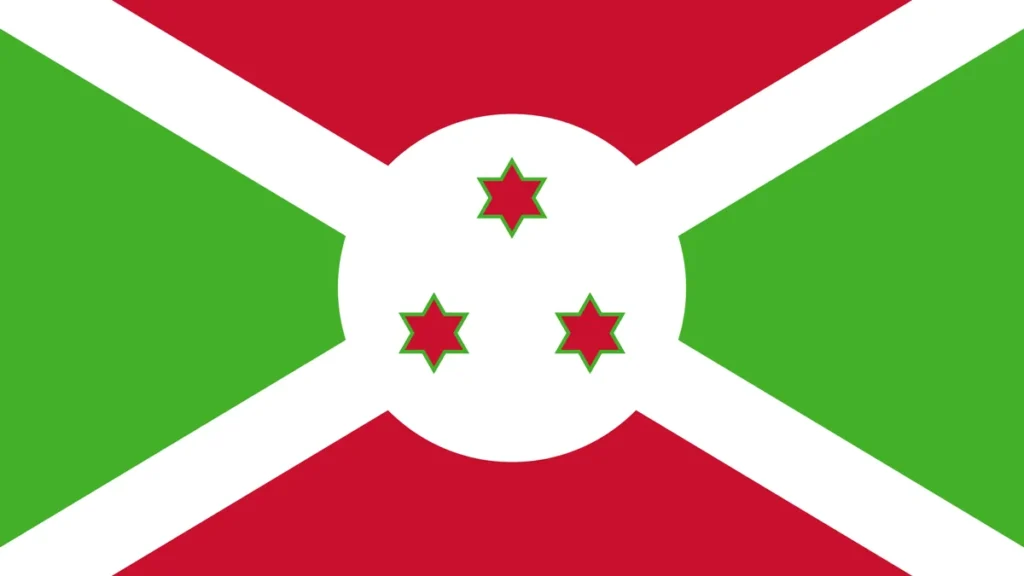
Burundi at a glance: One of the world’s poorest and most densely populated nations, Burundi sits at a critical juncture in 2026 — navigating a fragile post-crisis political order, deepening food insecurity, and a regional environment shaped by instability in the eastern Democratic Republic of Congo.
Overview
Burundi’s capital is Gitega (the political and administrative capital since 2019, with Bujumbura retaining its role as the economic capital). The country’s population is estimated at approximately 13.2 million people as of 2025, according to World Bank projections, making it one of the most densely settled nations on the African continent relative to its land area of roughly 27,800 square kilometres. Official languages are Kirundi, French, and — since 2014 — English, reflecting Burundi’s membership of the East African Community (EAC). The currency is the Burundian franc (BIF). GDP per capita sits in the very low-income band, estimated at below USD 300 in purchasing-power-adjusted terms, placing Burundi consistently among the five poorest countries in the world by this measure. Burundi matters in 2026 for two interconnected reasons: its chronic political fragility and humanitarian pressures create a persistent test case for regional stabilisation frameworks, and its position bordering the DRC, Rwanda, and Tanzania places it at the intersection of the Great Lakes’ most consequential security and displacement dynamics.
Government and Politics
Burundi is a presidential republic. Executive power is concentrated in the presidency, with the president serving as both head of state and head of government. Évariste Ndayishimiye, a former general and senior figure in the ruling CNDD-FDD (Conseil National pour la Défense de la Démocratie–Forces pour la Défense de la Démocratie), has held the presidency since June 2020, when he won an election widely criticised by international observers as neither free nor fair. Ndayishimiye came to power following the unexpected death of his predecessor Pierre Nkurunziza in June 2020, and initially signalled a degree of openness — releasing some political prisoners and engaging cautiously with international partners — but governance has remained authoritarian in character, with civil society, independent media, and political opposition operating under severe constraint. The legislature is bicameral: the National Assembly (Assemblée Nationale) holds 123 seats, with members elected by popular vote, while the Senate (Sénat) comprises 43 members, a combination of elected and appointed senators, including former heads of state. The constitution, adopted by referendum in 2018 under Nkurunziza, extended presidential term limits and reset the clock, theoretically allowing Ndayishimiye to serve two further seven-year terms. The next presidential and legislative elections are scheduled for 2027. The CNDD-FDD retains a dominant grip on all branches of government, the security services, and local administration, and no credible opposition party currently operates openly inside the country.
Economy
Burundi’s GDP is estimated at approximately USD 3.5–3.8 billion in nominal terms (2024–2025 World Bank estimates), with real growth rates hovering in the low single digits — insufficient to meaningfully reduce poverty given population growth of around 3 percent per annum. The economy is overwhelmingly agrarian: agriculture accounts for roughly 40 percent of GDP and employs the vast majority of the working population. Coffee and tea are the dominant export commodities, together generating the bulk of formal foreign exchange earnings; gold, increasingly extracted through artisanal and small-scale mining, has grown in significance. The Burundian franc has faced sustained depreciation pressure, and a persistent gap between the official exchange rate and the parallel market rate has complicated trade and investment. Burundi’s external debt position remains a source of concern, with the country qualifying for debt relief under international frameworks but facing limited fiscal space. The single most consequential economic story of the past 24 months has been the deepening foreign exchange crisis: acute shortages of hard currency have constrained imports of fuel, medicines, and essential goods, contributing to supply disruptions across the economy and fuelling inflation that has eroded household purchasing power most severely among urban populations. Efforts to attract foreign direct investment have been hampered by governance concerns, the absence of a reliable legal framework for commercial disputes, and infrastructure deficits — particularly in energy, where electricity access remains below 15 percent of the population nationally.
Demographics and Society
Burundi’s population of approximately 13.2 million is young — the median age is estimated at around 17 years — and growing rapidly, placing intense pressure on land, food systems, and public services. The country is among the least urbanised in Africa: roughly 15 percent of the population lives in urban areas, with Bujumbura, the economic capital on the shore of Lake Tanganyika, accounting for the majority of urban residents. The principal ethnic groups are the Hutu (estimated at approximately 85 percent of the population), the Tutsi (approximately 14 percent), and the Twa (approximately 1 percent). These categories carry deep historical and political weight, having been instrumentalised during colonial rule and implicated in cycles of mass violence, most devastatingly in 1972 and during the civil war of 1993–2005. The Arusha Peace and Reconciliation Agreement of 2000 embedded ethnic power-sharing provisions in state institutions, though critics argue these have been progressively hollowed out under CNDD-FDD rule. Kirundi is the universal mother tongue and a genuine lingua franca across ethnic lines; French remains the language of formal education and administration. Christianity is the dominant religion, with Roman Catholicism historically predominant, though Pentecostal and evangelical movements have grown substantially. The defining social trend of the current period is internal and cross-border displacement: hundreds of thousands of Burundians remain in refugee situations in Tanzania, the DRC, and Rwanda, while a significant number of refugees from the DRC are hosted within Burundi itself — a dual dynamic that strains local resources and complicates social cohesion in border communities.
Key Issues Right Now
Food insecurity and climate stress. Burundi consistently ranks among the most food-insecure countries in the world on the Integrated Food Security Phase Classification (IPC) scale, with millions of people in crisis or emergency phases in any given season. The underlying drivers are structural — land fragmentation, soil degradation, and population pressure — but climate variability has intensified the picture. Erratic rainfall patterns, prolonged dry spells in some regions, and flooding in others (particularly around Lake Tanganyika, whose water levels have risen significantly in recent years, inundating lakeside neighbourhoods in Bujumbura) have disrupted agricultural calendars and displaced communities. Humanitarian agencies operating in-country have flagged acute malnutrition rates, particularly among children under five, as a persistent emergency requiring sustained international attention.
Regional security and the DRC spillover. The ongoing conflict in eastern DRC — involving the M23 rebel movement, the Rwandan Defence Force’s alleged support for it, and a complex web of armed groups — has direct implications for Burundi. Bujumbura has deployed troops to the DRC as part of the EAC Regional Force and subsequently under the Southern African Development Community (SADC) Mission in the DRC (SAMIDRC), placing Burundian soldiers in active combat zones. The conflict has sharpened Burundi’s historically tense relationship with Rwanda: Bujumbura and Kigali have traded accusations of mutual destabilisation, and the border between the two countries has been a site of periodic diplomatic friction. Any escalation or resolution in eastern DRC will have immediate consequences for Burundian security policy, refugee flows, and the political calculus of the Ndayishimiye government.
Civil space and human rights. Burundi’s human rights environment remains among the most restrictive on the continent. The UN Human Rights Council’s Group of Experts on Burundi documented ongoing patterns of arbitrary detention, enforced disappearances, torture, and extrajudicial killings in its most recent reporting cycles, with the Imbonerakure — the CNDD-FDD’s youth wing — implicated in numerous incidents of violence and intimidation at the local level. Independent journalism is effectively impossible inside the country; most credible Burundian reporting is produced in exile. International human rights organisations face severe access restrictions. The government’s 2023 decision not to renew engagement with the UN Human Rights Council’s monitoring mechanism signalled continued resistance to external scrutiny, and the space for domestic civil society to operate freely has not meaningfully expanded since the crisis years of 2015–2016.
Travel and Connectivity
Burundi’s principal international gateway is Melchior Ndadaye International Airport in Bujumbura (IATA: BJM), which handles the overwhelming majority of international passenger and cargo traffic. The airport has seen reduced connectivity in recent years, with fewer direct routes to regional hubs; travellers frequently transit through Nairobi, Addis Ababa, Kigali, or Dar es Salaam. Gitega, the political capital, has a smaller domestic airstrip. The principal cities beyond Bujumbura and Gitega include Ngozi in the north, Rumonge on Lake Tanganyika, and Muyinga near the Tanzanian border. Tourism remains extremely limited: Burundi does not feature prominently in regional safari or leisure circuits, though Lake Tanganyika — one of the world’s deepest and most biodiverse freshwater lakes — offers potential for niche eco-tourism and sport fishing that remains largely undeveloped. Most travel advisories from Western governments currently recommend against non-essential travel, citing security concerns. Internet penetration is among the lowest in sub-Saharan Africa, estimated at below 10 percent of the population, with connectivity concentrated in Bujumbura and constrained by high costs and unreliable electricity supply. Mobile phone penetration is higher, and mobile money services — particularly those linked to regional platforms — have expanded in urban areas, offering a partial workaround to the formal banking sector’s limited reach; however, adoption lags significantly behind East African neighbours such as Kenya, Tanzania, and Rwanda.
Further Research
Analysts, journalists, and investors seeking to deepen their understanding of Burundi should consult the following institutions and resources. The World Bank Burundi Country Page provides regularly updated macroeconomic data, poverty assessments, and project documentation. The Banque de la République du Burundi (BRB) — the Central Bank of Burundi — publishes monetary policy statements, exchange rate data, and financial sector reports, though data timeliness can be inconsistent. The Institut de Statistiques et d’Études Économiques du Burundi (ISTEEBU), the national statistics office, is the primary source for census data, household surveys, and national accounts. The Africa Center for Strategic Studies (based in Washington, D.C.) produces accessible security and governance analysis covering Burundi within its Great Lakes and Central Africa coverage. The International Crisis Group has published substantive reports on Burundian political dynamics, the 2015 crisis, and regional implications, and continues to monitor the country. Finally, Human Rights Watch and Amnesty International both maintain dedicated Burundi documentation programmes and publish annual country chapters that serve as essential references for understanding the civil and political rights environment.