Dana Air
Dana Air
About
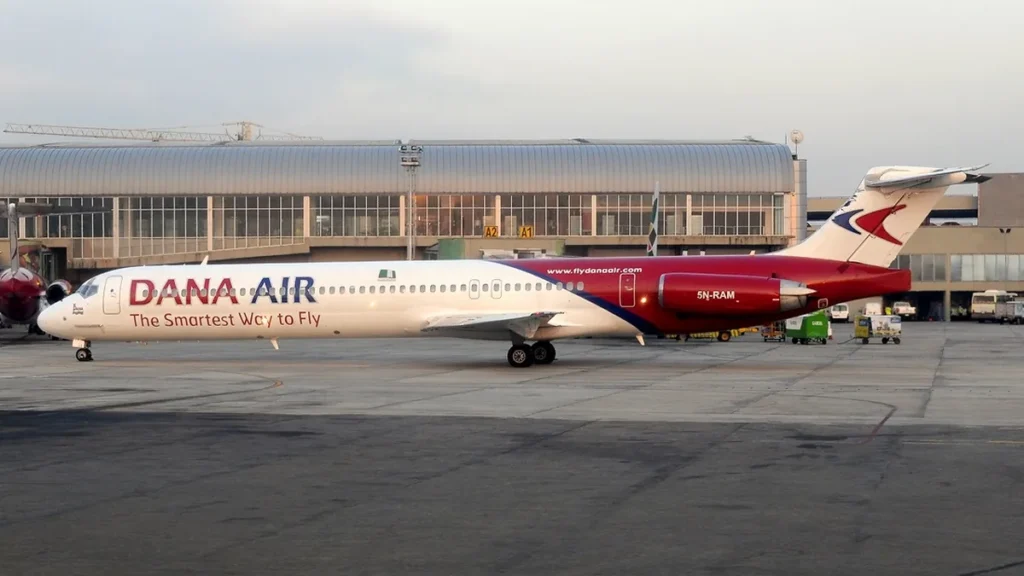
Dana Air is one of Nigeria’s most recognised privately owned domestic carriers, operating scheduled passenger services under IATA code 9J and ICAO designator DAN. Headquartered in Lagos and anchored at Murtala Muhammed International Airport (LOS), the airline has carved out a durable position in Nigeria’s competitive and often turbulent domestic aviation market, serving business travellers, diaspora passengers, and the growing middle-class segment that increasingly favours air over road travel on Nigeria’s congested inter-city corridors.
Dana Air was founded in the mid-2000s and launched commercial operations in 2008, entering a market then dominated by legacy carriers and a wave of new entrants that followed Nigeria’s aviation liberalisation push. The airline is privately held, with ownership linked to the Dana Group, a diversified Nigerian conglomerate with interests spanning manufacturing, shipping, and real estate. This corporate backing has historically given Dana Air a degree of financial resilience that purely aviation-focused startups in the region have often lacked.
Over the years, the airline has navigated Nigeria’s chronic aviation headwinds — fuel price volatility, foreign-exchange constraints on aircraft leasing and maintenance contracts, and periodic regulatory interventions by the Nigerian Civil Aviation Authority (NCAA). More recently, the airline has been working to stabilise and modernise its operation in the context of Nigeria’s broader post-pandemic aviation recovery, which has seen passenger demand rebound strongly even as operating costs remain elevated.
Bases and Hubs
Lagos – Murtala Muhammed International Airport (LOS): Dana Air’s principal hub and primary base of operations, handling the majority of the airline’s departures and serving as its maintenance and crew base.
Abuja – Nnamdi Azikiwe International Airport (ABV): A key focus city and secondary operating base, reflecting the high-frequency business travel demand between Nigeria’s commercial and political capitals.
Port Harcourt – Port Harcourt International Airport (PHC): An important spoke serving Nigeria’s oil-industry hub in the Niger Delta, a route category that attracts both corporate and energy-sector travellers.
Fleet
Dana Air has historically operated a narrowbody fleet centred on the Boeing 737 family, with various Classic and Next Generation variants having served the airline at different points in its history. The 737 platform suits the airline’s short-to-medium domestic stage lengths and aligns with the pool of type-rated crew available in the Nigerian market. According to publicly disclosed fleet data and industry tracking sources, the airline’s active fleet has fluctuated in size in response to regulatory airworthiness directives and the economics of wet-lease and dry-lease arrangements, both of which are common practice among Nigerian carriers managing foreign-currency lease obligations. Industry observers have noted that fleet renewal and the transition toward more fuel-efficient variants remain a stated operational priority, though no firm public order has been confirmed as of the time of writing.
Destinations
Dana Air’s network is primarily domestic in character, reflecting both its operating licence structure and the realities of Nigeria’s large internal travel market. The airline’s core route map connects Nigeria’s major commercial centres, with the Lagos–Abuja corridor standing as its highest-frequency and most commercially significant pairing — one of the busiest air routes on the African continent by passenger volume. Other key domestic routes include Lagos–Port Harcourt and Abuja–Port Harcourt, serving the energy and government sectors respectively. The airline has at various points served additional Nigerian cities including Enugu and Uyo, extending its reach into the southeast and south-south geopolitical zones. Dana Air does not currently operate scheduled international or intra-African routes as a core part of its network, positioning it firmly as a domestic specialist rather than a pan-African carrier.
Codeshare and Alliance
Dana Air is not a member of any of the three major global airline alliances — Star Alliance, SkyTeam, or oneworld. The airline does not have widely publicised codeshare agreements with international carriers, which is consistent with its domestic-focused operating model. This absence of interline and codeshare infrastructure is a common characteristic among Nigeria’s privately held domestic carriers, and represents both a commercial limitation and a potential area for future partnership development as the airline matures.
Notable Incidents
Dana Air has a documented safety history that includes a serious accident in June 2012, when a Dana Air Boeing MD-83 operating Flight 992 crashed in the Iju-Ishaga area of Lagos following a reported loss of power in both engines on approach to Murtala Muhammed International Airport. The accident, which resulted in significant loss of life among passengers, crew, and people on the ground, led to a temporary suspension of the airline’s operating licence by Nigerian aviation authorities and prompted a broader regulatory review of safety standards across Nigeria’s domestic aviation sector. The airline subsequently resumed operations following an NCAA-supervised safety audit. This incident is the most significant event in the airline’s public safety record and is extensively documented in Nigerian and international aviation safety literature. No comparable major accidents have been recorded in the years since the airline’s return to service.
Financial and Operational Situation
Dana Air operates in one of Africa’s most financially demanding aviation environments. Nigeria’s persistent foreign-exchange challenges — particularly the difficulty of repatriating naira revenues to meet dollar-denominated lease, fuel, and maintenance obligations — have weighed on the entire domestic airline sector, and Dana Air is not immune to these structural pressures. Industry estimates suggest that Nigerian carriers as a group have faced significant margin compression since 2022 as the naira depreciated sharply against major currencies. Dana Air’s private ownership structure means that detailed financial disclosures are not publicly available, making independent assessment of profitability difficult. Qualitatively, the airline’s continued operation and its maintenance of NCAA certification are indicators of baseline financial viability, though the broader operating environment remains challenging for all Nigerian domestic carriers.
Recent Developments
In the period leading into 2026, Dana Air’s most consequential operational story has been its navigation of Nigeria’s post-naira-devaluation cost environment, which followed the Tinubu administration’s removal of the managed exchange rate in mid-2023. Like its domestic peers, the airline has had to manage the pass-through of higher costs to fares while remaining price-competitive on routes where Air Peace, Ibom Air, and United Nigeria Airlines also compete. The NCAA has continued its programme of enhanced safety oversight across the domestic sector, and Dana Air has been subject to the same airworthiness compliance requirements applied industry-wide. Observers in the Nigerian aviation press have noted ongoing discussions within the sector about consolidation and the potential for strategic partnerships, though no confirmed transaction involving Dana Air has been publicly announced. Travellers and industry watchers should monitor NCAA bulletins and the airline’s own channels for the most current schedule and fleet status information.