Monastir Habib Bourguiba International Airport
Monastir Habib Bourguiba International Airport
About
Monastir Habib Bourguiba International Airport (IATA: MIR / ICAO: DTMB) occupies a distinctive position in North African aviation as one of Tunisia’s principal gateways for leisure and charter traffic. Situated on the country’s central-eastern coastline, the airport serves the resort city of Monastir and the broader Sahel region — a stretch of Mediterranean shoreline that draws millions of European holidaymakers each year. Within the African aviation landscape, MIR functions as a high-seasonality international airport whose passenger volumes are closely tied to European tourism cycles, making it a useful case study in how charter-dependent infrastructure adapts to shifting travel demand.
The airport bears the name of Tunisia’s founding president, Habib Bourguiba, who was himself born in Monastir — a deliberate act of national symbolism that reflects the city’s political and cultural significance. The facility was developed during the post-independence era as Tunisia pursued a state-led strategy of Mediterranean tourism, and it has operated as an international airport since the 1970s. Ownership and operational oversight fall under the Office de l’Aviation Civile et des Aéroports (OACA), the Tunisian state body responsible for managing the country’s civil aviation infrastructure and all major commercial airports.
Over the decades, the airport has undergone several phases of physical expansion to accommodate growing charter traffic from Western Europe. A dedicated international terminal was developed to handle high-volume seasonal surges, and apron and taxiway infrastructure has been periodically upgraded. While MIR is not classified among Africa’s large hub airports — a category dominated by facilities such as Cairo, Johannesburg O.R. Tambo, and Casablanca Mohammed V — it functions as a medium-scale international gateway with infrastructure calibrated primarily for narrow-body and medium-wide-body aircraft serving point-to-point leisure routes.
Country
Tunisia is a North African republic with its capital in Tunis and a population estimated in the tens of millions, placing it among the mid-sized nations of the African continent. Strategically positioned at the crossroads of the central Mediterranean, Tunisia shares land borders with Algeria to the west and Libya to the southeast, and maintains close economic and cultural ties with the European Union — its largest trading and tourism partner bloc. The country is a member of the African Union and the Arab League, and its aviation sector is regulated under frameworks aligned with both ICAO standards and bilateral air service agreements with European states. Tunisia’s tourism industry, centred heavily on its coastal resorts, remains one of the primary economic drivers for airports such as MIR.
→ Read the Tunisia expert briefing
Airlines based here
Monastir Habib Bourguiba International Airport does not function as a primary hub for any single carrier in the conventional sense, but it serves as a significant focus city for Tunisair, the Tunisian national flag carrier, which operates scheduled and seasonal services through the airport as part of its broader domestic and international network. Tunisair Express, the regional subsidiary of the Tunisair group, also uses MIR for shorter-haul connections. The airport’s traffic profile is, however, dominated by visiting carriers rather than home-based operators. European charter and low-cost carriers have historically accounted for a substantial share of seat capacity at MIR, with airlines including TUI fly (operating under various national subsidiaries across Germany, Belgium, and the Netherlands), Transavia France, and Nouvelair Tunisie — a privately held Tunisian leisure carrier — all maintaining regular seasonal programmes. Nouvelair in particular has positioned Monastir as one of its core operating bases, making it arguably the most operationally present carrier at the airport outside of Tunisair itself.
Flights and destinations
The route network at MIR is oriented overwhelmingly toward Western and Central Europe, reflecting the airport’s role as a leisure gateway. Scheduled and charter services connect Monastir to a range of European cities, with France, Germany, the United Kingdom, Belgium, Switzerland, and Italy representing the core source markets. Representative destinations served from MIR include Paris (Charles de Gaulle and Orly), Lyon, Marseille, Frankfurt, Düsseldorf, London (various airports depending on carrier), Brussels, Geneva, Zurich, and Rome. Domestic connectivity links Monastir to Tunis-Carthage International Airport, the country’s primary hub, providing onward access to the broader Tunisair network. Regional African and Middle Eastern services exist but are more limited in frequency compared to the European leisure corridors. Intercontinental traffic beyond Europe and the immediate Arab world is minimal at MIR, with travellers requiring long-haul connections typically routing through Tunis-Carthage. The airport’s schedule is markedly seasonal, with peak operations concentrated in the European summer months and a reduced winter programme maintained by a smaller subset of carriers.
Facilities and capacity
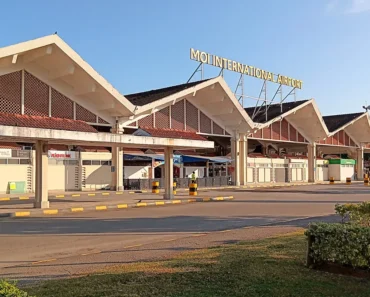
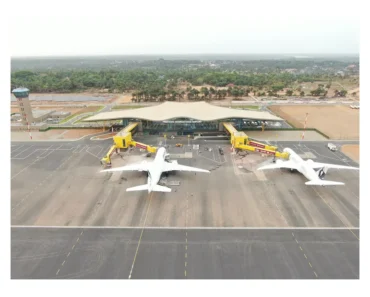
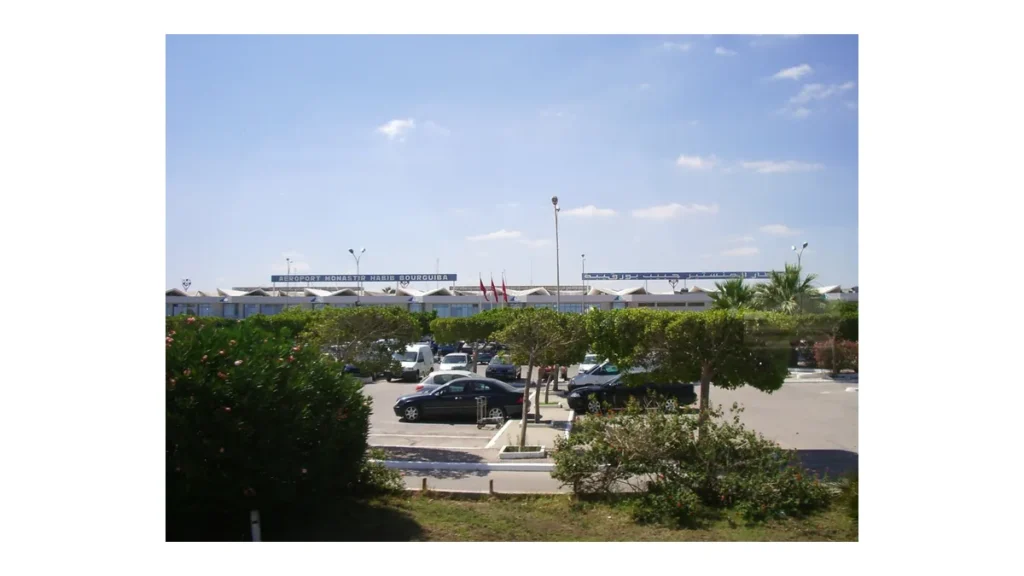
Monastir Habib Bourguiba International Airport is served by a single main passenger terminal configured to handle international arrivals and departures, with dedicated zones for check-in, immigration, customs, and a commercial retail and food and beverage offer oriented toward departing leisure travellers. The airport operates with a single primary runway, oriented to accommodate the prevailing wind patterns of the central Tunisian coastline, and is equipped to handle aircraft up to the narrow-body and medium-wide-body category — including the Boeing 737 family and Airbus A320 family that dominate its traffic mix, as well as occasional larger types. Cargo facilities exist but are not a primary operational focus; MIR is not classified as a significant freight hub. Apron capacity supports multiple simultaneous aircraft stands, which is operationally important during peak charter wave operations. In terms of overall scale, industry classification would place MIR in the small-to-medium international airport category by African standards, with passenger throughput subject to significant year-on-year variation tied to European tourism demand and broader geopolitical factors affecting Tunisia’s attractiveness as a destination. According to publicly disclosed traffic data from OACA, the airport has experienced fluctuating volumes over the past decade, with recovery trajectories following disruptions caused by regional security events and, more recently, the COVID-19 pandemic.
Visa regulations
Travellers arriving at Monastir Habib Bourguiba International Airport are subject to Tunisia’s national visa regime, which as of 2026 operates on a tiered basis depending on passport nationality. Citizens of European Union member states, the United Kingdom, and the United States have historically been permitted to enter Tunisia visa-free for short stays, typically up to 90 days, under bilateral or unilateral arrangements — though travellers are advised to verify current conditions before departure, as reciprocity arrangements and entry conditions can be amended by either party. Citizens of many Arab League member states similarly benefit from facilitated or visa-free entry. Travellers holding passports from sub-Saharan African countries face a more varied picture, with some nationalities eligible for visa-on-arrival arrangements and others required to obtain a visa in advance through a Tunisian diplomatic mission. Tunisia does not currently operate a widely publicised eVisa platform comparable to those of some other African states, though administrative processes are subject to change. All travellers should consult official Tunisian consular sources or their own government’s travel advisory service for the most current entry requirements prior to travel.
→ Check live visa requirements for Tunisia
Recent developments
In the 24 months to mid-2026, Monastir Habib Bourguiba International Airport has reflected broader trends in Tunisian aviation recovery and the gradual normalisation of European leisure travel to North Africa. The resumption and expansion of seasonal charter programmes by European carriers has been a notable feature of the post-pandemic period, with operators including TUI fly subsidiaries and Transavia France restoring or augmenting their Monastir schedules in line with recovering package holiday demand. Nouvelair Tunisie has continued to develop its presence at the airport, adding or reinstating routes to European secondary cities as seat demand has firmed. OACA has indicated ongoing attention to infrastructure maintenance and operational efficiency across its managed airports, though specific capital expenditure announcements for MIR should be verified against official OACA communications. The broader Tunisian aviation regulatory environment has also been subject to discussion in the context of the country’s Open Skies negotiations and its relationship with the EU’s Euro-Mediterranean aviation framework, developments that carry implications for market access at all Tunisian international airports including MIR.
News and reports
Researchers, journalists, and aviation analysts seeking current operational intelligence on Monastir Habib Bourguiba International Airport should consult several authoritative source categories. The Office de l’Aviation Civile et des Aéroports (OACA) publishes official traffic statistics and operational announcements through its institutional communications channels; these represent the primary source for verified passenger and movement data. The Tunisian Ministry of Transport issues policy-level statements relevant to airport development and bilateral air service agreements. At the regional level, the ICAO Middle East and Africa regional offices publish safety oversight and regulatory compliance data that covers Tunisian airports within their periodic reporting cycles. IATA’s Africa and Middle East regional division produces market intelligence and traffic analysis relevant to the North African aviation market, including commentary on leisure-traffic dynamics of the kind that characterise MIR. Specialist aviation trade publications — including those covering the charter and leisure travel sector — regularly report on European carrier programmes to Tunisian airports and are a useful source for route-level developments. Travellers and journalists should cross-reference any single source against OACA official data before publishing or acting on traffic or operational claims.