Mauritius — Expert Briefing
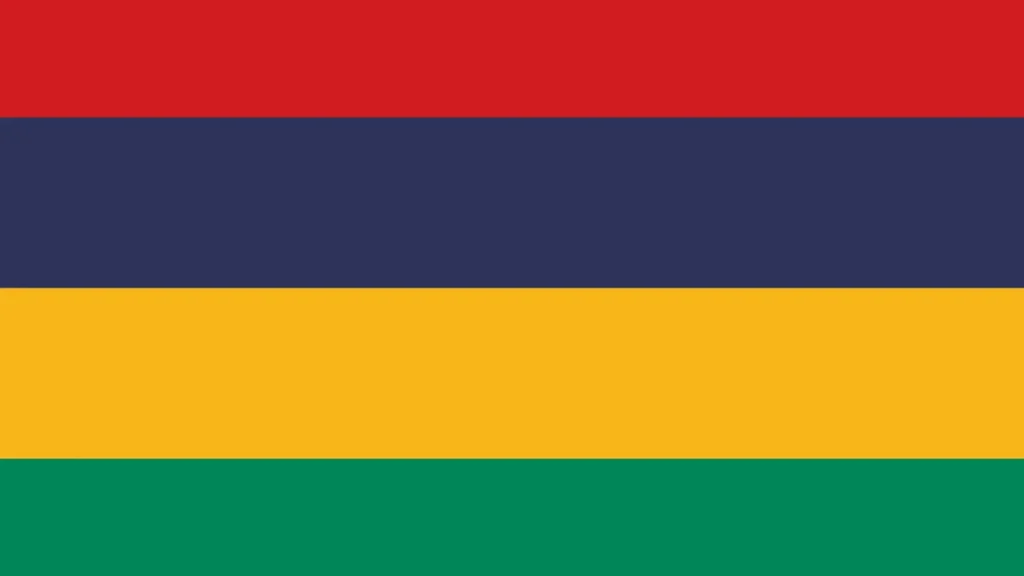
Mauritius at a glance: A small island state in the south-western Indian Ocean, Mauritius punches well above its weight as Africa’s most competitive economy, a sophisticated financial hub, and a bellwether for how small nations can navigate climate vulnerability, democratic backsliding, and post-pandemic reinvention simultaneously.
Overview
Capital: Port Louis. Population: approximately 1.3 million (World Bank, 2024 estimate), with a further Mauritian diaspora of roughly 200,000 concentrated in the United Kingdom, France, and Australia. Official languages: English (government and law), French (media and commerce), and Mauritian Creole (the dominant spoken tongue of daily life). Currency: Mauritian Rupee (MUR). GDP per capita: approximately USD 10,500–11,500 (upper-middle-income band, World Bank classification), making Mauritius one of only a handful of African states to have crossed the upper-middle-income threshold. In 2026, Mauritius matters for two reasons that extend well beyond its size: it remains the pre-eminent investment corridor between Africa and Asia — particularly India — and its ongoing democratic stress-test, following a disputed 2024 general election and subsequent political transition, is being watched closely by governance analysts as a case study in institutional resilience in small-island democracies.
Government and Politics
Mauritius is a parliamentary republic operating under the Westminster model inherited at independence in 1968. Executive authority rests with the Prime Minister, who commands a majority in the National Assembly; the President is a largely ceremonial head of state elected by the Assembly. Following the November 2024 general election — which ended the long dominance of the Militant Socialist Movement (MSM) under Pravind Jugnauth — the Alliance du Changement, led by Navin Ramgoolam of the Labour Party, secured a decisive parliamentary majority. Ramgoolam, a former Prime Minister who served two previous terms (2005–2014), returned to office amid widespread public frustration over cost-of-living pressures, allegations of surveillance-state overreach under the outgoing government, and concerns about the independence of public institutions. The 2024 election was itself contentious: the outgoing MSM administration faced credible accusations of using state resources for electoral advantage, and a post-election judicial review process examined several constituency results. The National Assembly comprises 70 members — 62 elected from 21 three-member constituencies plus Rodrigues, and up to 8 “best loser” seats allocated to ensure ethnic and party balance under a constitutionally mandated communal representation formula that remains both distinctive and controversial. The next general election is constitutionally due by late 2029. No major constitutional amendments have been enacted since the transition, though the new government has signalled intent to review the Independent Broadcasting Authority’s mandate and to strengthen the independence of the Electoral Commission.
Economy
Mauritius recorded a GDP of approximately USD 14–15 billion in 2024 (current prices, IMF estimates), with real growth of around 6 percent — one of the stronger performances in sub-Saharan Africa, though the comparison is somewhat misleading given the island’s structural distinctiveness. The economy rests on four principal pillars: financial services (contributing roughly 12–14 percent of GDP and employing a significant share of the formal workforce), tourism (which recovered strongly post-pandemic and now accounts for approximately 20 percent of GDP when ancillary services are included), textiles and light manufacturing (a legacy export sector under pressure from Asian competition), and a growing information and communications technology (ICT) sector that the government has actively promoted since the early 2000s. Key exports include apparel, sugar (a declining but historically significant commodity), cut flowers, and — most consequentially — financial and business services. The Mauritian Rupee has faced depreciation pressure since 2020, losing significant value against the US dollar and euro, which has squeezed import-dependent households but provided some relief to the export and tourism sectors. Public debt rose sharply during the COVID-19 period, reaching above 80 percent of GDP at its peak, and fiscal consolidation has been a stated priority; the IMF’s most recent Article IV consultation noted progress but flagged continued vigilance as necessary. The single most consequential economic story of the past 24 months has been Mauritius’s removal from the Financial Action Task Force (FATF) grey list in October 2022 — and the sustained effort since then to demonstrate that the reforms underpinning that removal are durable. The grey-listing between 2020 and 2022 caused measurable damage to the jurisdiction’s reputation as a financial centre, prompted some fund re-domiciling to competing jurisdictions such as Singapore and the Cayman Islands, and accelerated regulatory reforms that have reshaped the Global Business sector. Maintaining correspondent banking relationships and reassuring institutional investors of the robustness of anti-money-laundering frameworks remains the central preoccupation of the Financial Services Commission and the Bank of Mauritius heading into 2026.
Demographics and Society
Mauritius is one of Africa’s most ethnically and religiously plural societies, a legacy of successive waves of settlement: enslaved Africans and Malagasy people under French colonial rule, indentured Indian labourers brought by the British from the 1830s onwards, Chinese traders, and a Franco-Mauritian planter class. Today, Indo-Mauritians (of Hindu and Muslim heritage) constitute approximately 68 percent of the population; Creoles (of African and mixed descent) around 27 percent; Sino-Mauritians roughly 3 percent; and Franco-Mauritians approximately 2 percent. These categories are socially real and politically salient — the “best loser” system in the constitution explicitly encodes them — though younger Mauritians increasingly resist rigid communal identification. Hinduism is the largest religion (approximately 48 percent), followed by Christianity (predominantly Roman Catholic, around 32 percent), Islam (approximately 17 percent), and Buddhism and other traditions. Urbanisation is moderate but accelerating: roughly 40–42 percent of the population lives in urban areas, concentrated in the Port Louis metropolitan corridor and the northern coastal belt. The island of Rodrigues (population approximately 43,000), some 560 kilometres to the north-east, has its own elected Regional Assembly and distinct Creole cultural identity. The defining social trend of the current moment is a pronounced demographic ageing: Mauritius has one of the lowest fertility rates in Africa (below 1.5 children per woman), a rapidly expanding elderly cohort, and growing anxiety about the long-term sustainability of the non-contributory pension system — the Basic Retirement Pension — which is both a genuine social achievement and a mounting fiscal liability.
Key Issues Right Now
Democratic governance and institutional trust. The political transition following the 2024 election has reopened long-standing debates about the concentration of executive power, the politicisation of public institutions, and the use of digital surveillance tools against political opponents and journalists. Under the outgoing Jugnauth administration, civil society organisations and opposition figures documented what they described as systematic interception of communications and selective prosecution of critics. The new Ramgoolam government has promised a commission of inquiry into these allegations, but observers note that the structural incentives that enabled such practices — weak judicial oversight of intelligence agencies, a compliant public broadcaster, and an Electoral Commission perceived as insufficiently independent — remain largely intact. How thoroughly the new administration addresses these structural issues, rather than simply reversing personnel decisions, will define its democratic credibility.
Climate vulnerability and the Blue Economy. As a small island developing state (SIDS), Mauritius faces existential-level risks from sea-level rise, intensifying cyclone seasons, and coral bleaching events that threaten both the marine ecosystem and the tourism product that depends on it. The 2023 and 2024 cyclone seasons brought above-average storm activity to the south-western Indian Ocean, and coastal erosion is measurably accelerating in low-lying areas of the main island and Rodrigues. The government has positioned the “Blue Economy” — sustainable exploitation of the country’s vast Exclusive Economic Zone of approximately 2.3 million square kilometres — as both a climate adaptation strategy and an economic diversification opportunity, encompassing deep-sea fishing, ocean energy, and marine biotechnology. Translating this vision into bankable projects with credible environmental safeguards remains the central challenge, and Mauritius is actively engaged in multilateral negotiations around SIDS-specific climate finance mechanisms.
The Chagos Islands question. The protracted diplomatic dispute over the Chagos Archipelago — historically administered as the British Indian Ocean Territory and home to the strategically vital Diego Garcia military base — entered a new and uncertain phase following the announcement in October 2024 of a UK-Mauritius agreement in principle to transfer sovereignty to Mauritius while leasing Diego Garcia to the UK-US military partnership for 99 years. The deal, welcomed by Mauritius as a long-overdue decolonisation milestone and by the displaced Chagossian community as a partial step toward justice, faced significant political opposition in the United Kingdom and scrutiny from the United States. As of early 2026, the agreement’s ratification remains incomplete, and its final terms — particularly regarding Chagossian resettlement rights and the financial package accompanying the lease — are subject to ongoing negotiation. The outcome will have significant implications for Mauritius’s international standing, its relationship with Western partners, and the rights of the Chagossian diaspora.
Travel and Connectivity
Sir Seewoosagur Ramgoolam International Airport (SSR), located at Plaisance in the south-east of the main island, is the principal international gateway and handles the large majority of the approximately 1.3 million tourist arrivals recorded annually in recent years; a second, smaller airport serves Rodrigues Island. Port Louis is the capital and commercial centre; Grand Baie in the north is the primary leisure and expatriate hub; Curepipe and Quatre Bornes are significant inland towns. Mauritius has developed a well-regarded tourism product positioned firmly at the upper-middle and luxury end of the market, with a strong European (particularly French and British) visitor base supplemented by growing arrivals from India, China, and the Gulf states. Internet penetration stands at approximately 70–75 percent of the population, among the highest in Africa, supported by a fibre-optic backbone and competitive mobile broadband market. Mobile money adoption is moderate by regional standards — the dominance of a conventional banking sector (with high account ownership by African norms) means that mobile money has not achieved the transformative penetration seen in Kenya or Tanzania, though the Bank of Mauritius has been actively developing a regulatory framework for fintech and exploring a central bank digital currency pilot.
Further Research
Analysts and researchers seeking to deepen their understanding of Mauritius should consult the following institutions and resources. The Bank of Mauritius publishes quarterly economic bulletins, monetary policy statements, and financial stability reports that provide the most authoritative data on the financial sector and macroeconomic conditions. The Statistics Mauritius (formerly the Central Statistics Office), operating under the Ministry of Finance, is the primary source for population, trade, labour market, and national accounts data. The Financial Services Commission of Mauritius maintains detailed regulatory guidance and sector statistics relevant to the Global Business and fintech landscape. The World Bank’s Mauritius country page aggregates development indicators, project documentation, and recent economic assessments including Article IV consultation summaries prepared in conjunction with the IMF. The Africa Center for Strategic Studies (Washington DC) provides periodic analysis of governance and security dynamics across the continent, including Indian Ocean island states, and is a useful comparative reference. Finally, the Réduit-based University of Mauritius and its affiliated research centres — particularly those focused on ocean governance, sustainable development, and Mauritian social history — produce peer-reviewed scholarship that is often underutilised by international analysts but offers essential grounding in the island’s specific political economy and cultural context.