Pick n Pay Stores
Pick n Pay Stores
Pick n Pay Stores is one of Southern Africa’s most recognisable retail names — a company that shaped how millions of households shop for groceries and everyday goods, and one that is now fighting hard to reclaim that relevance in a fiercely competitive market.
About
Founded in 1967 by Raymond Ackerman, who acquired four stores in Cape Town and built them into a national chain, Pick n Pay Stores Limited has been a fixture of South African retail life for nearly six decades. Ackerman’s consumer-champion philosophy — low prices, customer service, and a willingness to challenge suppliers and government on pricing policy — defined the brand’s early identity and earned it a loyal following across income groups.
The Ackerman family has historically held a controlling interest through Ackerman Investment Holdings, giving the founding family significant influence over strategic direction even as the company trades publicly on the Johannesburg Stock Exchange (JSE) under the ticker PIK. Gareth Ackerman, son of the founder, has served as chairman, while professional management teams have run day-to-day operations through successive CEO appointments.
Headquartered in Kenilworth, Cape Town, the group operates through a dual-brand structure and has expanded beyond South Africa into several neighbouring markets, though its domestic business remains the overwhelming driver of revenue and strategic focus.
Sector and competitive position
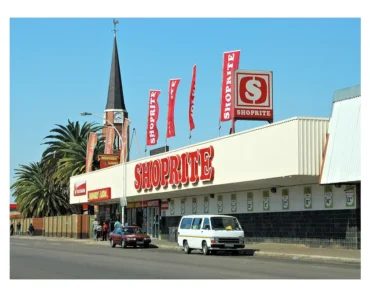
Pick n Pay competes in South Africa’s formal food and fast-moving consumer goods (FMCG) retail sector, a market characterised by intense price competition, shifting consumer loyalty, and the growing dominance of private-label products. Its principal rivals are Shoprite Holdings — the continent’s largest food retailer by store count and revenue — and the Woolworths Food division, which targets the premium segment. SPAR South Africa, operating on a franchise model, also competes directly across multiple store formats.
Pick n Pay has historically occupied the middle ground: broader than Woolworths on price accessibility, more aspirational than Shoprite’s core Checkers and Usave formats. However, Shoprite’s aggressive expansion of the Checkers brand — including the Checkers Sixty60 rapid-delivery app — has eroded Pick n Pay’s position in urban middle-income households, a segment the company is now working to recover.
Operations and footprint
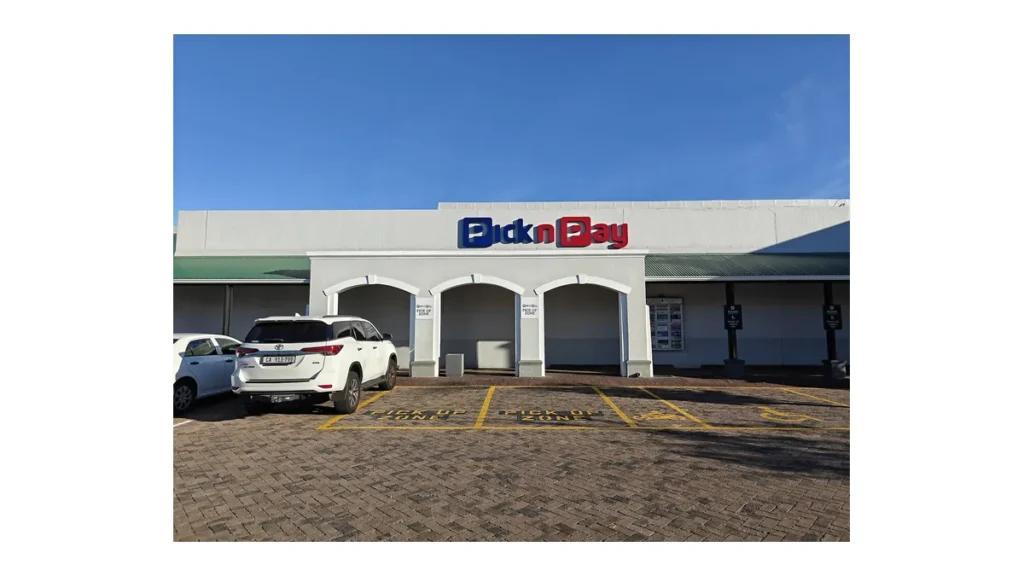
The group operates hundreds of stores across South Africa under its core Pick n Pay and Boxer banners, spanning large supermarkets, compact neighbourhood formats, and liquor stores. According to the most recent annual report, the combined estate runs to well over a thousand trading units when franchise and company-owned stores are counted together. Boxer, which targets value-conscious shoppers in township and peri-urban communities, has become an increasingly important growth vehicle.
Beyond South Africa, Pick n Pay has a presence in Namibia, Botswana, Zambia, Zimbabwe, Mozambique, and Eswatini, typically through a mix of company-owned and franchise arrangements. The group employs tens of thousands of people across its operations, making it one of South Africa’s significant private-sector employers, though workforce numbers have been subject to review as part of ongoing restructuring.
Products and brands
The Pick n Pay brand anchors the group’s mainstream supermarket offering, covering fresh produce, groceries, general merchandise, clothing basics, and financial services including the Pick n Pay Money account. The company has invested in its own private-label range — sold under the Pick n Pay house brand — as a margin and loyalty tool. Boxer operates as a distinct discount grocery and liquor format with its own store identity and customer base. The group also operates standalone Pick n Pay Liquor stores and has a growing e-commerce and on-demand delivery presence through its own platforms and third-party partnerships.
Financial situation
Pick n Pay’s financial position has been under significant pressure. The company reported material losses in its most recent full-year results, driven by margin compression, load-shedding costs, supply chain inefficiencies, and the expense of a large-scale restructuring programme. The group carried a substantial debt load entering its turnaround phase, prompting a rights issue — one of the largest in JSE retail history — completed in 2024 to recapitalise the balance sheet. Industry analysts have noted that while the rights issue stabilised the immediate liquidity position, a return to consistent profitability remains a work in progress. The JSE listing (PIK) means financial disclosures are publicly available through SENS announcements and annual integrated reports.
Recent developments
The most consequential recent development has been the partial unbundling and separate JSE listing of the Boxer business, completed in late 2024. The Boxer IPO was designed to unlock value from the high-growth discount format and raise capital to reduce group debt — a transaction that attracted considerable investor attention given Boxer’s stronger recent trading performance relative to the core Pick n Pay banner. Simultaneously, the group has executed a significant store closure and rightsizing programme, exiting underperforming locations and renegotiating leases. Leadership changes at CEO level have accompanied the turnaround, with Sean Summers returning to the role he previously held, bringing a mandate to restore operational discipline and customer trust.
Outlook
Management’s stated priorities centre on stabilising the core Pick n Pay supermarket business, rebuilding margins through better buying, shrinkage control, and private-label penetration, while allowing Boxer to pursue its own accelerated store rollout targeting underserved communities. The improvement in South Africa’s power supply following the easing of load-shedding removes one structural cost headwind, though consumer spending remains constrained by unemployment and the cost-of-living environment. Competitive pressure from Shoprite-Checkers shows no sign of abating, and the group’s e-commerce and rapid-delivery capabilities will need continued investment to remain relevant to urban shoppers. For regional markets, selective franchise-led growth is more likely than large capital-intensive expansion. The medium-term test is whether the turnaround translates into sustained earnings recovery — a question investors and analysts will be tracking closely through each set of interim results.
Related research
- South Africa Expert Briefing
- African Business Coverage
- African Business Research Hub
- African Country Comparison Tool