MTN Group
MTN Group
MTN Group is Africa’s largest mobile operator by subscribers, a Johannesburg-headquartered telecommunications giant whose network spans 17 markets across the continent and the Middle East. From its origins as a South African start-up in the mid-1990s, MTN has grown into one of the defining corporate stories of emerging-market telecoms, connecting hundreds of millions of people and anchoring a fast-expanding mobile financial services ecosystem.
About
MTN Group was founded in 1994 as M-Cell, launching commercial operations in South Africa just weeks after the country’s first democratic election. The timing was deliberate: a newly liberalised licensing regime opened space for a second mobile operator alongside the state-backed Telkom infrastructure. Early backing came from a consortium that included Cable & Wireless and several South African empowerment partners, reflecting the post-apartheid imperative to broaden corporate ownership. The company rebranded to MTN Group in 2001 as its pan-African ambitions crystallised.
Ownership today is widely distributed through the Johannesburg Stock Exchange (JSE), where MTN Group Limited trades under the ticker MTN. South African institutional investors, global emerging-market funds and broad retail participation make up the shareholder base. The South African government holds no direct controlling stake, though public-sector pension vehicles managed by the Public Investment Corporation (PIC) represent a meaningful institutional position. The group is led by a board that has in recent years prioritised portfolio rationalisation and digital transformation over further geographic expansion.
Sector and competitive position
MTN operates in the telecommunications sector, offering mobile voice, data, enterprise connectivity and financial services. By subscriber count it is the largest mobile operator on the African continent, a position it has held for over a decade. Its nearest pan-African rival is Airtel Africa, the London-listed subsidiary of India’s Bharti Airtel, which competes directly with MTN in several East and West African markets. Orange (via its Orange Africa and Middle East division) is a significant competitor in Francophone markets, while Vodacom — itself a Vodafone subsidiary headquartered in South Africa — contests the southern African corridor. In individual markets, MTN also faces strong local challengers: Safaricom in Kenya (where MTN does not operate) sets the regional benchmark for mobile money integration that MTN actively benchmarks itself against.
Operations and footprint
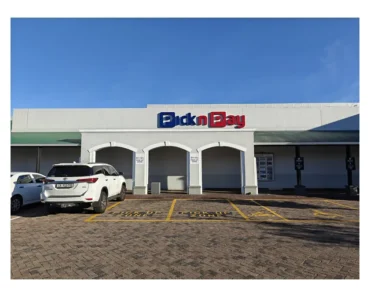
MTN’s operational footprint covers 17 countries, with its heaviest subscriber concentrations in Nigeria, Ghana, South Africa, Uganda, Cameroon, Côte d’Ivoire and Zambia. The Middle East presence includes operations in Afghanistan, Yemen and Syria — markets that carry elevated political risk but have historically generated meaningful cash flows. The group employs tens of thousands of people directly, with a far larger ecosystem of indirect employment through its dealer, agent and MoMo merchant networks, which number in the hundreds of thousands across the continent. Physical retail is delivered through a combination of branded service centres, authorised dealer outlets and an extensive informal airtime reseller network that reaches deep into rural communities.
Products and brands
The MTN master brand is the primary customer-facing identity across all markets, supported by a yellow-and-blue visual identity that has become one of the most recognised in Africa. Core consumer products include prepaid and postpaid mobile voice plans, 4G and increasingly 5G data packages, and fixed wireless access (FWA) services marketed under the MTN Home Internet proposition. The group’s enterprise arm, MTN Business, offers cloud, cybersecurity, IoT and connectivity solutions to corporate and government clients. The flagship financial services platform, MoMo (MTN Mobile Money), operates as a regulated fintech in multiple jurisdictions, offering wallet services, merchant payments, international remittances, micro-loans and insurance products. MTN has also developed Ayoba, a super-app targeting messaging and content consumption, as part of its broader digital services strategy.
Financial situation
MTN Group is listed on the JSE and reports in South African rand. According to its most recent annual report, the group has navigated a challenging macroeconomic environment characterised by currency depreciation in key markets — most acutely in Nigeria, where naira devaluation materially impacted rand-reported results — alongside elevated inflation and rising interest costs. Service revenue growth in local-currency terms has generally remained positive, driven by data and fintech, though translation losses have weighed on headline numbers. The group carries a meaningful debt load, partly reflecting infrastructure investment and the cost of spectrum acquisitions, and management has signalled a focus on deleveraging at the holding-company level. Dividend policy has been subject to review given currency repatriation constraints in certain markets, particularly Nigeria.
Recent developments
The past 24 months have been defined as much by portfolio exits as by expansion. MTN completed the sale of its operations in Guinea-Bissau and moved to streamline its Middle East exposure, reflecting a strategic pivot toward fewer, larger and more commercially stable markets. In South Africa, the group has accelerated 5G rollout and expanded its FWA footprint to compete more directly with fibre providers. The MoMo platform received standalone fintech licences in additional jurisdictions, a regulatory milestone that allows the business to operate with greater autonomy from the core telco. MTN Nigeria, the group’s most significant subsidiary by revenue, faced intense regulatory scrutiny and foreign-exchange headwinds following Nigeria’s 2023 currency reforms, prompting ongoing dialogue with the Central Bank of Nigeria and the Nigerian Communications Commission. The group also progressed discussions around a potential listing of MTN Nigeria on an international exchange, though no transaction had been concluded as of early 2026.
Outlook
MTN’s stated strategic framework, known internally as Ambition 2025 and its successor planning cycle, centres on three growth pillars: accelerating data monetisation as smartphone penetration rises, scaling MoMo into a full-service financial platform, and growing MTN Business as African enterprises digitalise. The structural tailwinds are compelling — Africa’s median age remains among the world’s lowest, mobile internet penetration still has significant headroom, and the continent’s large unbanked population represents a natural addressable market for MoMo. Headwinds are equally real: currency volatility, regulatory unpredictability, infrastructure costs in low-density markets, and competitive pressure from both established operators and well-funded fintech challengers. Investors and analysts will watch Nigeria closely, as its trajectory disproportionately shapes group-level outcomes. Capital discipline, selective market exits and the maturation of MoMo as a standalone profit centre are the metrics most likely to define MTN’s investment narrative through the remainder of the decade.
Related research
- South Africa Expert Briefing
- African Business News and Analysis
- African Business Research
- African Country Comparison Tool