Chief Dawid Stuurman International Airport
Chief Dawid Stuurman International Airport
About
Chief Dawid Stuurman International Airport (IATA: PLZ / ICAO: FAPE) serves Gqeberha — formerly Port Elizabeth — in South Africa’s Eastern Cape province, and occupies a quietly significant position in the country’s domestic aviation network. Though modest in scale compared with OR Tambo International in Johannesburg or Cape Town International, the airport functions as the primary air gateway to one of South Africa’s most historically layered and economically active coastal cities, connecting the Eastern Cape to the national grid of commerce, tourism, and public administration. For researchers and aviation analysts tracking secondary-hub development across sub-Saharan Africa, PLZ offers a useful case study in how regional airports balance infrastructure constraints against growing demand from both leisure and business travellers.
The airport’s origins trace to the mid-twentieth century, when the facility was developed to serve what was then known as Port Elizabeth, a major port and manufacturing centre on Algoa Bay. For decades it operated under the name Port Elizabeth Airport, functioning as a reliable domestic node without significant international scheduled service. The airport is owned by the South African government and operated by Airports Company South Africa (ACSA), the state-owned entity that manages the country’s principal commercial airports under a long-term operating licence framework.
The airport was formally renamed Chief Dawid Stuurman International Airport in 2021, honouring the Khoikhoi resistance leader who fought against colonial dispossession in the Eastern Cape in the early nineteenth century. The renaming was part of a broader post-apartheid programme of geographical and institutional transformation across South Africa. Despite carrying the “international” designation in its name, scheduled international services remain limited, and the airport functions operationally as a domestic hub, with its runway and terminal infrastructure scaled accordingly. ACSA has periodically signalled interest in expanding capacity at the facility, though the scope and timeline of any major capital programme remain subject to publicly disclosed planning processes.
Country
South Africa is a constitutional democracy situated at the southern tip of the African continent, with a population estimated at over 60 million people. It maintains three capital cities — Pretoria (executive), Cape Town (legislative), and Bloemfontein (judicial) — and is the continent’s most industrialised economy by several measures, serving as a regional anchor for trade, finance, and aviation connectivity across southern and sub-Saharan Africa. The country’s eleven official languages and diverse geography, ranging from the Drakensberg highlands to the Garden Route coastline, make it one of Africa’s most complex and compelling destinations for travellers, investors, and researchers alike.
→ Read the South Africa expert briefing
Airlines based here
Chief Dawid Stuurman International Airport does not serve as a primary hub for any single carrier, but it is a well-established focus city for South Africa’s dominant domestic airlines. FlySafair, the low-cost carrier that has grown rapidly to become one of South Africa’s most operationally reliable domestic operators, maintains regular services through PLZ and represents a significant share of seat capacity at the airport. Airlink, a regional carrier operating under a franchise and codeshare arrangement that has historically been associated with South African Airways, operates an extensive network of routes through Gqeberha, connecting the Eastern Cape to Johannesburg, Cape Town, and a range of smaller regional points. Cemair, which focuses on thinner regional routes across southern Africa, has also served the airport. The absence of a resident full-service international carrier means that travellers connecting onward to intercontinental destinations typically do so via OR Tambo International or Cape Town International.
Flights and destinations
The airport’s route network is primarily domestic in character, with Johannesburg (OR Tambo and Lanseria) and Cape Town forming the two dominant trunk routes that account for the majority of passenger movements. Beyond these high-frequency corridors, the airport supports connections to a range of secondary South African cities and regional points. Representative destinations served from PLZ include Johannesburg (OR Tambo), Cape Town, Durban (King Shaka International), Bloemfontein, George, East London, and Kimberley. Airlink’s regional network extends the airport’s effective reach into neighbouring countries, with connections available via Johannesburg to destinations across southern and eastern Africa. Direct international scheduled services have been limited in recent years, meaning that PLZ functions primarily as a domestic origin-and-destination airport rather than a connecting hub for intercontinental itineraries.
Facilities and capacity
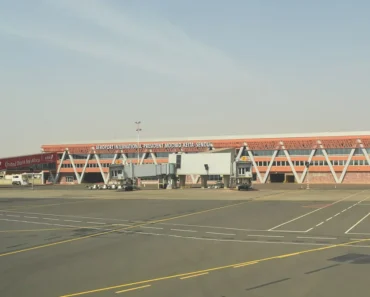
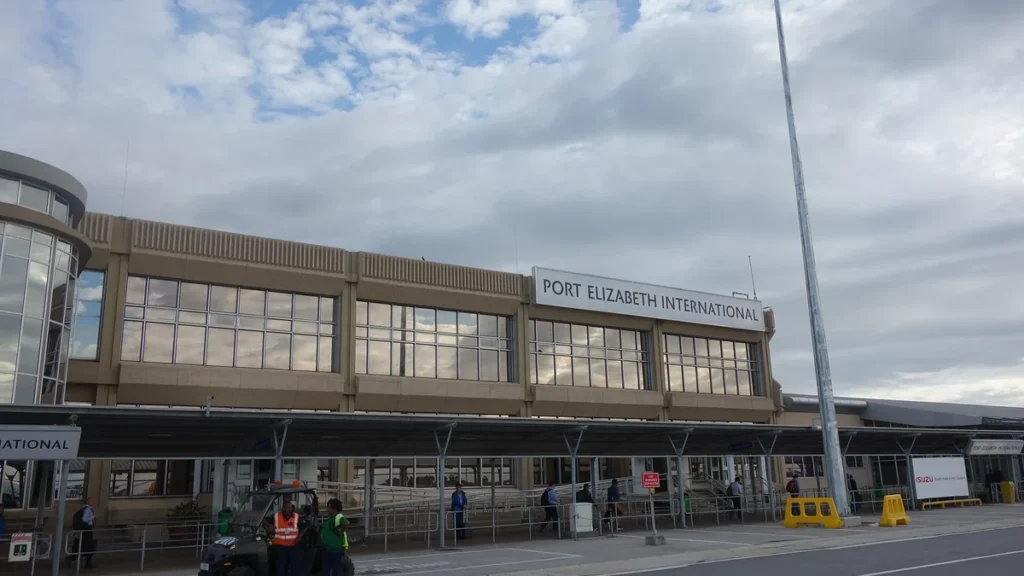
The airport operates a single passenger terminal building, which handles both arrivals and departures and is divided into domestic processing zones consistent with ACSA’s standard terminal management model. The facility includes check-in counters, retail and food-and-beverage concessions, car rental desks from major operators, and landside parking. The airport has one primary paved runway, oriented to accommodate the prevailing wind conditions of the Algoa Bay coastal environment, and is equipped with instrument landing systems appropriate for its traffic category. Cargo handling facilities are available on-site, serving the Eastern Cape’s manufacturing and agricultural export sectors, though PLZ is not classified as a major cargo hub. In terms of passenger throughput, the airport falls within the small-to-medium hub category by African standards, with publicly disclosed traffic data confirming it handles a fraction of the volumes processed at OR Tambo or Cape Town International. ACSA has indicated ongoing interest in terminal and apron improvements, though specific expansion budgets and confirmed timelines should be verified against the company’s most recent published annual reports and regulatory filings.
Visa regulations
Travellers arriving at Chief Dawid Stuurman International Airport are subject to South Africa’s national visa regime, administered by the Department of Home Affairs. Citizens of the United States, the United Kingdom, and most European Union member states benefit from visa-free entry for short stays, typically up to 30 days for tourism or business purposes, though the precise conditions — including permitted activities and extension rights — are defined by bilateral agreements that can be revised. Many regional African passport holders also enjoy visa-free or visa-on-arrival arrangements with South Africa, reflecting the country’s role as a regional economic hub, though this varies significantly by nationality. South Africa does not currently operate a universal eVisa system comparable to those of Kenya or Ethiopia, and most nationalities that require a visa must apply in advance through a South African diplomatic mission or an authorised visa application centre. Visa rules are subject to change without extended notice, and travellers, journalists, and researchers are strongly advised to verify current requirements before travel.
→ Check live visa requirements for your nationality
Recent developments
Over the past 24 months, Chief Dawid Stuurman International Airport has continued to consolidate its position within South Africa’s recovering post-pandemic domestic aviation market. FlySafair has maintained and, according to industry estimates, modestly grown its frequency on the Gqeberha–Johannesburg corridor, reflecting sustained demand from business travellers and the Eastern Cape’s tourism sector. Airlink has similarly sustained its regional network, reinforcing PLZ’s connectivity to smaller Eastern Cape points. ACSA, as the operating authority, has continued routine infrastructure maintenance and compliance works across its portfolio, with PLZ included in the company’s broader capital allocation planning. The Eastern Cape provincial government has publicly expressed interest in developing Gqeberha’s tourism and investment profile — including its positioning as a gateway to the Addo Elephant National Park and the Garden Route — which may support the case for enhanced air connectivity in the medium term. Travellers and analysts should monitor ACSA’s official communications and the South African Civil Aviation Authority (SACAA) for any regulatory or operational updates affecting the airport.
News and reports
Ongoing operational and commercial news relating to Chief Dawid Stuurman International Airport is best tracked through several authoritative sources. Airports Company South Africa publishes press releases, annual reports, and traffic data through its official corporate communications channels, and these represent the most reliable source for capacity, investment, and operational announcements. The South African Civil Aviation Authority (SACAA) issues regulatory notices, safety directives, and licensing updates that affect all airports operating under its jurisdiction, including PLZ. At the continental level, IATA’s Africa and Middle East regional office periodically publishes market analysis and connectivity reports that contextualise individual airport performance within broader African aviation trends. The ICAO Western and Southern African regional office (WACAF/ESAF) similarly produces safety oversight and infrastructure development reports relevant to South African airports. Aviation trade publications including ch-aviation, OAG, and Cirium provide schedule and capacity data that researchers and analysts can use to track route-level changes at PLZ over time.