Sierra Leone statistics — population, economy, trade and telecom
As Africa’s development trajectory draws increasing scrutiny from investors, policymakers, and development partners in 2026, granular country-level data has never been more consequential. Sierra Leone occupies a strategically significant position in West Africa — a post-conflict state with substantial natural resource endowments, a young and rapidly growing population, and an economy navigating persistent structural challenges. Understanding its statistics in depth is essential for anyone engaging with the region’s economic and humanitarian landscape.
Population and Demographics
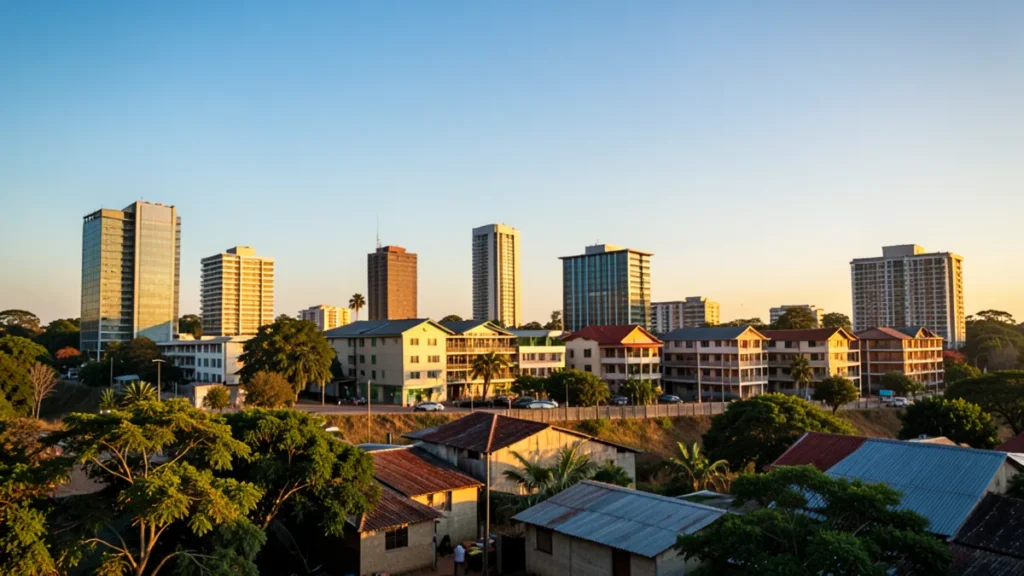
Sierra Leone’s population is estimated at approximately 8.8 to 9 million people as of 2025, based on projections from the United Nations Population Division and the World Bank. The country maintains one of the higher population growth rates in West Africa, with annual growth roughly in the range of 2.1 to 2.4 percent, placing sustained pressure on public services, infrastructure, and employment markets. The median age is low — estimated at around 19 to 20 years — reflecting a predominantly youthful demographic structure that presents both a long-term dividend opportunity and an immediate governance challenge. Urbanisation is accelerating, with the UN estimating that approximately 44 to 46 percent of the population now lives in urban areas, a figure driven heavily by migration toward Freetown, the capital and commercial hub. Freetown itself is estimated to house well over 1.2 million residents, with informal settlements expanding rapidly along its hillside periphery. Population density is concentrated in the Western Area and the southern and eastern provinces, while the north remains comparatively sparse.
Economic Indicators
Sierra Leone remains one of the lower-income economies in sub-Saharan Africa. World Bank estimates put nominal GDP at roughly 4 to 4.5 billion USD for 2024, with GDP per capita on a purchasing power parity basis estimated at approximately 1,700 to 1,900 USD. Real GDP growth has been volatile in recent years; IMF projections for 2024 and 2025 suggested modest growth in the range of 4 to 5 percent, contingent on mining sector performance and agricultural output. Inflation has been a persistent concern — the Leone experienced significant depreciation pressure, and consumer price inflation was running at elevated levels, with some estimates placing it above 40 percent in 2023 before beginning a gradual deceleration through 2024 and into 2025. The national currency is the Leone (SLL, redenominated as the new Leone, SLE, in 2022). Unemployment and underemployment remain structurally high, particularly among youth, though precise formal unemployment figures are difficult to verify given the dominance of the informal economy. The IMF has flagged debt sustainability as an ongoing concern, with public debt-to-GDP ratios estimated at roughly 80 to 90 percent in recent assessments, reflecting both legacy borrowing and pandemic-era fiscal expansion.
Trade and External Accounts
Sierra Leone’s trade profile is heavily shaped by its mineral wealth. The country’s top exports include rutile, ilmenite, bauxite, iron ore, diamonds, and gold — commodities that collectively account for the overwhelming majority of export earnings. Cocoa and coffee represent the principal agricultural exports. On the import side, Sierra Leone is heavily dependent on fuel, food commodities (particularly rice, which is a dietary staple), machinery, and manufactured goods. Top trading partners on the export side have historically included China, Belgium, the Netherlands, and the United States, while imports flow significantly from China, India, and European Union member states. The current account deficit is structural and persistent; industry reports and IMF Article IV consultations suggest the deficit has consistently hovered in a range that requires substantial external financing, including remittances — which are a meaningful source of foreign exchange — and official development assistance. Remittances from the Sierra Leonean diaspora, particularly in the United Kingdom and the United States, are estimated to represent a notable share of household income for many families.
Key Sectors
Agriculture remains the backbone of the Sierra Leonean economy in terms of employment, engaging an estimated 60 to 65 percent of the working population, though its share of GDP is considerably lower. Subsistence farming dominates, with rice, cassava, and groundnuts as staple crops alongside cash crops such as cocoa and palm oil. The mining sector is the primary driver of export revenue and foreign direct investment. Rutile mining — Sierra Leone holds some of the world’s largest rutile deposits — alongside diamond and bauxite extraction are central to the industrial economy. Iron ore has seen intermittent activity depending on global commodity prices and investor appetite. The services sector, including retail trade, financial services, and government services, accounts for a growing share of GDP and is expanding in Freetown. Tourism remains underdeveloped relative to the country’s potential; Sierra Leone’s beaches and biodiversity offer considerable appeal, but infrastructure deficits, security perceptions, and limited air connectivity have constrained growth. Post-pandemic recovery in visitor numbers has been gradual. Construction and real estate activity in Freetown has been a notable growth area, fuelled partly by diaspora investment and development finance.
Telecommunications and Digital
The telecommunications sector has expanded considerably over the past decade, though significant gaps remain. Mobile penetration is estimated at roughly 60 to 70 percent of the population based on ITU and GSMA data for 2024, with SIM card penetration potentially higher due to multi-SIM usage. Internet penetration remains comparatively low — estimates suggest active internet users represent somewhere between 15 and 25 percent of the population, with mobile internet accounting for the vast majority of connectivity. Fixed broadband infrastructure is minimal outside Freetown. The dominant mobile operators include Orange Sierra Leone, Africell, and Qcell, with Africell historically holding a strong market position. Mobile money services have gained traction as a financial inclusion tool, with platforms linked to the major operators enabling basic transfers, bill payments, and savings among populations with limited access to formal banking. The Bank of Sierra Leone has been working to develop a regulatory framework supportive of fintech growth. Connectivity infrastructure, including the ACE submarine cable landing, provides international bandwidth capacity, though last-mile distribution remains a constraint on broader digital adoption.
Sources and Methodology
The data and estimates presented in this dashboard draw on a range of authoritative sources consulted through 2025. Primary sources include the World Bank’s World Development Indicators and Open Data platform, IMF Article IV Consultation reports and World Economic Outlook databases, the United Nations Population Division’s World Population Prospects, the International Telecommunication Union (ITU) statistics portal, and GSMA Intelligence for mobile and digital indicators. Trade data references UN Comtrade and the African Development Bank’s statistical databases. National-level data is informed by publications from Statistics Sierra Leone (SSL) and the Bank of Sierra Leone. Where precise figures were unavailable or subject to revision, this article uses qualifying language — including “approximately,” “roughly,” and “estimates suggest” — to reflect the inherent uncertainty in data from lower-income economies with limited statistical capacity. Readers are encouraged to consult primary sources directly for the most current figures, as data for 2025 and 2026 continues to be compiled and revised.
For a deeper qualitative analysis of Sierra Leone’s political economy, investment climate, and development outlook, visit our Sierra Leone expert briefing. To benchmark Sierra Leone against its regional peers, explore our all African country statistics hub. For broader context on growth trends, trade dynamics, and structural transformation across the continent, see our African economy pillar.