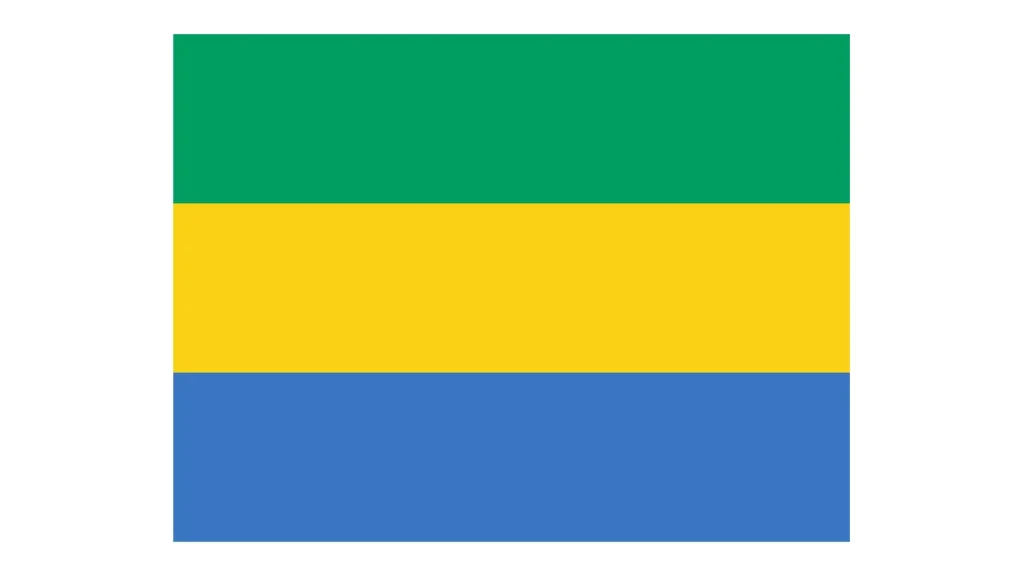
Gabon — Expert Briefing
Gabon at a glance: A small, oil-dependent Central African state navigating a fragile post-coup transition under military rule, while sitting atop some of the continent’s most significant carbon-sink forests and rare-earth mineral reserves.
Overview
Gabon is a Central African republic bordered by Equatorial Guinea, Cameroon, the Republic of Congo, and the Atlantic Ocean. Its capital is Libreville, which is also the country’s largest city and principal port. The latest UN Population Division estimates place Gabon’s population at approximately 2.4 million people (2025 projection), making it one of the least densely populated countries on the African continent relative to its land area of 267,668 square kilometres. French is the sole official language, though Fang, Myene, Nzebi, and dozens of other Bantu languages are spoken across the country. The currency is the Central African CFA franc (XAF), pegged to the euro and shared with five other members of the Economic and Monetary Community of Central Africa (CEMAC). Gabon sits in the upper-middle-income band by World Bank classification, with GDP per capita estimated at roughly USD 7,500–8,000 in nominal terms — unusually high for sub-Saharan Africa — though this figure masks profound inequality. In 2026, Gabon matters for two reasons that extend well beyond its size: it holds approximately 88 percent forest cover, positioning it as a pivotal actor in global carbon markets and biodiversity negotiations, and its ongoing military-led transition is being watched across the region as a test case for whether coup governments can credibly deliver constitutional reform without entrenching themselves permanently.
Government and Politics
Gabon is currently governed as a transitional military republic following the coup of 30 August 2023, in which the Committee for the Transition and Restoration of Institutions (CTRI) — led by General Brice Clotaire Oligui Nguema — seized power and suspended the constitution hours after the electoral commission announced a disputed victory for incumbent President Ali Bongo Ondimba. Oligui Nguema, a former head of the Republican Guard and a cousin of Ali Bongo, was sworn in as Transitional President and has since consolidated authority as head of state, head of government, and commander-in-chief. The National Assembly and Senate were dissolved following the coup; a Transitional Parliament composed of appointed members was subsequently established to perform legislative functions during the transition period. A National Dialogue process, convened in early 2024, produced a draft constitutional framework that proposed a new presidential system with term limits, anti-dynasty provisions, and a bicameral legislature — provisions notably absent from the Bongo-era constitution that had governed Gabon since 1991. A constitutional referendum was held in November 2024, with official results indicating overwhelming approval of the new text, though independent verification of turnout and vote integrity was limited. Under the transition roadmap, presidential and legislative elections are scheduled for 2025–2026, though no firm date had been confirmed as of mid-2025. The CTRI has stated that Oligui Nguema may stand as a candidate in those elections, a position that has drawn criticism from civil society groups who argue it contradicts the spirit of a genuine democratic handover. Gabon remains suspended from the African Union and the Economic Community of Central African States (ECCAS) pending the restoration of constitutional order.
Economy
Gabon’s GDP is estimated at approximately USD 20–21 billion (current prices, 2024 IMF Article IV projections), placing it among the smaller but wealthier economies in sub-Saharan Africa. The economy remains structurally dependent on three primary sectors: petroleum, manganese mining, and timber. Oil has historically accounted for roughly 40–45 percent of government revenues and 80 percent of export earnings, but production has been declining steadily since its peak in the mid-1990s, and proven reserves are expected to be substantially depleted within two decades without significant new discoveries. Gabon is the world’s second-largest producer of manganese ore, and the Moanda mine operated by Compagnie Minière de l’Ogooué (COMILOG), a subsidiary of Eramet, is one of the largest manganese operations globally — a fact that has gained strategic salience as manganese is a critical input for battery manufacturing. Timber, though subject to a 2010 export ban on raw logs intended to stimulate domestic processing, remains a significant sector. The CFA franc’s euro peg provides monetary stability but limits exchange-rate flexibility; Gabon’s external debt-to-GDP ratio has risen to levels that prompted the IMF to flag debt sustainability concerns, and the country reached a staff-level agreement with the Fund in 2024 on a programme designed to stabilise public finances and reduce the fiscal deficit. The single most consequential economic story of the past 24 months is Gabon’s aggressive push into carbon credit markets: the government has signed agreements with several international buyers and platforms to monetise the carbon sequestration capacity of its rainforests, with ambitions to generate hundreds of millions of dollars annually. This strategy has attracted both serious investor interest and significant scepticism from environmental economists who question the additionality and permanence of such credits.
Demographics and Society
Gabon’s population of approximately 2.4 million is highly urbanised by African standards, with an estimated 90 percent of residents living in urban areas — one of the highest urbanisation rates on the continent. Libreville alone accounts for roughly half the national population. The country is ethnically diverse, with the Fang people constituting the largest single group (estimated at 25–30 percent of the population), followed by the Myene, Nzebi, Bapounou/Eschira, and Bandjabi communities, among more than forty recognised ethnic groups. A significant proportion of the workforce — estimates range from 15 to 30 percent — is composed of migrants from neighbouring countries, particularly Cameroon, Equatorial Guinea, and the Republic of Congo, a demographic reality that has periodically generated social tension. Christianity is the dominant religion, practised by an estimated 80 percent of the population, with Islam accounting for roughly 10–12 percent and traditional animist beliefs remaining influential across many communities. French serves as the language of government, education, and formal commerce, though it coexists with a rich mosaic of indigenous languages. The defining social trend of the current moment is youth unemployment and urban underemployment: despite Gabon’s relatively high per capita income, a large share of young people in Libreville and Port-Gentil lack formal employment, a structural mismatch that has fuelled political discontent and was a significant undercurrent in the popular acquiescence — and in some quarters, outright celebration — that greeted the 2023 coup.
Key Issues Right Now
The transition timeline and democratic credibility. The CTRI’s stated commitment to returning Gabon to civilian constitutional rule remains the dominant political question of 2025–2026. The November 2024 constitutional referendum provided a formal milestone, but the decision by Oligui Nguema to position himself as a potential presidential candidate has complicated the narrative of a clean handover. Regional bodies, the African Union, and Western diplomatic partners are watching closely: if elections are held on schedule and are judged broadly credible, Gabon could become a model for managed transitions elsewhere in the coup belt stretching across the Sahel and Central Africa. If they are delayed or manipulated, the country risks deeper international isolation and renewed internal unrest.
Carbon markets and forest governance. Gabon’s forests cover approximately 23 million hectares and store an estimated 4 billion tonnes of carbon, making the country’s environmental governance decisions globally significant. The government’s carbon credit strategy, championed under both the Bongo administration and the CTRI, has attracted scrutiny over the robustness of monitoring, reporting, and verification frameworks, and over the distribution of revenues to forest-adjacent communities. International buyers and standards bodies are demanding greater transparency, and the outcome of these negotiations will determine whether Gabon’s carbon ambitions translate into a durable revenue stream or a reputational liability.
Oil revenue decline and economic diversification. The structural decline of Gabonese oil production is not a future risk — it is a present reality. Output has fallen from a peak of around 370,000 barrels per day in 1997 to below 200,000 barrels per day in recent years, and the fiscal arithmetic is increasingly uncomfortable. The transition government has inherited a public wage bill that consumes a disproportionate share of revenues, a legacy of Bongo-era patronage politics. Meaningful diversification into agro-industry, eco-tourism, and downstream mineral processing is frequently discussed but has made limited structural progress. The IMF programme agreed in 2024 sets conditionalities around fiscal consolidation that will test the CTRI’s political will and its relationship with public sector unions.
Travel and Connectivity
Gabon’s principal international gateway is Libreville International Airport (Leon M’ba Airport), which handles the majority of international arrivals and is served by Air France, Ethiopian Airlines, Kenya Airways, Royal Air Maroc, and several regional carriers. Port-Gentil Airport serves the country’s second city and oil industry hub, with connections primarily to Libreville and limited regional routes. Franceville (Masuku Airport) provides access to the southeast of the country, including the Lopé National Park area. Gabon’s tourism profile is niche but growing: the country’s thirteen national parks — covering approximately 11 percent of its territory — offer exceptional wildlife experiences, including forest elephants, western lowland gorillas, and humpback whale calving grounds off the Loango coast. Lopé National Park is a UNESCO World Heritage Site. Tourism infrastructure remains underdeveloped relative to the natural asset base, and visitor numbers are modest compared to East African safari destinations, though this is increasingly positioned as a selling point for high-value, low-volume eco-tourism. Internet penetration stands at approximately 60–65 percent of the population, concentrated heavily in urban areas; rural connectivity remains poor. Mobile money adoption is growing but lags behind West African leaders such as Côte d’Ivoire and Ghana; Airtel Money and MTN Mobile Money are the principal platforms operating in the market, and the CEMAC regional framework for interoperability is gradually improving cross-border transaction capacity.
Further Research
Analysts and researchers seeking to deepen their understanding of Gabon should consult the following institutions and resources. The World Bank Gabon Country Page provides regularly updated macroeconomic data, poverty assessments, and project documentation. The IMF Gabon Country Report series, including Article IV Consultation Staff Reports, offers the most rigorous publicly available analysis of fiscal and monetary conditions. The Africa Center for Strategic Studies (part of the US National Defense University) publishes briefings on Gabon’s political transition and its place in the broader Central African security landscape. The Banque des États de l’Afrique Centrale (BEAC) — the CEMAC central bank — publishes monetary and financial statistics relevant to understanding the CFA franc zone dynamics that shape Gabon’s economic policy space. The Direction Générale de la Statistique (DGS) of Gabon, the national statistics office, is the primary source for census data, household surveys, and national accounts, though data timeliness can be inconsistent. Finally, the Africa Research Institute and Chatham House Africa Programme have both published analytical work on Central African governance and resource politics that provides essential regional context for understanding Gabon’s trajectory.