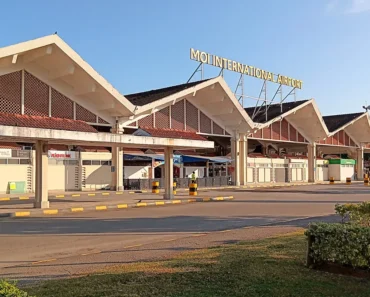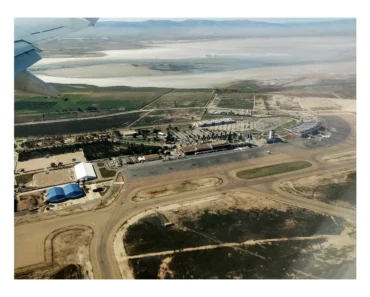
Ivato International Airport
Ivato International Airport
Ivato International Airport (TNR) — Airport Profile
Ivato International Airport (IATA: TNR | ICAO: FMMI) is the principal international gateway to Madagascar and one of the most strategically positioned airports in the southern Indian Ocean region. Serving the capital city of Antananarivo from its location in the suburb of Ivato, approximately 17 kilometres north of the city centre, the airport functions as the country’s primary hub for both passenger and cargo traffic. For travellers, journalists, and aviation analysts tracking African connectivity, Ivato represents a critical node — a point where Indian Ocean island geography, francophone African aviation traditions, and emerging long-haul demand intersect in ways that make it unlike most other airports on the continent.
About
Ivato International Airport has served Antananarivo since the mid-twentieth century, with its origins rooted in the colonial-era infrastructure developed under French administration. The airport was formally established and developed as Madagascar’s primary civil aviation facility in the years surrounding independence in 1960, and it has remained the country’s dominant international airport ever since. Ownership and operational oversight sit with the Malagasy state, with the airport falling under the regulatory authority of the Autorité de l’Aviation Civile de Madagascar (ACM), the national civil aviation body. Day-to-day management has historically been handled through state-linked entities, though Madagascar has periodically explored public-private partnership frameworks to attract investment and modernise operations.
The airport has undergone several phases of infrastructure improvement over the decades, driven by the need to accommodate larger aircraft, increase passenger throughput, and meet international safety and security standards set by ICAO. Expansion efforts have focused on terminal capacity, apron space, and navigational aids. Madagascar’s broader aviation development has been shaped by its participation in ICAO’s regional frameworks for Africa and the Indian Ocean (AFI region), and Ivato has been a focal point for compliance reviews and capacity-building initiatives within that context.
The airport operates a single main passenger terminal, which handles both international and domestic departures, alongside dedicated cargo handling facilities. Its runway infrastructure supports wide-body jet operations, enabling direct long-haul services to Europe and connections across the African continent. As a medium-scale hub by African standards, Ivato punches above its weight given Madagascar’s geographic isolation, serving as the indispensable link between the island nation and the wider world.
Country
Madagascar is an island nation situated in the Indian Ocean off the southeastern coast of Africa, separated from the Mozambican mainland by the Mozambique Channel. Antananarivo, known locally as Tana, serves as the capital and largest city, and is home to a significant share of the country’s population, which numbers in the tens of millions and makes Madagascar one of Africa’s more populous island states. The country occupies a unique regional position — geographically proximate to southern and eastern Africa, historically connected to France, and increasingly engaged with Indian Ocean trade and tourism networks that link it to Réunion, Mauritius, the Comoros, and the Seychelles. Its biodiversity, including endemic wildlife found nowhere else on Earth, makes it a significant destination for ecotourism and scientific research, both of which generate meaningful aviation demand.
→ Read the Madagascar expert briefing
Airlines Based Here
Air Madagascar, the national flag carrier, has historically used Ivato International Airport as its primary hub, operating both domestic routes to secondary Malagasy airports and international services to regional and intercontinental destinations. The airline has faced well-documented financial and operational difficulties over the years, including periods of suspension from European airspace under the EU Air Safety List, which have materially affected its ability to serve European markets directly. As of the mid-2020s, the carrier’s operational status and network scope have been subject to ongoing restructuring discussions, and travellers and analysts should verify current schedules directly with the airline or through accredited booking platforms.
Beyond the national carrier, Ivato serves as a focus city for several visiting international carriers. Air Austral, the French regional carrier based on Réunion, maintains services connecting Antananarivo to Saint-Denis and onward to metropolitan France, making it a significant operator for the Malagasy diaspora and French-connected travellers. Air France has operated services linking Antananarivo to Paris Charles de Gaulle, representing one of the most commercially important long-haul routes from the airport. Kenya Airways connects Ivato to Nairobi’s Jomo Kenyatta International Airport, providing an important hub connection into the broader African network and onward intercontinental options. Ethiopian Airlines, one of Africa’s most expansive carriers, also serves Antananarivo from Addis Ababa Bole International Airport, further integrating Madagascar into the continent’s fastest-growing aviation network. Corsair International has at various points operated charter and scheduled services between France and Madagascar, catering to leisure and VFR (visiting friends and relatives) traffic.
Flights and Destinations
The route network supported by Ivato International Airport reflects Madagascar’s dual orientation: toward Europe, particularly France, as its primary long-haul market, and toward the African continent and Indian Ocean island neighbours for regional connectivity. Intercontinental services link Antananarivo to Paris (Charles de Gaulle), which remains the single most important international city pair given the historical, cultural, and economic ties between Madagascar and France. Regional African connections include Nairobi, Addis Ababa, Johannesburg, and Mayotte, the latter being a French overseas territory with close ties to Madagascar. Within the Indian Ocean island arc, services to Saint-Denis de la Réunion and Mauritius are commercially significant, supporting both tourism and business travel. Domestic routes from Ivato fan out to airports including Nosy Be (Fascene Airport), Toamasina, Mahajanga, Toliara, and Fort Dauphin, making the capital airport the spine of Madagascar’s internal air transport system. Industry observers note that the thinness of some of these domestic routes, combined with infrastructure constraints at secondary airports, continues to limit network development.
Facilities and Capacity
Ivato International Airport operates with a single primary terminal building that handles both international and domestic traffic, a configuration common among airports of its scale in sub-Saharan Africa and the Indian Ocean region. The terminal provides check-in, immigration, customs, and departure lounge facilities, though passenger experience reviews frequently note that capacity constraints become apparent during peak periods, particularly when multiple wide-body international flights are scheduled in close proximity. The airport’s main runway — Runway 11/29 — is of sufficient length to accommodate wide-body aircraft including the Boeing 777 and Airbus A330 family, which are the primary long-haul types operating into Antananarivo. A parallel taxiway system and apron area support simultaneous ground handling of multiple aircraft, though ramp space is considered a limiting factor for significant traffic growth without further investment.
Cargo facilities at Ivato serve Madagascar’s export economy, which includes vanilla, seafood, and other agricultural products with time-sensitive supply chains. The cargo apron and handling infrastructure, while functional, are generally assessed by industry analysts as requiring modernisation to meet the standards expected by major freight forwarders and perishable cargo operators. According to publicly disclosed traffic data from the ACM and ICAO regional reporting, Ivato handles a volume of passengers that places it in the medium-hub category by African standards — significant for the island context but modest compared to major continental hubs such as Addis Ababa, Nairobi, or Johannesburg. Planned and ongoing expansion works have been discussed at various points in the airport’s recent history, with proposals covering terminal extensions, apron expansion, and upgraded navigational and safety systems, though the pace of implementation has been shaped by Madagascar’s broader fiscal environment and the availability of development financing.
Visa Regulations
Travellers arriving at Ivato International Airport are subject to Madagascar’s national visa regime, which has in recent years been relatively accessible by regional standards. Citizens of many countries, including the United States, the United Kingdom, and European Union member states, have generally been eligible to obtain a visa on arrival at Antananarivo, subject to the payment of applicable fees and the presentation of a valid passport, return or onward ticket, and proof of sufficient funds. Madagascar has also made progress in developing an eVisa system, allowing eligible travellers to obtain authorisation before departure, which reduces processing time at the airport and is recommended for travellers wishing to avoid queues during busy arrival periods. For travellers holding passports from regional African countries, conditions vary by nationality, and some SADC and COMESA member state citizens have benefited from simplified entry arrangements under bilateral or regional agreements. Visa regulations are subject to change without extended notice, and the information above reflects the general framework as understood in early 2026. Travellers, journalists, and researchers should always verify current requirements before travel.
→ Check the live visa requirements lookup for Madagascar
Recent Developments
The period from 2024 to early 2026 has seen a number of notable developments at and around Ivato International Airport. The ongoing question of Air Madagascar’s operational and financial stability has remained a central issue for the airport’s commercial performance, with the airline’s ability to sustain and grow its international network directly affecting Ivato’s connectivity profile. There has been renewed interest from African carriers in expanding services to Antananarivo, reflecting broader growth trends in intra-African aviation driven by the implementation of the Single African Air Transport Market (SAATM) framework, to which Madagascar is a signatory. Ethiopian Airlines and Kenya Airways have both been reported in industry media as maintaining or reviewing their Antananarivo services in the context of competitive positioning across the Indian Ocean island market. On the infrastructure side, discussions around terminal improvement and apron expansion have continued within Madagascar’s civil aviation planning processes, with international development partners including bodies affiliated with the African Development Bank and the European Union’s regional development programmes identified as potential sources of technical and financial support. Regulatory compliance with ICAO standards, particularly in the areas of safety oversight and aerodrome certification, has remained an active area of engagement between the ACM and international aviation bodies.
News and Reports
Researchers, journalists, and aviation analysts tracking developments at Ivato International Airport and Madagascar’s broader civil aviation sector have several authoritative sources to consult. The Autorité de l’Aviation Civile de Madagascar (ACM) publishes regulatory notices, safety directives, and periodic operational data through its official communications channels. ICAO’s AFI (Africa-Indian Ocean) regional office, based in Dakar, produces safety and infrastructure assessments covering Madagascar as part of its regional oversight mandate, and its Universal Safety Oversight Audit Programme (USOAP) results for Madagascar are publicly accessible through the ICAO website. IATA’s Africa regional reports and its Slot Coordination database provide commercially relevant data on traffic trends and airline scheduling at TNR. For day-to-day operational news, specialist aviation publications including ch-aviation, anna.aero, and the African Aviation Tribune regularly cover route announcements, airline developments, and airport infrastructure news relevant to Ivato. The World Bank’s transport sector publications and the African Development Bank’s infrastructure project databases are useful for tracking financing and development initiatives affecting the airport.
Related Research
- Madagascar Expert Briefing — in-depth country analysis for researchers and investors
- Madagascar Statistics — population, economic, and trade data
- African Airports Directory — profiles of airports across the continent
- African Airlines Guide — carrier profiles, routes, and fleet data
- Visa Requirements Lookup — live, country-by-country visa information
- Country Comparison Tool — benchmark Madagascar against regional peers