Wilson Airport
Wilson Airport
About
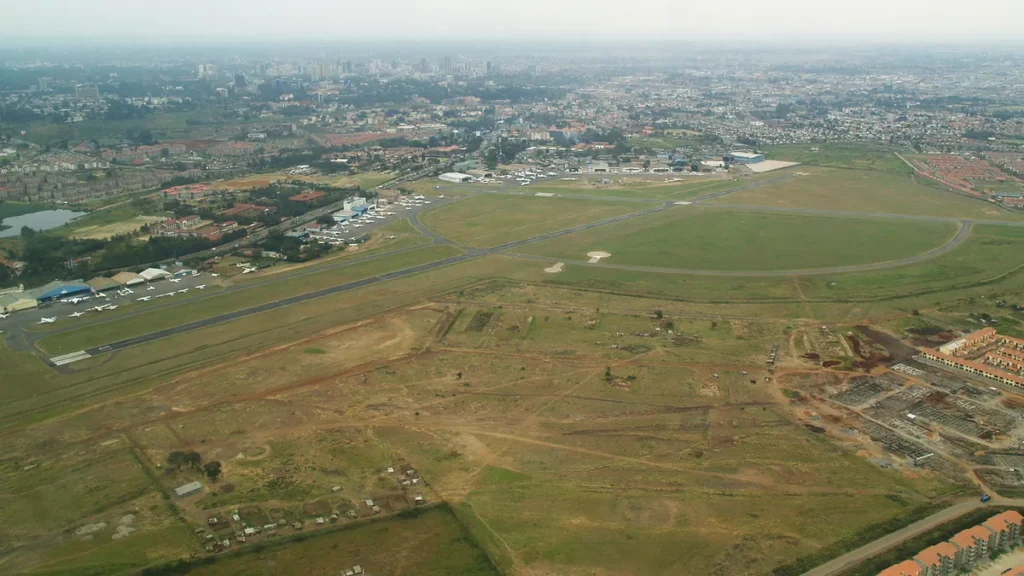
Wilson Airport (IATA: WIL / ICAO: HKNW) occupies a singular position in African aviation that is easy to underestimate from the outside. Situated in the Langata district of Nairobi, roughly six kilometres south of the city centre, it is not a gateway in the intercontinental sense — that role belongs to Jomo Kenyatta International Airport across town — but it is, by most measures, one of the busiest general aviation and light commercial airports on the African continent. For the safari industry, for humanitarian logistics, for regional charter operators, and for the small scheduled carriers that stitch together Kenya’s interior with its coast and its border towns, Wilson is the operational heartbeat.
The airport’s origins trace to the colonial era. It was established in the 1930s and named after Florence Kerr Wilson, a pioneering aviator and businesswoman who developed the site as a commercial aerodrome during a period when East Africa’s aviation infrastructure was being built almost entirely by private initiative. The Kenya Airports Authority (KAA), the state body that today owns and operates Wilson alongside Jomo Kenyatta and a network of upcountry airstrips, has managed the facility since the authority’s formation. Over the decades the airport has been incrementally upgraded — apron expansions, navigational aid improvements, and terminal refurbishments — though it has deliberately retained its character as a light-aviation hub rather than being redeveloped into a secondary full-service terminal.
That restraint is, in part, strategic. Kenya’s aviation masterplan has consistently positioned Jomo Kenyatta as the country’s primary international gateway and, increasingly, as a regional hub for East Africa. Wilson’s mandate is complementary: to absorb the high-frequency, short-sector traffic that would otherwise congest JKIA’s runways, and to serve as the base for Kenya’s substantial bush-flying and air-safari ecosystem. The result is an airport that handles an extraordinary diversity of aircraft types — from Cessna Caravans and Pilatus PC-12s to twin-engine turboprops and the occasional medevac jet — within a relatively compact footprint.
Country
Kenya is a East African republic with Nairobi as its capital and, according to recent census and projection data, a population now estimated in the range of 55–58 million people, making it one of the most populous nations in sub-Saharan Africa. It shares borders with Ethiopia, Somalia, Tanzania, Uganda, and South Sudan, and its Indian Ocean coastline anchors a significant tourism and trade economy. Nairobi functions as the de facto commercial and diplomatic capital of the East African Community region, hosting the headquarters of numerous UN agencies, multinational corporations, and regional financial institutions, a status that generates consistent demand for both business aviation and scheduled air services. → Read the Kenya expert briefing
Airlines Based Here
Wilson Airport is the operational home of Kenya’s bush-flying and light-scheduled carrier sector. Safarilink Aviation, one of the most recognised names in East African leisure aviation, is based at Wilson and operates a scheduled network connecting Nairobi to the country’s principal wildlife and coastal destinations using a fleet of Cessna Grand Caravans. Airkenya Express similarly uses Wilson as its hub, offering scheduled services on comparable routes with a mixed turboprop fleet. Both carriers are, in practical terms, as closely associated with Wilson as any flag carrier is with a major international hub. Fly-SAX (Safari Air Express) has also operated scheduled domestic services out of Wilson, serving northern and western Kenya routes that larger carriers do not cover commercially. Beyond these scheduled operators, Wilson hosts a dense ecosystem of charter companies — among them operators affiliated with major safari lodge groups — that use the airport as a base for bespoke itinerary flying. Visiting or transiting operators, including occasional medevac and humanitarian aircraft from organisations such as the African Medical and Research Foundation (AMREF), which has historically maintained a presence at Wilson, add further diversity to the traffic mix.
Flights and Destinations
The network radiating from Wilson Airport is almost entirely domestic and regional, shaped by Kenya’s tourism geography and the distribution of its national parks and reserves. Scheduled and charter services connect Nairobi to the Maasai Mara (via the Mara airstrips at Ol Kiombo, Keekorok, and others), Amboseli, Samburu, Lewa Downs, Nanyuki, Malindi, Lamu, Kisumu, Eldoret, and Lodwar in the far northwest. Across the border, regional charters and some scheduled services reach destinations in Tanzania — including Kilimanjaro-area airstrips and the Serengeti ecosystem — as well as Uganda and Rwanda on a charter or ad hoc basis. The airport does not handle intercontinental scheduled services; travellers arriving on international flights at Jomo Kenyatta who wish to continue to a bush destination typically transfer by road or by a short domestic hop. This feeder function makes Wilson an integral, if invisible, part of the international travel chain for a large share of Kenya’s inbound leisure visitors.
Facilities and Capacity
Wilson Airport operates with two paved runways — the primary runway designated 07/25 and a secondary crosswind strip — alongside grass areas that accommodate lighter piston aircraft. The terminal infrastructure is modest by international standards and is best described as a small hub: there is a main passenger terminal building handling departures and arrivals for scheduled services, a separate general aviation facility, and dedicated apron space for charter operators and based aircraft. Cargo handling at Wilson is limited relative to JKIA; the airport’s freight role is primarily the carriage of perishables, medical supplies, and safari equipment on light aircraft rather than containerised freight. According to publicly disclosed traffic data reviewed by the Kenya Airports Authority, Wilson consistently ranks among the highest-cycle-count airports in Kenya when measured by aircraft movements rather than passenger throughput — a reflection of the high frequency, short-duration nature of its operations. Planned and ongoing infrastructure works, as periodically announced by the KAA, have focused on apron resurfacing, terminal passenger-flow improvements, and navigational aid upgrades, though the scale and budget of specific programmes should be confirmed against current KAA disclosures.
Visa Regulations
Travellers arriving at Wilson Airport are subject to the same visa regime as those entering Kenya through any other port of entry. Kenya operates an electronic Travel Authorisation (eTA) system, introduced in 2023 and subsequently refined, which replaced the previous visa-on-arrival mechanism for most nationalities. Under the current framework, citizens of the United States, the United Kingdom, and European Union member states are generally required to obtain an eTA prior to travel, applied for online through the official government portal. Citizens of many African Union member states benefit from visa-free or simplified entry arrangements under regional integration agreements, though the specific terms vary by bilateral treaty and are subject to change. Travellers are strongly advised to verify their individual requirements well in advance of departure, as Kenya’s entry regulations have evolved rapidly in recent years and continue to be updated. → Check the live visa requirements lookup
Recent Developments
In the period leading into 2026, Wilson Airport has seen several notable operational and commercial developments. Safarilink Aviation has continued to expand its scheduled network, adding or restoring frequencies to high-demand Mara-area airstrips in response to recovering post-pandemic leisure tourism volumes, which industry estimates suggest have returned to and in some corridors exceeded pre-2020 levels. The Kenya Airports Authority has progressed apron rehabilitation works at Wilson as part of a broader capital programme across its managed airports, with the aim of improving aircraft parking capacity and reducing surface deterioration caused by the high movement count. Regulatory attention from the Kenya Civil Aviation Authority (KCAA) has focused on safety oversight of the general aviation sector, consistent with ICAO’s Universal Safety Oversight Audit Programme recommendations for the region. There has also been ongoing discussion within Kenya’s aviation policy community about the long-term land-use future of Wilson’s site, given its location within an increasingly urbanised corridor of Nairobi — a conversation that has not, as of early 2026, produced any firm redevelopment decisions.
News and Reports
Researchers and journalists tracking Wilson Airport’s operational developments should consult several authoritative sources. The Kenya Airports Authority publishes press releases and traffic summaries on its official website and is the primary source for infrastructure and concession announcements. The Kenya Civil Aviation Authority issues regulatory notices, airworthiness directives, and safety audit outcomes relevant to operators based at Wilson. At the continental level, IATA’s Africa and Middle East regional office produces periodic market analysis covering East African aviation trends, and ICAO’s Eastern and Southern African Regional Office (ESAF), based in Nairobi, publishes safety and infrastructure assessments. For commercial route and capacity data, aviation analytics platforms such as OAG and Cirium track scheduled seat capacity on Wilson’s served routes, and their published reports are frequently cited in trade journalism. Regional aviation trade publications including African Aviation and ch-aviation provide ongoing news coverage of carrier developments at the airport.