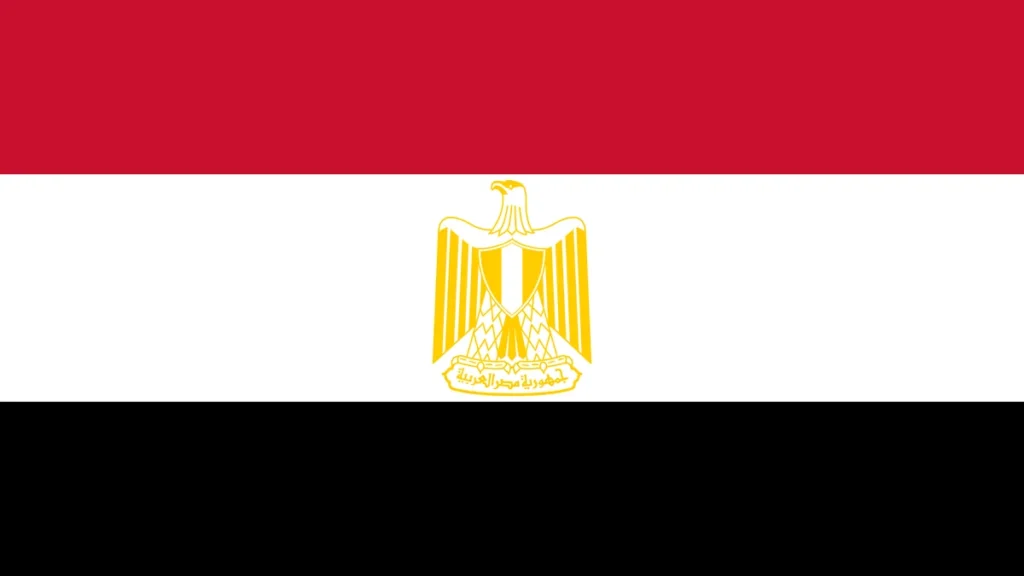
Egypt — Expert Briefing
Egypt at a glance: The Arab world’s most populous nation sits at the intersection of African, Middle Eastern, and Mediterranean geopolitics, making it one of the most consequential — and closely watched — states on the continent in 2026.
Overview
Capital: Cairo (with the new administrative capital, informally known as the New Administrative Capital, now hosting key government ministries and the presidential palace). Population: approximately 106–107 million (World Bank/UN 2025 estimates), making Egypt the most populous country in the Arab world and the third most populous in Africa. Official language: Arabic. Currency: Egyptian Pound (EGP). GDP per capita: broadly in the lower-middle-income band, estimated at roughly USD 3,500–4,000 at current exchange rates following significant currency depreciation, though purchasing-power-parity figures are considerably higher. Egypt matters in 2026 for two compounding reasons: it controls the Suez Canal, through which approximately 12–15 percent of global trade ordinarily passes, and it is navigating one of the most severe economic adjustment programmes in its modern history — the outcomes of which will shape regional stability from the Sahel to the Levant.
Government and Politics
Egypt is a presidential republic, though one in which executive power is heavily concentrated and institutional checks on the presidency are limited in practice. President Abdel Fattah el-Sisi, a former Field Marshal and head of the Egyptian Armed Forces who came to power following the July 2013 removal of President Mohamed Morsi, has governed since 2014. He was re-elected in December 2023 in a vote that returned him for a third term with an officially reported 89.6 percent of the vote; international observers and domestic civil society groups noted significant restrictions on political competition. A 2019 constitutional referendum extended the presidential term from four to six years and included provisions allowing Sisi to remain in office potentially until 2030, while also formalising a broader political role for the military. The legislature is bicameral: the House of Representatives (Majlis al-Nowwab), the lower house with 596 seats, and the Senate (Majlis al-Shuyukh), restored under the 2019 amendments. Both chambers are dominated by pro-government blocs; organised political opposition remains marginal. The next scheduled presidential election would fall in 2030 under current constitutional arrangements. Egypt’s political environment is characterised by tight restrictions on civil society, the press, and independent political activity, a situation documented consistently by Freedom House, Reporters Without Borders, and the Committee to Protect Journalists.
Economy
Egypt’s GDP is estimated at approximately USD 350–380 billion in nominal terms (2024–25 figures, subject to exchange-rate volatility), placing it among Africa’s three largest economies alongside Nigeria and South Africa. The economy rests on several structural pillars: Suez Canal revenues (which generate USD 8–10 billion annually in normal conditions, though receipts fell sharply in 2024 due to Houthi attacks on Red Sea shipping diverting traffic around the Cape of Good Hope), remittances from Egyptians abroad (consistently one of the country’s top foreign-exchange earners, exceeding USD 20 billion annually), tourism, hydrocarbons — particularly natural gas from the East Mediterranean’s Zohr field — and a large but productivity-constrained agricultural sector. Key exports include natural gas, refined petroleum products, textiles, and agricultural commodities. The single most consequential economic story of the past 24 months has been Egypt’s managed currency devaluation and IMF programme. In March 2024, Egypt allowed the pound to depreciate sharply — losing roughly 35–40 percent of its value against the dollar in a matter of days — as part of a renegotiated and expanded IMF Extended Fund Facility, ultimately valued at approximately USD 8 billion. This was accompanied by a landmark USD 35 billion investment agreement with the UAE’s ADQ sovereign wealth fund centred on the Ras el-Hekma coastal development project on the Mediterranean. Together, these moves provided critical foreign-exchange relief but also intensified inflationary pressure on ordinary Egyptians. Public debt remains elevated, with external debt servicing consuming a substantial share of government revenues, and inflation — though easing from its 2023 peak above 35 percent — remains a defining hardship for middle- and lower-income households.
Demographics and Society
Egypt’s population is ethnically relatively homogeneous: the vast majority identify as Egyptian Arab, with smaller Nubian, Amazigh (Berber), and Bedouin communities. Arabic is the sole official language, with Egyptian Arabic serving as the dominant spoken vernacular and a widely understood lingua franca across the Arab world through media and popular culture. Islam is the religion of approximately 90 percent of the population, predominantly Sunni; Coptic Christians constitute the largest religious minority, estimated at 8–10 percent, representing one of the oldest Christian communities in the world. Urbanisation is advanced and accelerating: Cairo and its greater metropolitan area is home to an estimated 20–22 million people, one of Africa’s and the world’s largest urban agglomerations, while Alexandria, the Nile Delta cities, and the Suez Canal corridor cities (Port Said, Ismailia, Suez) are significant secondary centres. Egypt has a young population — the median age is approximately 25 — which creates both a potential demographic dividend and sustained pressure on employment, housing, and public services. The defining social trend of this moment is the cost-of-living crisis: inflation has eroded real wages across formal and informal sectors alike, driving a measurable increase in food insecurity among urban lower-middle-class households that had previously considered themselves economically stable. This is reshaping consumption patterns, migration decisions, and — carefully expressed in private — public sentiment toward the government’s economic management.
Key Issues Right Now
The Gaza conflict and regional security exposure. Egypt’s border with the Gaza Strip at Rafah has placed Cairo at the centre of one of the most acute humanitarian and diplomatic crises in the region. Egypt has played a central mediation role in ceasefire negotiations between Israel and Hamas, working alongside Qatar and the United States, while simultaneously managing the domestic political sensitivity of the conflict — Egyptian public opinion is strongly sympathetic to Palestinians — and resisting intense international pressure to absorb large numbers of Palestinian refugees into Sinai, a move Cairo has consistently and firmly rejected on both security and sovereignty grounds. The conflict has also suppressed tourism revenues and contributed to the Red Sea shipping disruption that reduced Suez Canal income. Egypt’s ability to manage this exposure without being drawn into direct confrontation while maintaining its strategic relationships with both Washington and Gulf partners is the most delicate diplomatic balancing act the Sisi government has faced.
The Grand Ethiopian Renaissance Dam (GERD) and Nile water security. The dispute over Ethiopia’s filling and operation of the GERD on the Blue Nile remains unresolved and represents an existential concern for Egyptian policymakers. Egypt depends on the Nile for over 90 percent of its freshwater supply, and successive rounds of African Union-mediated negotiations have failed to produce a binding legal agreement on water-sharing or dam operation rules. Ethiopia completed successive filling stages of the dam’s reservoir despite Egyptian and Sudanese objections. With Egypt’s population continuing to grow and per-capita water availability already below the international water-poverty threshold, this is not a background diplomatic irritant but a long-term structural threat to food production, agricultural livelihoods, and national security that shapes Egypt’s posture across the Horn of Africa.
Economic reform sustainability and social contract pressures. The IMF-backed adjustment programme has stabilised Egypt’s macroeconomic position in the short term, but the social costs are substantial and the reform agenda — including reducing the footprint of military-linked enterprises in the civilian economy, improving the business environment for private investment, and cutting energy subsidies — faces significant structural resistance. Foreign direct investment outside the hydrocarbons sector and the Ras el-Hekma project remains modest. Youth unemployment, particularly among university graduates, is a persistent structural problem. The government’s capacity to maintain public acquiescence to austerity while delivering visible improvements in living standards will be the central domestic political test of the next two to three years.
Travel and Connectivity
Egypt’s principal international gateway is Cairo International Airport, one of Africa’s busiest by passenger volume, with connections to Europe, the Gulf, sub-Saharan Africa, and North America. Hurghada International Airport and Sharm el-Sheikh International Airport serve the substantial Red Sea resort tourism market, with direct charter and scheduled services from Europe. Borg el-Arab Airport serves Alexandria. Tourism is a cornerstone of the economy: Egypt received approximately 14–15 million international visitors in 2023, drawn primarily by the Nile Valley antiquities (Luxor, Aswan, Abu Simbel), the Giza pyramids, Red Sea diving and beach resorts, and increasingly the new Grand Egyptian Museum adjacent to Giza, which opened progressively from 2023. The country’s tourism profile spans high-end cultural travellers, European package holidaymakers, and a growing Gulf Arab leisure segment. Internet penetration stands at approximately 72–75 percent of the population (ITU/DataReportal estimates), with mobile internet the dominant mode of access. Mobile money adoption is growing but lags behind East African leaders; the Central Bank of Egypt has pushed financial inclusion through the Meeza national payment card scheme and InstaPay, a real-time payment platform launched in 2022 that has gained meaningful uptake among urban users.
Further Research
Analysts and researchers seeking to deepen their understanding of Egypt should consult the following institutions and resources. The Central Bank of Egypt publishes monetary policy statements, inflation data, foreign-exchange reserve figures, and balance-of-payments statistics, and is the authoritative source for macroeconomic and financial data. The World Bank Egypt country page provides regularly updated economic monitoring reports, poverty assessments, and project documentation, including analysis of the ongoing IMF programme context. The International Monetary Fund Egypt page contains Article IV consultation reports and programme review documents that offer the most detailed publicly available assessment of Egypt’s fiscal and external position. The Africa Center for Strategic Studies (Washington DC) publishes briefings on Egyptian security dynamics, including Sinai, the GERD dispute, and Egypt’s role in Sahel and Horn of Africa security architecture. The Carnegie Middle East Center (Beirut) produces rigorous political economy and governance analysis on Egypt, including work on civil-military relations and the political constraints on economic reform. Finally, the Egyptian Center for Economic Studies (Cairo) offers locally grounded economic research, though readers should note that independent think-tank space in Egypt operates within political constraints that may shape publication choices.