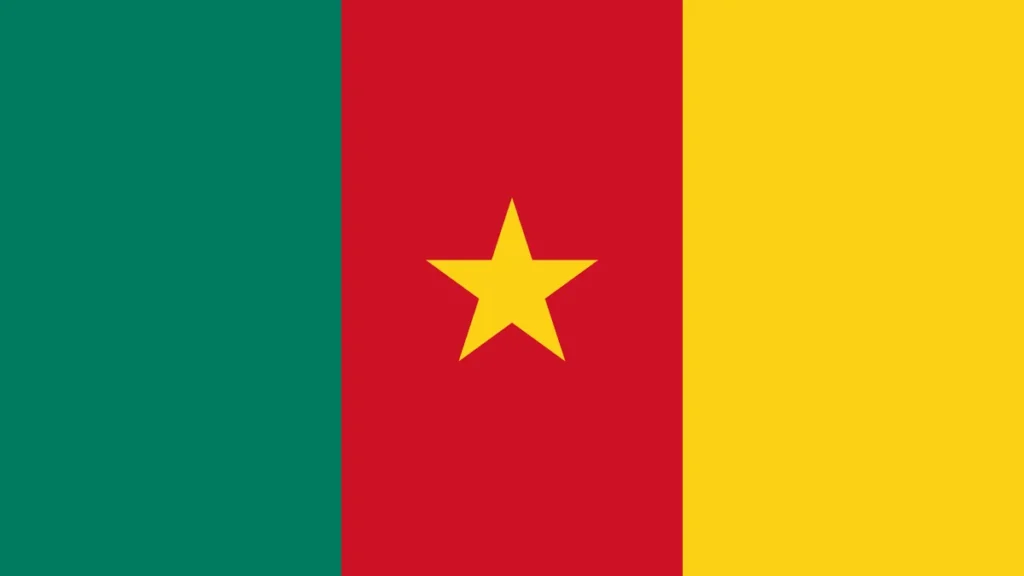
Cameroon — Expert Briefing
Cameroon at a glance: A resource-rich Central African state navigating a protracted internal conflict, a generational leadership question, and growing strategic interest from external powers — making it one of the continent’s most consequential and underreported stories of 2026.
Overview
Capital: Yaoundé (seat of government); Douala is the economic capital and largest city. Population: approximately 29.5 million (World Bank, 2024 estimate), with projections placing the country above 31 million by 2027. Official languages: French and English — a bilingual designation that carries profound political weight given the ongoing Anglophone crisis. Currency: Central African CFA franc (XAF), pegged to the euro at a fixed rate managed through the Bank of Central African States (BEAC). GDP per capita: approximately USD 1,600–1,700 (World Bank Atlas method, 2023–24 estimate), placing Cameroon in the lower-middle-income band by African Development Bank classifications. Cameroon matters in 2026 for two intersecting reasons: it sits at the geographic and political hinge between West and Central Africa, sharing borders with Nigeria, Chad, the Central African Republic, Gabon, Equatorial Guinea, and the Republic of Congo, giving it outsized regional influence. At the same time, the country is approaching an inflection point — an ageing president, unresolved separatist conflict, and a young population demanding economic transformation — that will shape the trajectory of Central Africa for the decade ahead.
Government and Politics
Cameroon is a presidential republic. Executive power is concentrated in the presidency to a degree that most analysts describe as hyperpresidentialism: the head of state appoints the prime minister, controls the armed forces, and can dissolve the National Assembly. Paul Biya, born in 1933, has served as President of the Republic since 1982, making him one of the longest-serving heads of state in the world; he is widely regarded as governing through a system of managed patronage and deliberate institutional ambiguity. The bicameral Parliament comprises the National Assembly (180 seats) and the Senate (100 seats, of which 30 are presidential appointees). The ruling Cameroon People’s Democratic Movement (CPDM) holds commanding majorities in both chambers. Presidential and legislative elections were last held in 2018 and 2020 respectively; the next presidential election is constitutionally due in 2025, though as of mid-2026 no credible electoral calendar has been confirmed and the political environment surrounding succession remains opaque. A 2008 constitutional amendment removed presidential term limits, entrenching Biya’s hold on power. Decentralisation legislation passed in 2019 — creating elected regional councils, including in the two Anglophone regions — has been implemented unevenly and is widely viewed by Anglophone civil society as insufficient to address underlying grievances. The question of presidential succession, whether managed through elite negotiation or contested through elections, is the defining political variable of the current moment.
Economy
Cameroon’s GDP stood at approximately USD 47–49 billion in current prices (IMF World Economic Outlook, 2024), making it the largest economy in the CEMAC (Central African Economic and Monetary Community) zone, ahead of the Republic of Congo and Gabon. The economy rests on four primary pillars: hydrocarbons (crude oil and natural gas, though production has been declining since the mid-2000s), agriculture (cocoa, coffee, cotton, palm oil, and rubber — Cameroon is among Africa’s top cocoa producers), timber and forestry, and services concentrated in Douala’s trading and financial sector. Key exports are crude oil, cocoa beans, refined petroleum products, timber, and aluminium smelted at the Alucam facility in Édéa. The CFA franc’s euro peg provides monetary stability but limits exchange-rate flexibility, a persistent structural constraint on export competitiveness. Public debt has risen to approximately 45–48 percent of GDP, elevated by infrastructure borrowing — notably the Lom Pangar hydroelectric dam and Kribi deep-water port — and by the fiscal costs of the security operations in the Northwest, Southwest, and Far North regions. The single most consequential economic story of the past 24 months has been the accelerating development of the Cameroon–Nigeria gas pipeline corridor and associated LNG discussions: with European buyers actively diversifying away from Russian supply, Cameroon’s offshore gas reserves in the Rio del Rey basin have attracted renewed commercial and diplomatic attention, positioning the country as a potential mid-tier LNG supplier to European markets within the next decade — a prospect that has drawn investment interest from TotalEnergies, Glencore, and several Gulf sovereign wealth vehicles, while simultaneously raising governance and revenue-management questions that civil society groups and the IMF have flagged publicly.
Demographics and Society
Cameroon’s population is exceptionally young: the median age is approximately 18 years, and roughly 43 percent of the population is under 15. The country is often described as “Africa in miniature” — a phrase attributed to its extraordinary ethnic and ecological diversity. There are an estimated 250–280 distinct ethnic and linguistic groups; the largest include the Bamileke and Bamoun in the West, the Beti cluster (Bulu, Ewondo, Fang) in the Centre and South, the Fulani (Peul) across the North and Adamawa regions, and the Kanuri and Arab Choa communities in the Far North. Religiously, the country is roughly 70 percent Christian (predominantly Catholic and Protestant, with significant Pentecostal growth), approximately 20 percent Muslim — concentrated in the northern regions — and the remainder practising indigenous traditions. The Anglophone minority, concentrated in the Northwest and Southwest regions, constitutes approximately 20 percent of the national population and has been at the centre of the country’s most acute political crisis since 2016. Urbanisation is advancing rapidly: Douala alone is estimated to house 3.5–4 million people, and secondary cities including Bafoussam, Garoua, and Bamenda are growing quickly. The defining social trend of the current period is the phenomenon Cameroonian sociologists and journalists have termed “la galère” — a generalised condition of educated urban youth unable to access formal employment, driving both internal migration toward Douala and significant emigration to France, Canada, and Gulf states. Youth unemployment in urban areas is estimated at above 35 percent by the International Labour Organization, and the brain drain of university graduates is a subject of sustained policy concern.
Key Issues Right Now
The Anglophone Crisis. Now entering its ninth year, the armed conflict between Cameroonian security forces and Anglophone separatist groups — who seek an independent state they call “Ambazonia” — remains unresolved and deeply entrenched. The Northwest and Southwest regions have experienced sustained violence, school boycotts enforced by armed factions, mass displacement (an estimated 700,000 internally displaced persons according to UNHCR figures), and significant civilian casualties. Peace talks brokered by Switzerland and facilitated by the Centre for Humanitarian Dialogue have stalled repeatedly; the separatist movement itself is fragmented into competing factions with divergent negotiating positions. The humanitarian situation in both regions deteriorated further in 2024–25 following a series of attacks on civilian infrastructure. For investors and analysts, the conflict represents a direct constraint on economic activity in the country’s Anglophone agricultural and commercial zones, and its resolution — or escalation — will be a primary variable in any medium-term country risk assessment.
Boko Haram and Far North insecurity. The Far North region continues to face persistent attacks from Boko Haram and its ISWAP (Islamic State West Africa Province) splinter, operating across the Lake Chad Basin in coordination with cells active in northeastern Nigeria and western Chad. Cameroon’s Multinational Joint Task Force (MNJTF) participation has helped contain — but not eliminate — the threat. Attacks on villages, abductions, and the disruption of agricultural activity remain regular occurrences, and the region hosts one of the continent’s most acute humanitarian situations, with food insecurity levels classified as Crisis or Emergency (IPC Phase 3–4) across significant portions of the population. The Far North crisis receives considerably less international media attention than the Anglophone conflict but imposes comparable humanitarian costs.
The succession question and institutional fragility. Paul Biya’s age and increasingly limited public visibility — he has spent extended periods abroad, primarily in Geneva, and makes rare public appearances — have elevated succession to the top of the analytical agenda for regional specialists, diplomats, and investors alike. Cameroon has no established, transparent succession mechanism beyond the constitutional provision that the President of the Senate assumes power on an interim basis. The CPDM’s internal dynamics are opaque, and no successor has been publicly positioned. The risk scenario most frequently cited by analysts is not a coup but a period of elite competition and institutional paralysis in the transition period, with potential spillover effects on CEMAC monetary arrangements and regional security partnerships. This is the single issue that most concentrates the attention of Cameroon’s diplomatic community in 2026.
Travel and Connectivity
Cameroon’s principal international gateway is Douala International Airport (DLA), which handles the majority of commercial traffic and connects to Paris (Air France), Istanbul (Turkish Airlines), Addis Ababa (Ethiopian Airlines), Casablanca (Royal Air Maroc), and several West and Central African hubs. Yaoundé Nsimalen International Airport (NSI) serves as the secondary international airport and is the preferred entry point for government and diplomatic travel. A third airport at Garoua serves the north. Principal cities beyond Douala and Yaoundé include Bafoussam (West Region commercial hub), Bamenda (Northwest Region, significantly affected by the Anglophone conflict and not recommended for non-essential travel), Garoua and Maroua in the north, and the emerging port city of Kribi in the South. Tourism remains underdeveloped relative to the country’s natural assets — which include Mount Cameroon (the highest peak in West and Central Africa), Waza National Park, the Dja Faunal Reserve (a UNESCO World Heritage Site), and the beaches of Limbe — partly due to security concerns and partly due to limited hospitality infrastructure. Internet penetration stands at approximately 35–40 percent of the population (ITU, 2023–24), with significant urban-rural disparity; mobile internet via 4G networks in Douala and Yaoundé is broadly functional. Mobile money adoption has grown substantially: MTN Mobile Money and Orange Money are the dominant platforms, and mobile financial services are increasingly central to informal trade and remittance flows, with the BEAC and COBAC (the regional banking regulator) actively developing a regulatory framework for digital financial services across the CEMAC zone.
Further Research
Analysts, journalists, and investors seeking to deepen their understanding of Cameroon should consult the following institutions and resources. The Bank of Central African States (BEAC) publishes monetary and macroeconomic data for the CEMAC zone, including Cameroon-specific fiscal and balance-of-payments statistics. The Cameroon National Institute of Statistics (INS) — Institut National de la Statistique — is the primary source for demographic, poverty, and household survey data, including the Cameroon Household Survey (ECAM series). The Africa Center for Strategic Studies (National Defense University, Washington DC) produces regular analytical briefs on the Lake Chad Basin security situation and the Anglophone crisis that are among the most rigorous publicly available assessments. The World Bank Cameroon country page provides access to the most recent Country Economic Memoranda, poverty assessments, and project documentation, including evaluations of the Kribi port and energy sector investments. The International Crisis Group has published substantive reports on both the Anglophone conflict and the Far North insurgency and maintains ongoing monitoring of both situations. Finally, the Centre for Humanitarian Dialogue (HD) in Geneva, which has been directly involved in facilitation efforts related to the Anglophone crisis, publishes periodic process updates and analytical context that are essential reading for anyone tracking the peace process.