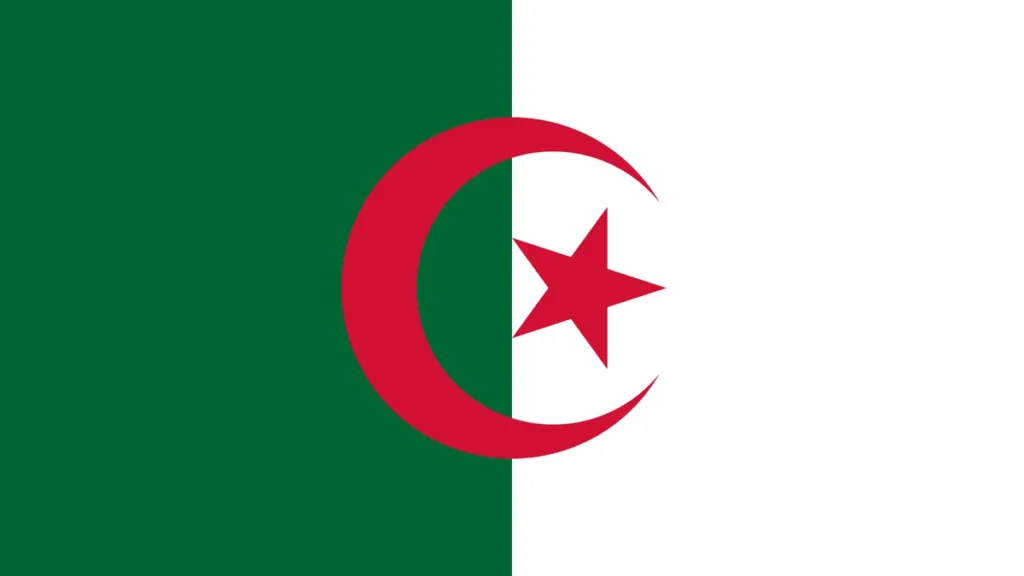
Algeria — Expert Briefing
Algeria at a glance: Africa’s largest country by land area is navigating a delicate transition from hydrocarbon dependency while asserting itself as an indispensable regional power across the Sahel and Mediterranean.
Overview
Capital: Algiers (El Djazaïr). Population: approximately 46.2 million (World Bank, 2024 estimate), making Algeria the tenth most populous country in Africa. Official languages: Arabic and Tamazight (Berber), with French retaining significant administrative and commercial usage. Currency: Algerian dinar (DZD). GDP per capita: broadly in the lower-middle-income band, estimated at around USD 4,200–4,500 at current prices, though purchasing power parity figures are considerably higher. Algeria matters in 2026 for two interconnected reasons: it sits at the intersection of sub-Saharan instability and European energy anxiety, making it simultaneously a critical gas supplier to southern Europe and the de facto security anchor for a Sahel region that has shed French military influence at speed. Its choices on both fronts carry consequences well beyond its borders.
Government and Politics
Algeria is a presidential republic, formally designated as a People’s Democratic Republic under its constitution. Executive power is concentrated in the presidency to a degree that places it among the more centralised systems in North Africa. President Abdelmadjid Tebboune, re-elected in September 2024 with an officially reported 94.65 percent of the vote in a contest that drew significant abstention and international scepticism, serves as head of state and commander-in-chief. Tebboune, a former prime minister who first won the presidency in December 2019 following the forced resignation of Abdelaziz Bouteflika amid the Hirak protest movement, has positioned himself as a modernising nationalist while maintaining the primacy of the military establishment — the so-called pouvoir — in national decision-making. The legislature is bicameral: the People’s National Assembly (lower house, 407 seats) and the Council of the Nation (upper house, 144 seats, one-third appointed by the president). Legislative elections were held in June 2021; the next parliamentary cycle is due in 2026, and the government has signalled interest in electoral code revisions ahead of that vote. A revised constitution was approved by referendum in November 2020, introducing provisions allowing the deployment of Algerian military forces abroad — a significant doctrinal shift — and formally recognising Amazigh identity, though critics argued the document consolidated presidential authority rather than broadening democratic participation. The Hirak movement, which mobilised millions between 2019 and 2021, has been effectively suppressed through a combination of selective prosecution, media restrictions, and the co-optation of some demands into constitutional language.
Economy
Algeria’s GDP is estimated at approximately USD 230–240 billion in nominal terms (2024), placing it among the five largest economies in Africa. The economy remains structurally dominated by hydrocarbons: oil and natural gas account for roughly 20 percent of GDP, over 85 percent of export revenues, and approximately 40 percent of government budget receipts, according to IMF Article IV assessments. The state energy company Sonatrach is the single most important economic actor in the country. Non-hydrocarbon sectors — agriculture (cereals, dates, citrus), construction, and a nascent manufacturing base — have grown in relative terms but remain constrained by import dependency, bureaucratic barriers to private enterprise, and a banking sector that channels credit predominantly toward state-owned entities. Algeria’s foreign exchange reserves, which were drawn down sharply during the 2014–2016 oil price collapse, have recovered substantially on the back of elevated post-2022 energy prices, reaching an estimated USD 69–72 billion by late 2024. External debt remains comparatively low as a share of GDP, a point of deliberate government policy. The most consequential economic story of the past 24 months has been Algeria’s emergence as a pivotal gas supplier to Europe following Russia’s full-scale invasion of Ukraine. Sonatrach has signed expanded long-term supply agreements with Italy’s ENI and Spain’s Naturgy, and the Trans-Mediterranean Pipeline (Transmed) and Medgaz pipeline systems have operated at or near capacity. This has generated a significant revenue windfall and given Algiers unusual diplomatic leverage with European partners — leverage it has deployed with notable confidence in disputes over the Western Sahara question and migration management. The government has used a portion of these revenues to expand social subsidies and public sector wages, measures that ease domestic pressure but deepen structural dependency on commodity cycles.
Demographics and Society
Algeria’s population is young — the median age is approximately 29 years — and urbanising rapidly, with around 75 percent of the population now living in urban areas, concentrated heavily along the northern coastal strip. The interior and Saharan south are sparsely populated relative to their vast land area. Ethnically and linguistically, the population is predominantly Arab-Berber; the distinction is more cultural and political than strictly genealogical, as centuries of intermarriage have blurred clear boundaries. Amazigh (Berber) communities — including Kabyle, Chaoui, Mozabite, and Tuareg groups — constitute a significant minority, with Kabyle identity in the Kabylie region carrying particular political salience. Islam (Sunni Maliki tradition) is the religion of the overwhelming majority, and the state constitution designates Islam as the state religion. The single most defining social trend of the current period is the phenomenon of harga — clandestine emigration, literally “burning” one’s documents — which has accelerated among young Algerians despite the country’s relative economic stability compared to its neighbours. Youth unemployment, estimated at 25–30 percent in some surveys, combined with restricted political expression, limited social mobility, and the pull of diaspora networks in France, Spain, and Italy, drives tens of thousands to attempt irregular crossings annually. The government treats the subject with considerable sensitivity, framing emigration as a security and sovereignty issue rather than a development failure, but the scale of the phenomenon is a structural indicator of unmet expectations among a generation that came of age after Bouteflika and during Hirak.
Key Issues Right Now
Sahel security realignment. The withdrawal of French forces from Mali, Burkina Faso, and Niger — and the subsequent pivot of those juntas toward Russia’s Wagner Group (now rebranded under various structures following Prigozhin’s death) — has fundamentally altered the security architecture on Algeria’s southern border. Algiers has long opposed direct military intervention in the Sahel, preferring dialogue-based approaches and hosting peace processes such as the 2015 Algiers Accord for Mali. That accord has effectively collapsed, and Algeria now faces the uncomfortable reality of jihadist groups operating with greater freedom in a belt stretching from northern Mali into Niger, directly adjacent to its porous southern frontier. The Algerian army has intensified border surveillance and conducted operations against smuggling and militant networks, but the strategic question of how to manage a neighbourhood where its preferred tools — mediation and non-interference — have lost traction remains unresolved and urgent.
The Western Sahara fault line. Algeria’s relationship with Morocco has deteriorated to its lowest point in decades, with diplomatic ties severed in August 2021 and showing no sign of restoration. The core dispute is Western Sahara: Algeria is the principal backer of the Polisario Front and hosts the Sahrawi refugee population at Tindouf camps. Morocco’s autonomy proposal for the territory has gained endorsements from the United States, France, Spain, and Germany in recent years, a diplomatic trend that Algiers views as a direct strategic encirclement. The closure of the shared border (shut since 1994) and the suspension of the Maghreb-Europe Gas Pipeline through Morocco have hardened economic as well as political separation. This bilateral freeze has effectively paralysed the Arab Maghreb Union and complicates any coherent North African response to shared challenges including climate, migration, and trade integration.
Economic diversification and the subsidy dilemma. The government’s National Economic and Social Development Plan has set ambitious targets for expanding non-hydrocarbon exports, developing a domestic pharmaceutical and automotive sector, and attracting foreign direct investment into agriculture and renewable energy. Progress has been real but uneven. Algeria has significant solar and wind potential — the Tamanrasset and Adrar regions rank among the highest solar irradiance zones globally — and has announced large-scale renewable projects under the Algerian Energy Company framework. However, a deeply embedded subsidy system (covering fuel, food, utilities, and housing) consumes a substantial share of public expenditure, creates price distortions that undermine private sector competitiveness, and has proven politically impossible to dismantle at scale. Reforming subsidies without triggering the kind of social unrest that toppled Bouteflika remains the central domestic economic challenge for the Tebboune administration.
Travel and Connectivity
Algeria’s principal international gateway is Houari Boumediene International Airport in Algiers, which handles the large majority of international traffic and has undergone capacity expansion works in recent years. Constantine Mohamed Boudiaf International Airport and Oran Ahmed Ben Bella International Airport serve as secondary hubs with regional and European connections. Principal cities beyond Algiers include Oran (the commercial capital of the west), Constantine (the cultural centre of the east), Annaba, and Tlemcen. Tourism has historically been underdeveloped relative to Algeria’s extraordinary assets — Roman ruins at Timgad and Djémila, the Saharan landscapes of the Hoggar and Tassili n’Ajjer (a UNESCO World Heritage Site), and a rich Andalusian architectural heritage in cities like Tlemcen — due to visa restrictions, limited hospitality infrastructure, and the legacy of the 1990s civil conflict. The government has made tourism promotion a stated priority, easing visa procedures for a growing list of nationalities and investing in desert tourism circuits, but the sector remains nascent. Internet penetration stands at approximately 70–72 percent of the population, with mobile broadband the dominant mode of access. Mobile money adoption is low by regional standards: Algeria’s banking sector is heavily state-dominated and cash-reliant, and mobile financial services have not achieved the penetration seen in West or East Africa, though the government has pushed digital payment initiatives through the national postal and savings network (Algérie Poste) with some uptake in urban areas.
Further Research
Analysts and researchers seeking to deepen their understanding of Algeria should consult the following institutions and resources. The Bank of Algeria (Banque d’Algérie) publishes quarterly monetary and financial stability reports, balance of payments data, and annual reports that are the authoritative source for macroeconomic and banking sector figures. The National Office of Statistics (Office National des Statistiques, ONS) is the primary source for demographic, labour market, and trade data, and publishes in both Arabic and French. The International Monetary Fund’s Algeria country page provides Article IV consultation reports, staff country reports, and selected issues papers that offer rigorous independent assessment of fiscal and structural conditions. The Africa Center for Strategic Studies (a US Department of Defense academic institution) produces regular analytical pieces on Sahel security dynamics and Algeria’s role, freely available through its publications portal. The International Crisis Group’s North Africa and Sahel programmes offer some of the most granular and regularly updated conflict and political risk analysis covering Algeria’s neighbourhood. Finally, the Middle East and North Africa programme at Chatham House publishes research on Algerian political economy, regional diplomacy, and energy policy that is particularly useful for analysts tracking the country’s evolving relationship with European partners.