Bestfly Cape Verde
Bestfly Cape Verde
About
Bestfly Cape Verde occupies a distinctive position in West African aviation: a scheduled carrier rooted in the Cabo Verdean archipelago, operating under ICAO code BSF and registered in one of the Atlantic’s most strategically positioned island nations. In a regional landscape dominated by larger flag carriers and pan-African low-cost challengers, Bestfly Cape Verde represents the kind of nimble, island-focused operator that keeps remote communities connected and opens thin-margin routes that bigger airlines routinely overlook.
The airline traces its origins to the broader Bestfly group, which established an operational footprint in Cabo Verde as demand for inter-island and international connectivity grew alongside the country’s expanding tourism sector. Cabo Verde’s geographic reality — ten islands spread across more than 4,000 square kilometres of Atlantic Ocean — creates a structural need for air services that road or sea transport simply cannot satisfy at competitive journey times, and Bestfly Cape Verde was positioned to address precisely that gap.
Ownership of the carrier sits within a private framework, distinguishing it from the state-backed model historically associated with TACV Cabo Verde Airlines, the archipelago’s legacy flag carrier. This private orientation has allowed Bestfly Cape Verde to pursue commercial decisions with a degree of agility uncommon among its regional peers, though the airline, like all operators in the Cabo Verdean market, functions within a regulatory environment shaped by the Agência de Aviação Civil (AAC), the national civil aviation authority.
In recent years the carrier has undertaken quiet but meaningful corporate consolidation, refining its scheduled operations and sharpening its focus on routes where it can sustain a viable load factor. Industry observers note that the airline has benefited from the broader recovery in Cabo Verdean inbound tourism following the disruptions of the early 2020s, a recovery that has injected renewed commercial logic into inter-island and feeder services connecting the archipelago’s main gateways.
Bases and Hubs
Praia — Nelson Mandela International Airport (RAI): The airline’s principal hub, located on Santiago island, Cabo Verde’s most populous island and the seat of the national capital; RAI serves as the primary gateway for government, business, and diaspora traffic and anchors Bestfly Cape Verde’s scheduled network.
Sal — Amílcar Cabral International Airport (SID): A critical secondary focus city given Sal’s role as the archipelago’s leading sun-and-sea tourism destination, with SID handling a significant share of charter and scheduled international arrivals that feed onward inter-island demand.
São Vicente — Cesária Évora Airport (VXE): Named after Cabo Verde’s most celebrated musical export, VXE serves the culturally significant island of São Vicente and the city of Mindelo, representing an important node for both domestic connectivity and regional tourism.
Fleet
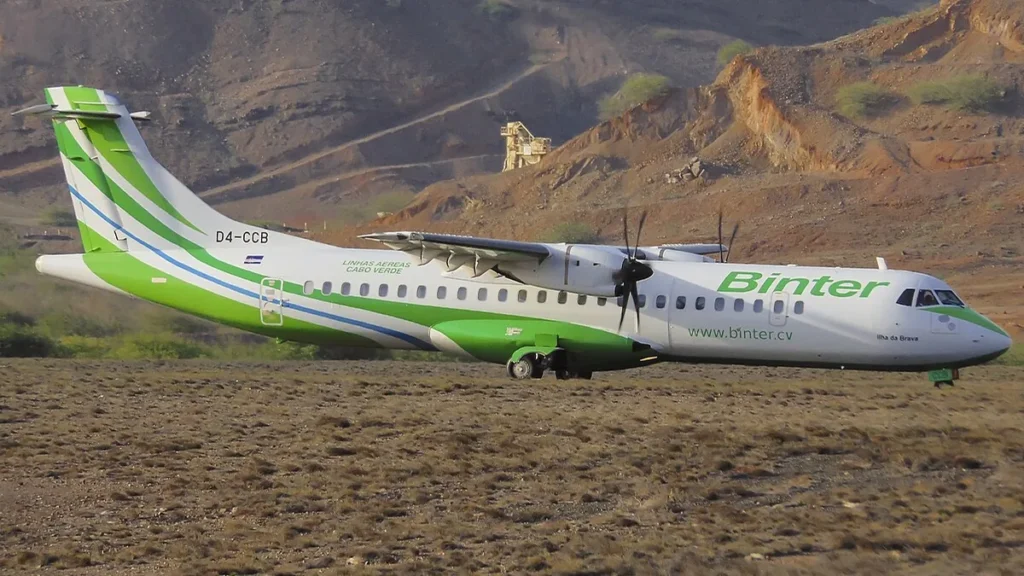
According to publicly disclosed fleet data and industry tracking sources, Bestfly Cape Verde has operated aircraft suited to the short-sector, island-hopping profile of its network. The carrier has utilised turboprop and regional jet equipment consistent with the operational demands of Cabo Verdean inter-island routes, where runway lengths, weight restrictions, and sector distances of under 200 nautical miles shape aircraft selection decisively. The Embraer family of regional jets has featured in the operator’s history, offering a balance of passenger capacity and range appropriate for thin island routes. Any fleet renewal or expansion activity as of 2026 should be verified against the AAC’s current register and the airline’s own commercial communications, as fleet composition in this segment of the market can shift with leasing arrangements on relatively short cycles.
Destinations
The network shape of Bestfly Cape Verde is best understood as concentric: a tight core of intra-archipelago services connecting the main inhabited islands, surrounded by a selective set of regional and international routes that reflect both commercial opportunity and the realities of Cabo Verde’s Atlantic geography. Inter-island services linking Praia (RAI), Sal (SID), São Vicente (VXE), and other island airports form the operational backbone, providing essential connectivity for residents, government workers, and tourists moving between islands. On the international tier, the carrier has pursued routes connecting Cabo Verde to West African mainland destinations and to European markets with significant Cabo Verdean diaspora communities, particularly in Portugal and other Lusophone-linked hubs. Industry estimates suggest that leisure-oriented routes, particularly those feeding Sal and Boa Vista, represent a meaningful share of seat capacity during peak Northern Hemisphere winter and spring seasons.
Codeshare and Alliance
Bestfly Cape Verde is not a member of any of the three major global airline alliances — Star Alliance, SkyTeam, or oneworld — a position consistent with its scale and market focus. The carrier has operated independently without a widely publicised codeshare framework, though commercial interline or ground-handling arrangements with larger carriers serving Cabo Verde’s international gateways are a practical feature of the market. Journalists and investors researching partnership structures should seek current confirmation directly from the airline or from AAC filings, as commercial agreements in this segment are subject to change and are not always publicly announced in advance.
Notable Incidents
No major safety incidents involving Bestfly Cape Verde appear on the airline’s publicly available safety record in recent years. The carrier operates within the regulatory oversight of the Agência de Aviação Civil and, for international operations, is subject to the safety assessment frameworks applied by destination-state authorities. As with any operator, routine occurrences are reported through standard ICAO-aligned mechanisms, but no significant event has entered the public domain in a manner that would warrant specific notation here. Readers requiring a comprehensive safety audit should consult the Aviation Safety Network database and AAC official records.
Financial and Operational Situation
Bestfly Cape Verde’s financial profile reflects the structural characteristics of small-island aviation: high operating costs per seat driven by short sectors, fuel logistics, and the absence of economies of scale available to continental carriers. The airline operates in a market where load factor management is critical, given that inter-island routes can experience sharp seasonal swings tied to tourism flows and diaspora travel patterns. As a privately held operator, the carrier does not publish audited financial statements in the public domain, and industry estimates of profitability should be treated with appropriate caution. The broader Cabo Verdean aviation market has benefited from sustained tourism growth, which has improved the commercial environment for all scheduled operators in the archipelago. Whether Bestfly Cape Verde has translated that tailwind into consistent operating surpluses is not confirmed by publicly available data as of early 2026.
Recent Developments
Over the 24 months to early 2026, Bestfly Cape Verde has continued to navigate the post-pandemic normalisation of Cabo Verdean air travel demand, a period characterised by strong inbound tourism recovery and renewed interest from European leisure carriers in the archipelago’s sun destinations. The carrier has maintained its scheduled inter-island operations and, according to available market intelligence, has explored opportunities to deepen its regional connectivity in line with Cabo Verde’s ambitions to position itself as an Atlantic hub between Africa, Europe, and the Americas. Regulatory engagement with the AAC and alignment with ECOWAS-area open-skies frameworks remain relevant background factors for any new route development. Investors and route analysts should monitor the airline’s official communications and AAC route licensing announcements for the most current picture of network changes and any fleet or partnership developments that may have been confirmed after the time of writing.