Mali — Expert Briefing
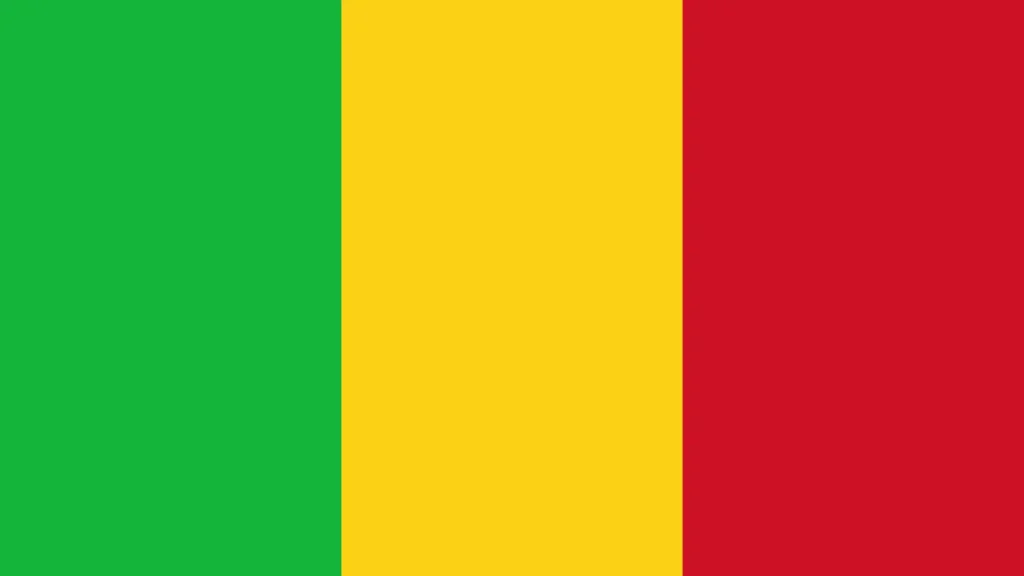
Mali at a glance: A vast, landlocked Sahelian state navigating military rule, a deepening jihadist insurgency, and a dramatic geopolitical realignment away from Western partners — Mali is one of the most consequential stress-tests of governance and security in twenty-first-century Africa.
Overview
Mali’s capital is Bamako, a rapidly expanding city on the Niger River that functions as the country’s commercial, administrative, and cultural hub. The country’s population is estimated at approximately 24 million (World Bank, 2024 projection), making it one of the more populous states in the Sahel. French is the official language of government and administration, though Bambara serves as the dominant lingua franca across much of the country, alongside dozens of other national languages including Fulfulde, Songhai, and Tamasheq. The currency is the West African CFA franc (XOF), shared with seven other members of the West African Economic and Monetary Union (WAEMU). GDP per capita sits in the low-income band, estimated at roughly USD 870–920 (World Bank, 2023 data), reflecting chronic structural underdevelopment compounded by years of conflict. Mali matters in 2026 for two interconnected reasons: it sits at the epicentre of the Sahel’s security crisis, which has displaced millions and destabilised neighbouring states, and its military government’s break with France and ECOWAS in favour of Russian security partnerships has reshaped the geopolitical architecture of West Africa in ways that will reverberate for a generation.
Government and Politics
Mali is currently governed as a military transitional state — formally described by the junta as a “transitional republic” — following two successive coups: the first in August 2020, which ousted President Ibrahim Boubacar Keïta, and the second in May 2021, which removed the transitional civilian president Bah N’Daw. The effective head of state and government is Colonel Assimi Goïta, who holds the title of Transitional President. Goïta, a former special forces commander, leads the National Committee for the Salvation of the People (CNSP) and has consolidated authority over all major branches of government. The transitional legislature, the National Transition Council (CNT), is an appointed body with no electoral mandate; it functions largely as a rubber-stamp institution for executive decrees. Mali’s 2023 transitional charter extended the junta’s mandate and formally suspended the constitutional order that had been in place since 1992. A constitutional referendum held in June 2023 approved a new draft constitution — one that critics argued entrenched military prerogatives and weakened civilian oversight mechanisms — with official results claiming over 96 percent approval on a disputed turnout figure. Presidential and legislative elections, repeatedly promised and repeatedly postponed, had not been held as of early 2026; the junta has offered no firm electoral calendar, and international pressure to restore civilian rule has yielded little tangible progress. Mali was suspended from ECOWAS in January 2022 and, in a dramatic escalation, formally withdrew from the bloc alongside Burkina Faso and Niger in January 2025, forming the Alliance of Sahel States (AES) as an alternative regional framework.
Economy
Mali’s GDP is estimated at approximately USD 19–21 billion in nominal terms (IMF, 2024 Article IV consultations), a figure that masks extreme vulnerability to commodity cycles, climate shocks, and conflict-related disruption. The economy rests on three principal pillars: gold mining, subsistence and smallholder agriculture, and remittances from the Malian diaspora. Gold is by far the dominant export earner, consistently accounting for 70–80 percent of export revenues; Mali is Africa’s third-largest gold producer. Cotton is the leading agricultural export, though the sector has faced sustained pressure from erratic rainfall and input cost inflation. Livestock herding remains a critical livelihood for a large share of the rural population, particularly in the north and centre. The CFA franc, pegged to the euro, provides monetary stability but limits the government’s ability to deploy exchange-rate policy as an adjustment tool. Mali’s public debt position has deteriorated: the IMF has flagged elevated debt-distress risk, and the suspension of direct budget support from the European Union and France following the coups created significant fiscal gaps that the government has partially filled through domestic borrowing and opaque financing arrangements linked to its Russian security partnerships. The single most consequential economic story of the past 24 months has been the financial cost of the Wagner Group — now rebranded under Russian state structures as the Africa Corps — whose deployment is widely estimated to cost Mali hundreds of millions of dollars annually in direct payments and resource concessions, including reported access to artisanal gold sites in areas cleared of jihadist presence. This arrangement has generated hard currency for the junta but has done little to broaden the productive base of an economy where more than 40 percent of the population lives below the international poverty line.
Demographics and Society
Mali has one of the highest total fertility rates in the world, estimated at approximately 5.9 children per woman (UN Population Division, 2023), driving rapid population growth that places acute pressure on public services, land, and water resources. The population is overwhelmingly young: the median age is estimated at around 16–17 years, meaning the majority of Malians have grown up knowing nothing but political instability and conflict. Urbanisation is accelerating — Bamako’s metropolitan population is estimated to exceed 3.5 million and is growing at roughly 5 percent annually — driven partly by rural insecurity displacing farming and herding communities. The country is ethnically and linguistically diverse: the Bambara are the largest single group and dominate the south and centre, while the Fulani (Peul) are widely distributed and have been disproportionately caught up in the conflict dynamic, with some communities targeted by both jihadist recruiters and state security forces. The Tuareg and Arab communities of the north have historically driven separatist and autonomy movements. Islam is practised by an estimated 93–95 percent of the population, predominantly in Sufi traditions, though Salafi influence has grown over the past two decades. The defining social trend of the current moment is internal displacement: the UN Office for the Coordination of Humanitarian Affairs (OCHA) estimated that Mali had more than 375,000 internally displaced persons by late 2024, with displacement concentrated in the Mopti, Ségou, and northern regions, creating protracted humanitarian caseloads and straining host communities.
Key Issues Right Now
The jihadist insurgency and its territorial spread. The armed conflict involving Jama’at Nusrat al-Islam wal-Muslimin (JNIM), affiliated with al-Qaeda, and the Islamic State in the Greater Sahara (ISGS) remains the defining security crisis. Despite the deployment of Russian Africa Corps personnel and the expulsion of the French Barkhane force in 2022 and the UN peacekeeping mission MINUSMA in 2023, neither group has been militarily degraded in any sustained way. JNIM in particular has expanded its operational reach southward toward Bamako’s peri-urban zones and westward toward the Senegalese and Guinean borders — a geographic spread that alarmed regional analysts throughout 2024 and into 2025. The junta’s counter-insurgency approach, which has involved documented mass atrocities against civilian populations in areas suspected of harbouring militants, has generated significant international human rights scrutiny without producing durable security gains.
The Alliance of Sahel States and regional fragmentation. Mali’s formal withdrawal from ECOWAS alongside Burkina Faso and Niger, and the creation of the Alliance of Sahel States (AES), represents the most significant restructuring of West African regional architecture in decades. The AES has announced ambitions for a common passport, a potential monetary union independent of the CFA franc, and joint military operations — though implementation has been slow and the institutional capacity of the new bloc remains thin. For analysts and investors, the critical question is whether the AES represents a durable geopolitical realignment or a fragile arrangement of convenience among three military governments facing similar legitimacy deficits. The bloc’s posture toward ECOWAS, France, and Western multilateral institutions will shape trade flows, aid architecture, and security cooperation across the wider region.
Climate stress and food insecurity. Mali is acutely exposed to the accelerating climate pressures bearing down on the Sahel. Erratic and shortened rainy seasons, advancing desertification in the north, and increasing competition over water and pastureland between farming and herding communities have compounded the conflict dynamic in the country’s central regions. The 2023–2024 agricultural season produced below-average cereal harvests in several key producing zones, and the World Food Programme estimated that more than 7 million Malians faced acute food insecurity at the peak of the 2024 lean season. Climate adaptation investment has been severely disrupted by the withdrawal of Western development partners, leaving communities with fewer institutional resources to manage shocks that are growing in frequency and severity.
Travel and Connectivity
Bamako–Sénou International Airport is Mali’s principal international gateway, handling the majority of passenger and cargo traffic; it is served by a limited number of regional and international carriers, with Air France having suspended services following the diplomatic rupture with Paris. Mopti’s Ambodedjo Airport serves the historically significant central region, though security conditions have severely curtailed civilian air traffic there. Principal cities beyond Bamako include Ségou, Sikasso, Mopti, Gao, Timbuktu, and Kayes. Tourism, once a meaningful contributor to the economy — Mali’s UNESCO World Heritage Sites, including the Djingareyber Mosque in Timbuktu and the Cliff of Bandiagara in Dogon Country, attracted significant visitor numbers in the 2000s — has effectively collapsed under the weight of sustained insecurity; most Western governments maintain “do not travel” advisories for the majority of the country. Internet penetration remains low, estimated at 30–35 percent of the population (ITU, 2023 estimates), with connectivity heavily concentrated in Bamako and other urban centres. Mobile money has achieved meaningful adoption: Orange Money and Moov Money are the dominant platforms, and mobile financial services have become a critical infrastructure for remittance receipt and small-scale commerce in areas where formal banking is absent.
Further Research
Analysts and researchers seeking to deepen their understanding of Mali should consult the following institutions and resources. The World Bank Mali Country Page provides regularly updated macroeconomic data, poverty assessments, and project documentation. The IMF Mali Country Report series, including Article IV consultation documents, offers the most rigorous publicly available analysis of fiscal and monetary conditions. The Africa Center for Strategic Studies (Washington, D.C.) publishes focused security and governance analysis on the Sahel, including Mali-specific briefs on the insurgency and the AES. The UN Office for the Coordination of Humanitarian Affairs (OCHA) Mali maintains situation reports and displacement tracking data that are indispensable for understanding the humanitarian dimension. The Sahel Research Group at the University of Florida and the Institut d’Études de Sécurité (ISS), based in Dakar and Pretoria, both produce peer-reviewed and policy-oriented research on Malian politics, conflict dynamics, and regional security architecture that provides essential analytical depth beyond headline reporting.