Madagascar — Expert Briefing
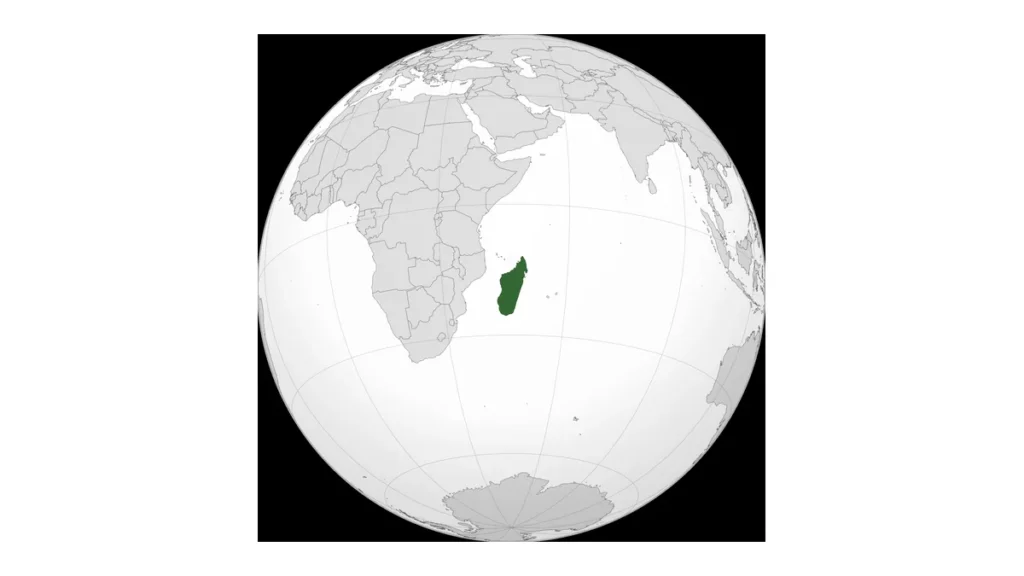
Madagascar at a glance: The world’s fourth-largest island is a biodiversity superpower navigating chronic political fragility, deepening climate vulnerability, and a scramble for its critical mineral wealth — making it one of the most consequential, and most overlooked, countries in the Indian Ocean region.
Overview
Capital: Antananarivo (commonly abbreviated to “Tana”). Population: approximately 30.3 million (World Bank, 2024 estimate), making Madagascar the second most populous island nation in Africa after Madagascar’s neighbour in demographic terms, though it remains one of the least densely settled large landmasses on the continent. Official languages: Malagasy and French. Currency: Malagasy Ariary (MGA). GDP per capita: low-income band, estimated at roughly USD 530–560 (current prices, 2024), placing Madagascar consistently among the ten poorest economies in the world by this measure. Madagascar matters in 2026 for two intersecting reasons: its extraordinary endowment of critical minerals — including graphite, ilmenite, cobalt, and rare earth elements — has drawn intensified interest from Chinese, Australian, and European extractive investors at precisely the moment global supply chains are being restructured around the green energy transition. Simultaneously, the country’s position as a climate-exposed, food-insecure state in the southern Indian Ocean gives it outsized relevance to humanitarian planners, climate finance negotiators, and regional security analysts tracking instability corridors between East Africa and the wider Indo-Pacific.
Government and Politics
Madagascar is a presidential republic. Executive power is concentrated in the presidency, with a prime minister serving at the president’s discretion. The current head of state is President Andry Rajoelina, who first seized power in a military-backed coup in 2009, was elected in a contested poll in 2018, and was re-elected in the first round of the November 2023 presidential election — a result immediately disputed by opposition coalitions who alleged fraud and called for a boycott. Rajoelina, a former Antananarivo mayor and media entrepreneur, has governed with a strong personalist style, centralising decision-making and pursuing high-visibility infrastructure projects under his “Velirano” (promise) programme. The legislature is bicameral: the National Assembly (Assemblée Nationale) holds 151 seats, and the Senate (Sénat) holds 18 elected and 18 presidentially appointed members. Legislative elections held in May 2024 returned a strong majority for Rajoelina’s Isika Rehetra Miaraka amin’i Andry Rajoelina (IRD) party and allied formations, consolidating executive control over both chambers. The opposition — fragmented across multiple platforms including the Tiako i Madagasikara party of former president Marc Ravalomanana — remains largely marginalised from formal institutional power. No significant constitutional amendments have been enacted since the 2010 constitution was adopted following the post-coup transition, though pressure from civil society groups for electoral law reform ahead of the 2028 cycle is already building. Madagascar’s democratic credentials remain under scrutiny: Freedom House rates it “Partly Free,” and the African Union has periodically raised concerns about the independence of the High Constitutional Court.
Economy
Madagascar’s GDP is estimated at approximately USD 16–17 billion (current prices, 2024), with real growth running at around 4–4.5 percent annually — a rate that, while positive, is insufficient to reduce per capita poverty given population growth of roughly 2.7 percent per year. The economy rests on four primary pillars: subsistence and smallholder agriculture (employing an estimated 70–75 percent of the workforce, producing rice, cassava, vanilla, cloves, and lychees); extractive industries (ilmenite and zircon mining at QMM/Rio Tinto’s Fort Dauphin operation, graphite extraction in the northeast, and cobalt and nickel processing at the Ambatovy complex); export processing zones centred on Antananarivo producing garments and textiles for the US AGOA market and European buyers; and a recovering tourism sector. Key exports by value include nickel, cobalt, ilmenite, vanilla (Madagascar supplies an estimated 70–80 percent of the world’s natural vanilla), cloves, and textile manufactures. The Ariary has faced sustained depreciation pressure against the US dollar and euro, driven by a persistent current account deficit, import dependency for fuel and capital goods, and limited foreign exchange reserves. Public debt stands at approximately 55–58 percent of GDP, elevated but not yet at crisis levels, with the IMF and World Bank remaining the principal creditors alongside bilateral Chinese lending tied to infrastructure projects. The single most consequential economic story of the past 24 months has been the renegotiation and partial restructuring of the Ambatovy nickel-cobalt project — one of the largest foreign direct investment assets in sub-Saharan Africa — as its Japanese-led consortium of shareholders (Sumitomo, Sherritt International, and Korea Resources Corporation) grappled with depressed nickel prices, high operating costs, and questions about the project’s long-term viability. The outcome of those negotiations will shape Madagascar’s fiscal position, its relationship with Asian capital, and its credibility as a destination for the critical minerals investment the government is actively courting.
Demographics and Society
Madagascar’s population of approximately 30.3 million is young — median age estimated at around 19 years — and growing rapidly, with the UN projecting a population of 40 million by the late 2030s. The country is predominantly rural: urbanisation stands at roughly 40 percent, though Antananarivo’s greater metropolitan area is home to an estimated 3.5–4 million people, and secondary cities including Toamasina (Tamatave), Mahajanga, Fianarantsoa, and Toliara are expanding quickly. The Malagasy people are ethnically and linguistically complex: the population is broadly divided into 18 officially recognised ethnic groups (foko), with the highland Merina historically dominant in politics, commerce, and the civil service, and coastal peoples (collectively termed “côtiers”) representing a persistent fault line in national identity politics. The Malagasy language — an Austronesian tongue with Bantu, Arabic, French, and English loanwords — is the primary unifying cultural marker; French remains the language of formal administration, higher education, and the business elite. Religiously, the population is roughly 50 percent Christian (split between Catholic, Protestant, and a growing Pentecostal/evangelical movement), with the remainder practising traditional Malagasy religion (centred on ancestor veneration, or razana) or Islam, the latter concentrated in the northwest coastal communities. The defining social trend of the current moment is the accelerating rural-to-urban migration of young Malagasy, driven by climate-related agricultural shocks, land degradation, and the pull of informal urban economies — a movement that is straining Antananarivo’s infrastructure, expanding informal settlements, and generating a politically restless urban youth cohort with high smartphone penetration but limited formal employment prospects.
Key Issues Right Now
Climate vulnerability and the southern humanitarian corridor. The Grand Sud region of southern Madagascar has experienced near-chronic drought conditions linked to the La Niña cycle and longer-term aridification trends, producing what the UN World Food Programme has described as conditions approaching famine — a situation sometimes termed “kere” (hunger) in Malagasy. While international attention has fluctuated, the structural drivers — soil degradation, deforestation, erratic rainfall, and the near-total absence of irrigation infrastructure — have not been addressed. Cyclone seasons remain a severe annual threat to the northeast and east coasts, with Cyclone Gamane (2023) and subsequent storms causing significant displacement and infrastructure damage. Madagascar’s climate vulnerability index places it among the most exposed nations globally, yet its access to international climate finance remains disproportionately low relative to need — a gap that climate justice advocates are increasingly highlighting in multilateral forums.
Critical minerals governance and the resource curse risk. Madagascar sits atop significant deposits of graphite (essential for electric vehicle batteries), ilmenite, zircon, cobalt, nickel, and potentially rare earth elements. The Rajoelina government has actively marketed this endowment to foreign investors, and new exploration licences have been issued at pace. The governance challenge is acute: Madagascar’s extractive sector has a documented history of revenue leakage, weak environmental enforcement, community displacement without adequate compensation, and limited local value addition. Civil society organisations, including the Publish What You Pay coalition’s Madagascar chapter, have raised concerns about the transparency of recent licensing rounds. The risk that a new minerals boom reproduces the enclave economy dynamics of previous cycles — enriching a narrow elite and foreign shareholders while leaving affected communities worse off — is widely discussed among development economists and is a live concern for the World Bank’s governance programme in-country.
Political legitimacy and institutional fragility. The disputed 2023 presidential election result has left a residue of political tension that has not fully dissipated. Opposition leaders, civil society groups, and some international observers have questioned the independence of electoral institutions and the fairness of campaign conditions. While Madagascar has avoided a return to the overt military intervention that characterised its 2009 crisis, the underlying conditions — a weak judiciary, a politicised security apparatus, high levels of impunity for elite actors, and a frustrated urban population — mean that institutional fragility remains a baseline risk. The Africa Center for Strategic Studies has flagged Madagascar in its governance monitoring work as a country where democratic backsliding indicators are present even in the absence of acute crisis, a pattern that warrants sustained attention from regional analysts.
Travel and Connectivity
The principal international gateway is Ivato International Airport (IATA: TNR), located approximately 18 kilometres north of central Antananarivo, serving flights from Paris (Air Madagascar and Air France), Nairobi, Johannesburg, Réunion, Mauritius, and a growing number of regional African hubs. Nosy Be’s Fascene Airport (NOS) in the northwest serves charter and regional traffic for the island’s premium beach tourism market. Toamasina (Tamatave) functions as the country’s main commercial port and a secondary urban centre of strategic importance for trade logistics. Tourism is a significant and recovering sector: Madagascar attracted an estimated 300,000–350,000 international visitors annually in the pre-COVID period, drawn primarily by its extraordinary endemic biodiversity (lemurs, baobabs, unique reptile and bird fauna), adventure tourism, and Indian Ocean beach destinations. The sector is rebuilding post-pandemic, with the government targeting higher-value, lower-volume ecotourism as a strategic priority. Internet penetration stands at approximately 20–25 percent of the population, with mobile internet via 3G and 4G networks the dominant access mode; fixed broadband infrastructure is limited outside Antananarivo. Mobile money adoption is significant and growing: platforms including MVola (Telma) and Orange Money have achieved meaningful penetration in urban and peri-urban areas, providing financial access to populations largely excluded from formal banking — a pattern consistent with broader sub-Saharan African mobile finance trends.
Further Research
Analysts and journalists seeking to deepen their understanding of Madagascar should consult the following institutions and resources. The Institut National de la Statistique (INSTAT Madagascar) — the national statistics bureau — publishes household survey data, demographic estimates, and economic indicators and is the authoritative source for domestic data series. The World Bank Madagascar country page provides regularly updated macroeconomic assessments, project documentation, and the Madagascar Poverty and Equity Brief, which offers the most rigorous available analysis of welfare trends. The International Monetary Fund’s Madagascar Article IV Consultation reports provide detailed fiscal and monetary analysis and are freely available through the IMF’s document portal. The Africa Center for Strategic Studies (Washington DC) publishes governance and security mapping relevant to Madagascar within its broader Indian Ocean and East Africa coverage. The Madagascar Conservation and Development journal, published by the Society for Conservation Biology’s Madagascar section, is the leading peer-reviewed outlet for environmental governance, land use, and conservation-development tensions — essential reading for anyone engaging with the extractives or climate dimensions. Finally, the Banque Centrale de Madagascar publishes monetary policy statements, exchange rate data, and financial stability reports that are indispensable for investors and economic analysts tracking the Ariary and the banking sector.