Luxor International Airport
Luxor International Airport
About
Luxor International Airport (IATA: LXR / ICAO: HELX) occupies a singular position in African aviation: it is one of the continent’s most historically significant gateways, channelling millions of visitors each year toward the world’s densest concentration of pharaonic monuments. Situated on the east bank of the Nile in Upper Egypt, the airport functions almost exclusively as a tourism-oriented international hub, making it a useful case study for analysts examining how heritage destinations manage air-access strategy in a region where aviation infrastructure and visitor-economy policy are increasingly intertwined.
The airport’s origins trace to the mid-twentieth century, when Egypt began developing regional airfields to support both civil aviation and strategic military requirements. Commercial international operations at Luxor expanded meaningfully from the 1970s and 1980s onward, as package-holiday travel from Europe — particularly from Germany, the United Kingdom, Italy, and Russia — grew into a substantial market. The facility is owned by the Egyptian state and operated under the authority of the Egyptian Airports Company (EAC), a subsidiary of the Egyptian Civil Aviation Authority (ECAA), which oversees the country’s broader network of commercial airports.
Successive expansion phases have enlarged the terminal building and apron capacity to accommodate wide-body charter and scheduled aircraft. A significant modernisation programme was undertaken in the 2000s, improving landside facilities, check-in capacity, and airside lounges. The airport has periodically been affected by fluctuations in Egyptian tourism demand — most acutely during the periods of political instability that followed 2011 and again during the global aviation contraction of 2020–2021 — but publicly disclosed traffic data indicate a strong recovery trajectory through 2024 and into 2025, consistent with broader Egyptian tourism growth reported by the Egyptian Ministry of Tourism and Antiquities.
Country
Egypt is a transcontinental republic bridging northeastern Africa and the Sinai Peninsula of western Asia, with Cairo as its capital and a national population that, according to official Egyptian census projections, has surpassed 100 million people, making it the most populous country in the Arab world and one of the most populous on the African continent. Egypt holds a commanding geopolitical and economic position as a member of the African Union, the Arab League, and a key partner in Mediterranean and Red Sea trade corridors. Its tourism sector is among the largest contributors to GDP, and Luxor — as the country’s premier archaeological destination — sits at the centre of that economic proposition. → Read the Egypt expert briefing
Airlines Based Here
Luxor International Airport does not serve as a primary hub for any single carrier in the conventional sense, but EgyptAir — Egypt’s flag carrier and Star Alliance member — maintains scheduled services to and from Luxor as part of its domestic and short-haul international network, effectively treating LXR as a focus city. EgyptAir operates connections linking Luxor to Cairo International Airport (CAI), providing onward connectivity to the carrier’s intercontinental network. Beyond EgyptAir, the airport’s traffic profile is dominated by visiting carriers operating charter and leisure-scheduled services. European low-cost and charter operators including TUI fly (operating under various national subsidiaries), Condor, and historically Thomas Cook Airlines affiliates have featured prominently in the winter sun programme. Middle Eastern carriers including Air Arabia have operated services connecting Luxor to Gulf hubs. The mix of carriers shifts seasonally, with European winter-sun charters peaking between October and April.
Flights and Destinations
The route network at LXR is weighted heavily toward European leisure markets and domestic Egyptian connectivity. Domestically, Cairo is the dominant link, providing passengers with access to EgyptAir’s full intercontinental schedule. Regionally within Africa and the Middle East, connections to cities including Hurghada, Sharm el-Sheikh, and Gulf hubs such as Sharjah and Dubai have featured in published schedules at various points. Internationally, European cities that have been served — on a scheduled or charter basis — include London (Gatwick and Heathrow), Frankfurt, Munich, Moscow (historically a major source market), Warsaw, Amsterdam, and Rome. Industry estimates suggest that the European charter segment, particularly from German-speaking markets and the United Kingdom, accounts for a substantial share of total seat capacity in peak season. Long-haul intercontinental services are not a structural feature of the LXR network; passengers requiring transatlantic or East Asian connections typically route through Cairo.
Facilities and Capacity
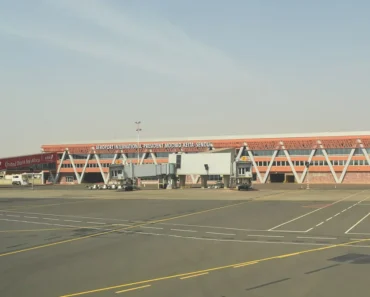
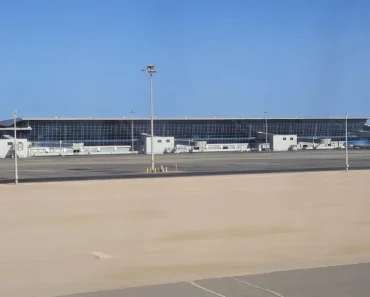
Luxor International Airport operates from a single passenger terminal building that has been progressively expanded and refurbished over several decades. The terminal accommodates both international arrivals and departures, with dedicated zones for passport control, customs, and baggage reclaim. The airport is served by two runways, configured to handle wide-body jet aircraft including the Boeing 737 family, Airbus A320 family, and larger types such as the Airbus A330, which charter operators have deployed on high-density leisure routes. Apron capacity supports multiple simultaneous wide-body stands. Cargo facilities exist but are limited in scale, consistent with the airport’s tourism-primary function; significant freight volumes are not a defining characteristic of LXR’s operational profile. By standard industry classification, Luxor International Airport is best described as a medium-sized regional international hub — large enough to handle meaningful international charter volumes in peak season, but without the infrastructure scale of Cairo International or Alexandria Borg el Arab. Planned and ongoing infrastructure investments under Egypt’s broader civil aviation development agenda have been reported by the ECAA, though specific budget figures and completion timelines should be verified against official ECAA announcements.
Visa Regulations
Travellers arriving at Luxor International Airport are subject to Egypt’s national visa regime, administered by the Ministry of Interior. As of 2025–2026, Egypt offers a visa-on-arrival facility for nationals of a broad range of countries, including the United States, the United Kingdom, European Union member states, Canada, and Australia, typically issued for a single-entry stay of up to thirty days and subject to a fee payable in accepted currencies at the airport. Egypt’s eVisa system — accessible through the official Egyptian government eVisa portal — allows eligible travellers to obtain authorisation before departure, which can reduce processing time at the airport. Nationals of several Arab League countries and some African states may benefit from simplified entry arrangements or visa-free access under bilateral agreements, though the specific list is subject to periodic revision. Travellers holding passports from countries not covered by on-arrival or eVisa arrangements are generally required to obtain a visa from an Egyptian diplomatic mission before travel. Visa conditions, fees, and eligible nationalities change; travellers, journalists, and researchers should consult the live lookup tool at /visa-requirements/ for current, verified information before travel.
Recent Developments
The 24-month period through early 2026 has seen Luxor International Airport benefit from the continued recovery of Egyptian inbound tourism, which the Egyptian Ministry of Tourism and Antiquities has publicly described as reaching record or near-record visitor numbers in successive recent years. Route resumptions and new seasonal services from European carriers have been reported in trade press, reflecting renewed operator confidence in the Upper Egypt leisure market. The opening of the Grand Egyptian Museum in Giza in 2023 generated significant international media attention for Egyptian heritage tourism broadly, with industry observers noting a spillover effect on Luxor bookings as travellers combined multiple Egyptian destinations in single itineraries. Infrastructure works at the terminal — including improvements to arrivals processing and airside passenger amenities — have been referenced in ECAA communications, though the scope and completion status of specific projects should be confirmed against official sources. Regulatory alignment with ICAO safety standards and IATA operational requirements has remained an ongoing area of attention for Egyptian civil aviation authorities across the national airport network.
News and Reports
Researchers and analysts tracking Luxor International Airport’s operational performance should consult several authoritative source categories. The Egyptian Civil Aviation Authority publishes official statements, regulatory updates, and periodic traffic summaries through its official communications channels; the Egyptian Airports Company similarly issues operational notices relevant to LXR. IATA’s Africa and Middle East regional office produces periodic market intelligence reports covering Egyptian aviation, accessible through IATA’s member and public research portals. The ICAO Middle East Regional Office, based in Cairo, publishes safety oversight and infrastructure development data relevant to Egyptian airports. Specialist aviation trade publications — including ch-aviation, OAG, and Cirium — provide schedule data, capacity analysis, and route news that cover LXR on a regular basis. For on-the-ground tourism and destination reporting, the Egyptian Ministry of Tourism and Antiquities press office and the Luxor Governorate’s official communications are relevant supplementary sources.
Related Research
- Egypt Expert Briefing — in-depth country analysis for researchers and investors
- Egypt Statistics — key demographic, economic, and aviation data
- African Airports — comparative profiles across the continent
- African Airlines — carrier profiles, alliance memberships, and route maps
- Visa Requirements — live lookup tool for entry requirements by passport and destination
- Country Comparison — benchmark Egypt against peer economies and aviation markets